
Harvest
Expenses
Sign up

Project Expense Report

Harvest enables precise tracking of project expenses alongside time, helping businesses manage and invoice expenses within project budgets effectively.

EXPENSE REPORT DRAFT

Drop your receipts here or click to upload

Images and PDFs (max 10 MB each)

Date
Category
Merchant
Description
Amount
Total
$0.00

Customise report

Appearance

Show report title

Report settings

What is a Project Expense Report?

A project expense report is a comprehensive document that details all expenses incurred during the execution of a project. This report is essential for maintaining financial control and ensuring that the project stays within budget. It typically includes all costs related to labor, materials, travel, and overhead, helping project managers to keep track of spending and identify potential areas for cost savings.

Despite the critical nature of these reports, many organizations still struggle with manual tracking methods that are prone to errors. According to recent data, 83% of enterprises are moving towards automated solutions to streamline this process, achieving up to 34% in cost savings. The shift towards digital and mobile-first solutions is notable, with 66% of employees now submitting expenses via mobile apps, decreasing processing times by 41%.
Challenges in Managing Project Expenses

Managing project expenses can be challenging, especially when relying on traditional, manual processes. These methods often lead to human errors, compliance risks, and delayed reimbursements, affecting overall project efficiency. In fact, only 39% of small and mid-sized businesses have a formal, well-maintained expense policy, leading to inefficiencies.

Organizations face hurdles such as scope creep, poor estimates, and inadequate documentation, which can result in budget overruns. To mitigate these challenges, it's crucial to use structured processes and automation. Studies show that automation in expense management improves efficiency for 77% of organizations, with 57% reporting significant cost reductions.

How Harvest Simplifies Project Expense Tracking

Harvest simplifies project expense tracking by allowing users to manage and differentiate expenses as billable or non-billable. This feature is crucial for projects that need clear financial oversight and accurate client billing. With Harvest, users can set budgets that include these expenses, providing a structured approach to managing project costs.

By integrating expense tracking with time management, Harvest offers a complete solution within its platform. Although it does not provide real-time tracking for budget overruns, it ensures all tracked expenses are included in project budgets, facilitating better financial control. This integration helps organizations avoid manual data entry errors and improve overall project efficiency.

Best Practices for Creating an Effective Project Expense Report

Creating an effective project expense report involves several best practices. First, establish a detailed pre-project budget and consistently log all actual costs in real-time. Regular reviews can help identify any unusual spending patterns and address them promptly. Comparing planned versus actual costs is essential for spotting variances and understanding their causes.

Avoiding common pitfalls like inadequate documentation and poor cost estimates is crucial. Ensure all expenses are supported by itemized receipts and clear business justifications. Automating these processes can significantly reduce errors and compliance risks, as manual tracking is often slow and prone to mistakes. Harvest's project-based expense tracking can assist in maintaining these standards by providing a systematic way to manage and report expenses.

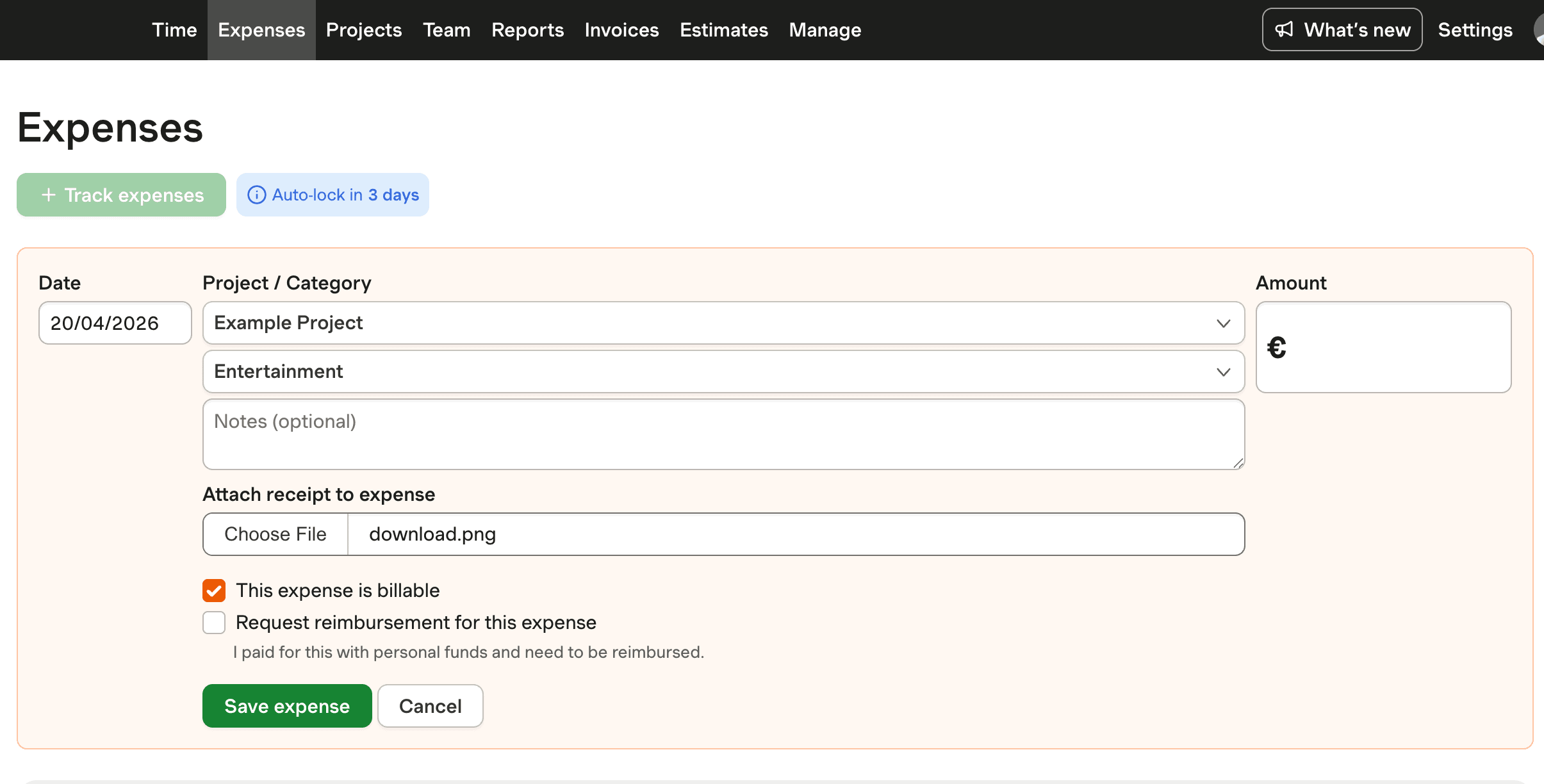
Harvest Project Expense Tracking

See how Harvest's interface allows you to track project expenses alongside time, streamlining budgeting and invoicing.

Harvest project expense tracking interface showcasing expense categories.

Project Expense Report FAQs

  • Project expenses typically include direct costs such as labor and materials, and indirect costs like overhead and administration. Properly tracking these helps in maintaining budget control and ensuring accurate financial reporting.

  • To create a project expense report, begin by detailing all project-related costs. Use software like Harvest to log expenses as they occur, categorize them, and include them in your project budgets for comprehensive financial oversight.

  • Tools such as Harvest offer robust capabilities for tracking project expenses. Harvest allows for categorization of expenses, marking them as billable or non-billable, and integrating them into project budgets for effective management.

  • Manage project budgets by planning costs meticulously, tracking expenses in real-time, and regularly comparing actuals to budgets. Automation and tools like Harvest can streamline these processes and enhance accuracy.

  • While Harvest tracks current expenses, forecasting requires analyzing historical data and anticipating future costs. Use detailed records to project future expenses, considering factors like resource availability and market trends.

  • Harvest allows you to mark expenses as billable or non-billable, ensuring accurate client billing and inclusion in project budgets. This feature helps maintain financial clarity and streamline invoicing processes.

  • While Harvest offers project-based expense tracking within its platform, it does not directly integrate with external project management tools. However, its comprehensive features support detailed tracking and reporting within Harvest itself.