
Harvest
Expenses
Sign up

Submitting Expenses

Harvest simplifies the process of submitting expenses by integrating receipt tracking with time management, reducing errors and ensuring compliance.

EXPENSE REPORT DRAFT

Drop your receipts here or click to upload

Images and PDFs (max 10 MB each)

Date
Category
Merchant
Description
Amount
Total
$0.00

Customise report

Appearance

Show report title

Report settings

Steps to Submit an Expense Report Efficiently

Submitting an expense report efficiently requires following a structured process that minimizes errors and ensures timely reimbursement. Begin by collecting and organizing receipts immediately. This can be done by photographing or scanning receipts right after a purchase. Digital copies should be stored in dedicated folders, and mobile expense tracking apps can capture receipt information at the point of purchase. According to research, improper receipt management is a common issue, with 19% of reports containing errors due to misplaced documentation.

Next, review your company's expense policy thoroughly. Pay attention to specific spending limits, per diems, required approvals, and exclusions. Non-compliance with policy is a primary reason for claim rejections. Once you've ensured adherence to the policy, complete the expense claim form, which typically requires detailed information such as employee details, department codes, and a clear business purpose. Finally, submit the report through the designated software, ensuring all receipt images are clear and accurately coded. Automating parts of this process can reduce the cost per transaction by up to 78%.
Common Mistakes in Expense Submissions and How to Avoid Them

Avoiding common mistakes in expense submissions can save both time and money. One frequent issue is losing or misplacing receipts. Utilizing an expense management platform like Harvest, which allows for instant scanning and digital storage, can effectively mitigate this risk. Another common error is submitting damaged receipts. Digitizing receipts as soon as they are received ensures they remain clear and legible for verification and audits.

Another pitfall is mixing personal and business expenses. It is advisable to use separate payment methods for personal and business transactions to prevent reporting nightmares and ensure accurate financial reports. Additionally, unfamiliarity with company policy can lead to rejections. Companies are encouraged to clearly define all terms in the expense policy and make it easily accessible to employees. Moreover, tracking all expenses, no matter how small, is crucial, as minor expenditures can lead to significant financial leakage over time. Harvest supports the creation of custom expense categories, aiding in effective documentation and categorization.

Leveraging Software for Streamlined Expense Submission

Utilizing expense management software can significantly streamline the submission process. Harvest, for instance, integrates expense tracking with time tracking and invoicing, allowing for efficient submission and management of expenses. This integration enables users to attach receipt images directly to expenses, which is vital for verification purposes. Historically, manual expense reporting has been shown to be costly and inefficient, taking an average of 20 minutes per report and costing $58 to process.

Automation in expense management can reduce the processing cost by up to 78%. Although Harvest requires manual submission of expenses as part of weekly timesheets, its streamlined interface makes this process straightforward. Furthermore, Harvest supports multiple currencies, allowing users to handle foreign currency expenses with manual conversions. This flexibility is crucial for businesses operating in multiple regions, ensuring accurate and compliant financial records.

Documenting and Categorizing Expenses Effectively

Documenting and categorizing expenses effectively is crucial for accurate financial reporting. Harvest allows administrators to create custom expense categories, which aids in organizing and categorizing expenses efficiently. This feature helps businesses maintain clarity and consistency in their financial documents, which is essential for internal analysis and auditing purposes.

The importance of attaching receipts to expenses cannot be overstated, as it ensures verification and compliance. According to the IRS, receipts are crucial for audit defense, with expenses potentially disallowed without them. Furthermore, businesses that digitize and categorize expenses systematically can gain actionable insights into spending patterns, ultimately enabling smarter financial decisions. With Harvest's capabilities in categorizing expenses, businesses can achieve greater financial visibility and control.

Submitting Expenses with Harvest

Explore how Harvest streamlines expense submissions with integrated receipt tracking and categorization, ensuring efficient and compliant processes.

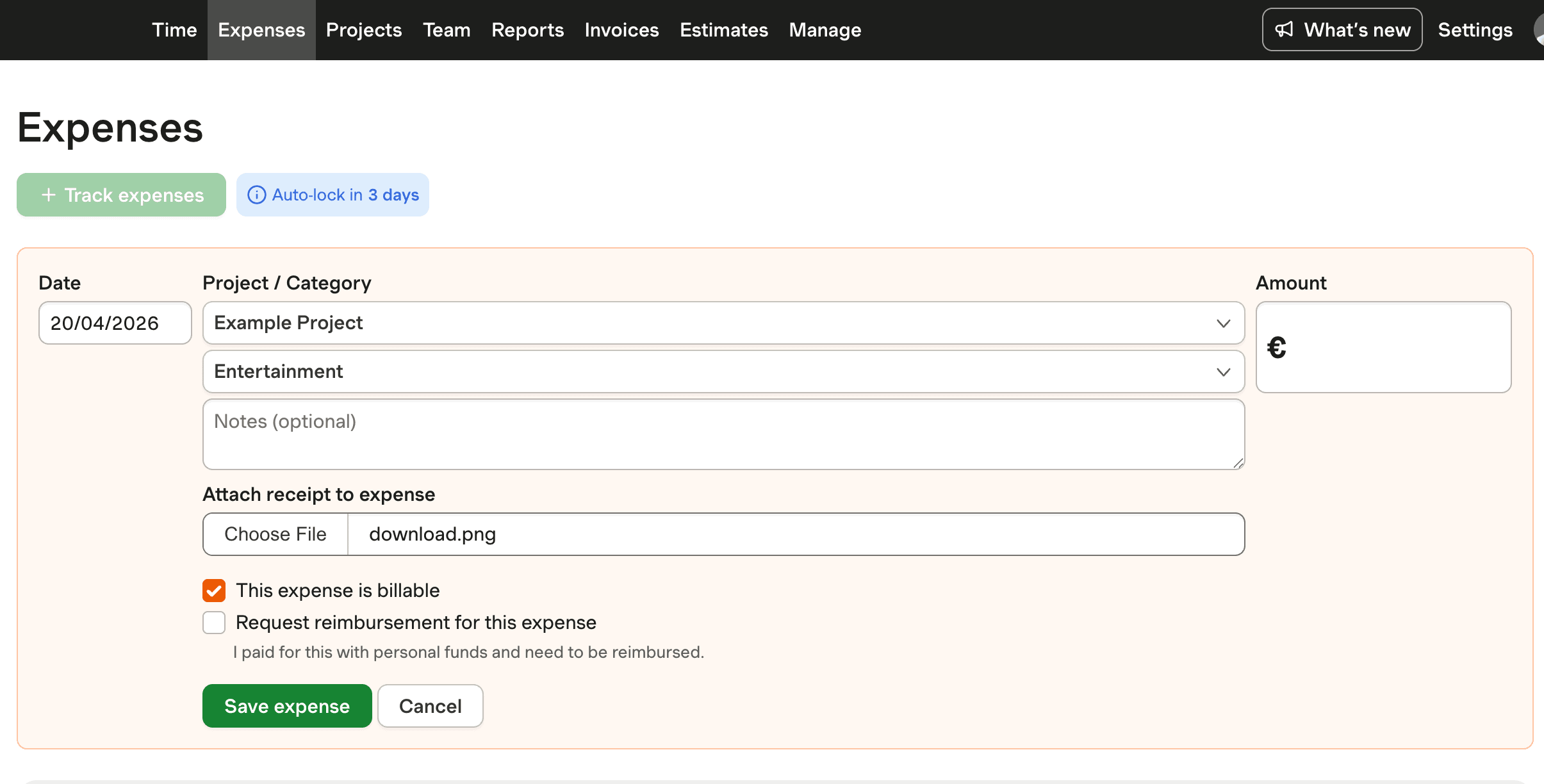
Screenshot of Harvest's expense submission interface with receipt upload and categorization features.

Submitting Expenses FAQs

  • To submit an expense report, first collect and organize your receipts immediately after purchases. Next, review your company's expense policy for compliance. Then, complete the expense claim form with detailed information. Finally, submit the report through the designated software, ensuring all receipt images are clear and accurately coded.

  • Avoid losing receipts by using a digital platform like Harvest for instant scanning and storage. Prevent mixing personal and business expenses by using separate payment methods. Familiarize yourself with company policy to avoid claim rejections, and track all expenses to prevent financial leakage.

  • Harvest integrates expense tracking with time tracking and invoicing, allowing for efficient submission and management of expenses. Users can attach receipts directly to expenses, ensuring verification and compliance. This integration simplifies the process and reduces the likelihood of errors.

  • Expense management software, like Harvest, streamlines the reporting process, reduces costs, and improves accuracy. It allows for real-time tracking, categorization, and receipt attachment, providing greater financial visibility and control. Automated systems can cut processing costs and save time.

  • Harvest supports multiple currencies, allowing users to handle foreign currency expenses. While it requires manual conversion, this feature is crucial for businesses operating in multiple regions, ensuring accurate and compliant financial records.

  • In an expense report, document employee details, department codes, submission date, expense categorization, date and location, a clear business purpose, and payment method. Attach clear and complete receipt images for verification and compliance purposes.

  • Small businesses benefit from expense management tools by improving financial accuracy, reducing fraud risk, and gaining insights into spending patterns. Despite misconceptions, all businesses can streamline operations and make smarter financial decisions with these tools.