
Harvest
Time Tracking
Sign up free

Project Management Methodologies

Harvest streamlines time tracking and invoicing for teams and freelancers, making project management simpler and more efficient.

Try Harvest Free

Will this project be profitable?

Estimate your project cost, set the right price, and know exactly how many hours your team can spend before margin disappears.

Total hours across all team members
$
Average rate across all roles on the project
15%
Scope creep is real. Most projects need 10-25% buffer to stay profitable.
Recommended project price $0
Base cost (before buffer) $0
Hours per person per week 0h
Weekly burn rate $0
Max hours before loss 0h

Track project hours with Harvest

Walk through the entire flow below. Start a timer, check your reports, and create a real invoice — all in three clicks.

Go ahead — start tracking!

One click and you're timing. Try it right here: start a timer, add an entry, edit the details. This is exactly how it feels in Harvest.

  • One-click timer from browser, desktop & mobile
  • Works inside Jira, Asana, Trello, GitHub & 50+ tools
  • Duration or start/end — your call
  • Day, week & calendar views to stay on top of it all
  • Friendly reminders so no hour gets left behind
Acme Corp
Website Redesign
Homepage layout revisions
1:24:09
Content Strategy
Blog calendar planning
1:30:00
SEO Audit
Technical audit report
0:45:00
Brand Guidelines
Color system documentation
2:15:00
Logo Concepts
Initial sketches round 1
1:00:00

Understanding Project Management Methodologies: A Foundational Overview

Project management methodologies are essential frameworks that guide how projects are planned, executed, and completed. They are critical for ensuring team efficiency and effectiveness. In fact, 58% of organizations "mostly" or "always" utilize a defined project management methodology. These structured systems can significantly enhance the likelihood of project success, as projects are 2.5 times more successful when proper frameworks are in place.

There are three primary categories of project management methodologies: predictive (traditional), adaptive (Agile), and hybrid approaches. Predictive methodologies, like Waterfall, are characterized by linear phases and detailed planning. Agile methodologies, such as Scrum and Kanban, emphasize iterative development and adaptability. Hybrid models combine elements of both to suit unique project needs. Understanding these categories is crucial for selecting the right approach for your project.
Exploring Common Project Management Methodologies

Choosing the right project management methodology is essential for project success. Predictive methodologies like Waterfall, used by 43.9% of organizations, are ideal for projects with well-defined requirements. They offer clear scope and detailed planning, which is beneficial in industries like construction and manufacturing. However, they can be inflexible, with late testing phases.

Agile methodologies, including Scrum and Kanban, are growing in popularity, with Scrum used by 24.6% of companies. They provide flexibility and rapid delivery, making them suitable for software development and IT projects. Agile projects have a 64% success rate, significantly higher than the 49% for Waterfall projects. Hybrid approaches, used by 31.5% of organizations, offer a tailored solution, combining the best of both worlds.

Choosing the Right Methodology: A Strategic Decision Framework

Selecting the appropriate project management methodology involves a comprehensive assessment of your project's characteristics and needs. Begin by understanding the clarity of your project requirements and goals. If requirements are stable, predictive approaches like Waterfall may be suitable. For evolving requirements, Agile methodologies are advantageous.

Assess project complexity and size to determine the best fit. Agile is recommended for high uncertainty projects, while larger, complex projects may benefit from a Waterfall model. Evaluate team dynamics and stakeholder involvement. Agile requires collaborative, self-organized teams and frequent feedback loops. Consider your organization's risk tolerance and budget constraints in the decision-making process.

Industry Applications and Emerging Trends

Project management methodologies have varied applications across different industries. In construction and manufacturing, predictive methodologies like Waterfall are prevalent due to their sequential planning and compliance requirements. Agile methodologies, particularly Scrum and Kanban, excel in software development and IT, thanks to their adaptability and focus on customer feedback.

Hybrid methodologies are on the rise, with 73% of organizations planning to increase their use in the next five years. The project management landscape is evolving with trends such as the adoption of hybrid models and the growing demand for skilled professionals, projected to increase by 48% by 2035. Staying informed about these trends is crucial for future project management success.

Explore Project Management with Harvest

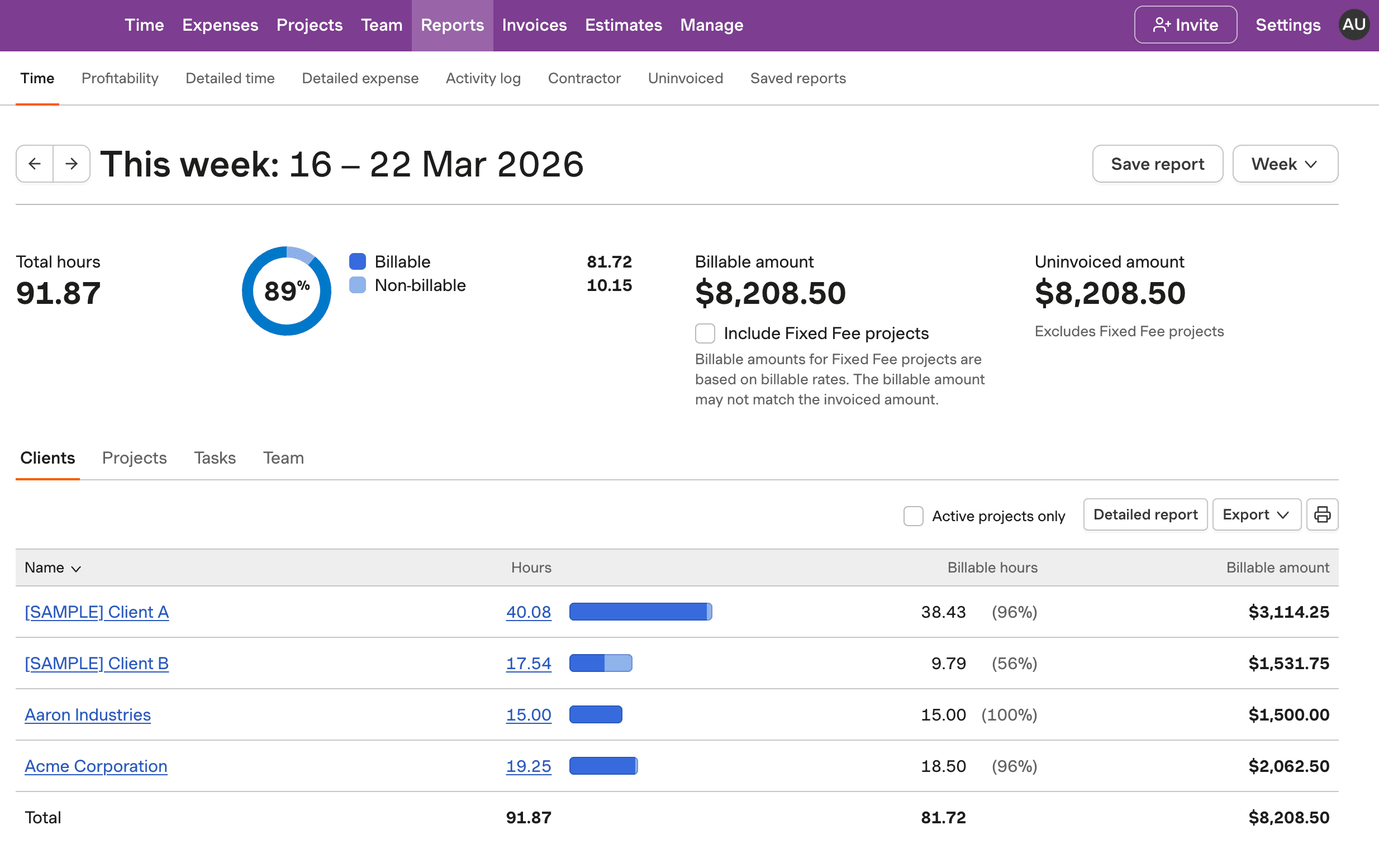
See how Harvest enhances project management through efficient time tracking and invoicing, crucial for methodology success.

Harvest time tracking and invoicing dashboard for project management.

Project Management Methodologies FAQs

  • The most common project management methodologies include predictive (traditional) methods like Waterfall, adaptive (Agile) methods like Scrum and Kanban, and hybrid approaches that combine elements of both. Each has distinct advantages and is suitable for different project types and industries.

  • To choose the right methodology, assess your project's requirements, complexity, team dynamics, and stakeholder involvement. Consider if your project needs the flexibility of Agile or the structure of predictive methods like Waterfall. Hybrid approaches may suit projects that require elements of both.

  • Agile methodologies offer flexibility, adaptability, and faster delivery, with a 64% success rate compared to 49% for Waterfall. However, they require high team commitment and can lead to scope creep without proper management. Agile is ideal for projects with evolving requirements.

  • Smaller projects with low complexity often benefit from Agile methodologies like Scrum or Kanban. Larger, more complex projects may require the structured approach of predictive methodologies like Waterfall, which are better suited for managing intricate dependencies.

  • Industries such as software development and IT benefit greatly from Agile methodologies due to their focus on incremental progress, adaptability, and customer feedback. Agile frameworks like Scrum and Kanban are particularly effective in these fast-paced environments.

  • Waterfall is more appropriate when project requirements are well-defined and unlikely to change. It is ideal for industries like construction and manufacturing, where sequential phases and detailed planning are essential. Scrum is better for projects needing flexibility and iterative development.

  • A hybrid methodology combines elements of both predictive and Agile approaches, offering a tailored solution. It can be effectively implemented by assessing project needs and integrating the most beneficial practices from each methodology to optimize project efficiency and success.