
Harvest
Time Tracking
Sign up free

Project Management With Crm Integration

Harvest is a time tracking and invoicing solution that helps teams seamlessly integrate CRM capabilities to boost efficiency and client satisfaction.

Try Harvest Free

Will this project be profitable?

Estimate your project cost, set the right price, and know exactly how many hours your team can spend before margin disappears.

Total hours across all team members
$
Average rate across all roles on the project
15%
Scope creep is real. Most projects need 10-25% buffer to stay profitable.
Recommended project price $0
Base cost (before buffer) $0
Hours per person per week 0h
Weekly burn rate $0
Max hours before loss 0h

Track project hours with Harvest

Walk through the entire flow below. Start a timer, check your reports, and create a real invoice — all in three clicks.

Go ahead — start tracking!

One click and you're timing. Try it right here: start a timer, add an entry, edit the details. This is exactly how it feels in Harvest.

  • One-click timer from browser, desktop & mobile
  • Works inside Jira, Asana, Trello, GitHub & 50+ tools
  • Duration or start/end — your call
  • Day, week & calendar views to stay on top of it all
  • Friendly reminders so no hour gets left behind
Acme Corp
Website Redesign
Homepage layout revisions
1:24:09
Content Strategy
Blog calendar planning
1:30:00
SEO Audit
Technical audit report
0:45:00
Brand Guidelines
Color system documentation
2:15:00
Logo Concepts
Initial sketches round 1
1:00:00

The Strategic Imperative: Why Integrate CRM with Project Management?

Integrating CRM systems with project management tools is a strategic move that unifies customer data with project workflows, enhancing efficiency and driving business growth. This integration allows organizations to manage the entire customer journey within a cohesive environment, breaking down silos and fostering cross-functional collaboration. For instance, businesses can achieve a 29% increase in sales revenue and a 34% boost in sales productivity through CRM adoption. Moreover, 87% of businesses report improved project outcomes post-integration.

By integrating CRM with project management, companies can accelerate the 'bid-to-bill' cycle, improving cash flow and reducing time to revenue. This synergy ensures a 360-degree view of customer interactions and project data, enhancing customer satisfaction and retention through personalized experiences. For example, construction firms using CRM systems have seen a 20-25% increase in lead conversion rates by enhancing client engagement with tailored communication strategies.
Essential Features and Functionalities of Integrated Solutions

When selecting a CRM-integrated project management tool, businesses should focus on features that unify customer and project data seamlessly. Centralized data organization is crucial for maintaining comprehensive communication management, allowing for a holistic view of client interactions. Workflow automation is another key feature, as it streamlines repetitive tasks and ensures seamless handoffs between teams, boosting productivity by up to 34%.

Additionally, integrated solutions should offer robust task management capabilities, such as timeline and milestone tracking using Gantt charts or Kanban boards. Real-time reporting and analytics enable data-driven decision-making, providing insights that can improve project outcomes. As 87% of businesses have observed, integrating these tools can significantly enhance project management efficiency.

Overcoming Challenges in CRM and Project Management Integration

While the integration of CRM with project management tools offers numerous benefits, it also presents challenges that must be addressed. Between 20% and 70% of CRM projects fail due to poor user adoption, lack of integration with other tools, and complexity of use. To mitigate these risks, businesses should prioritize comprehensive training and support, ensuring team members are well-equipped to utilize the new system effectively.

Data quality is another critical factor. Before integration, companies should address issues such as duplicate records and inconsistent formatting. By doing so, they can enhance data accuracy and integrity, crucial for achieving reliable outcomes. Moreover, selecting compatible and scalable tools that offer purpose-built integration solutions can reduce costs by 70-80% compared to custom development, making it a financially viable option for many organizations.

Measuring the Success of CRM Integration in Project Management

To evaluate the success of CRM integration in project management, businesses should monitor key performance indicators (KPIs) that reflect improvements in both customer relationships and project execution. Key metrics include increases in sales revenue, with CRM usage driving an average rise of 29%, and improved forecast accuracy, which can boost predictability by 32%.

Additionally, tracking customer retention rates, which can increase by up to 27% through effective CRM strategies, provides insight into long-term relationship management. Regularly gathering feedback and optimizing processes based on real-time data also help ensure that the integrated system continues to meet evolving business needs. With a strategic approach, businesses can leverage CRM integration to enhance both client satisfaction and project success.

Manage Projects With CRM Integration in Harvest

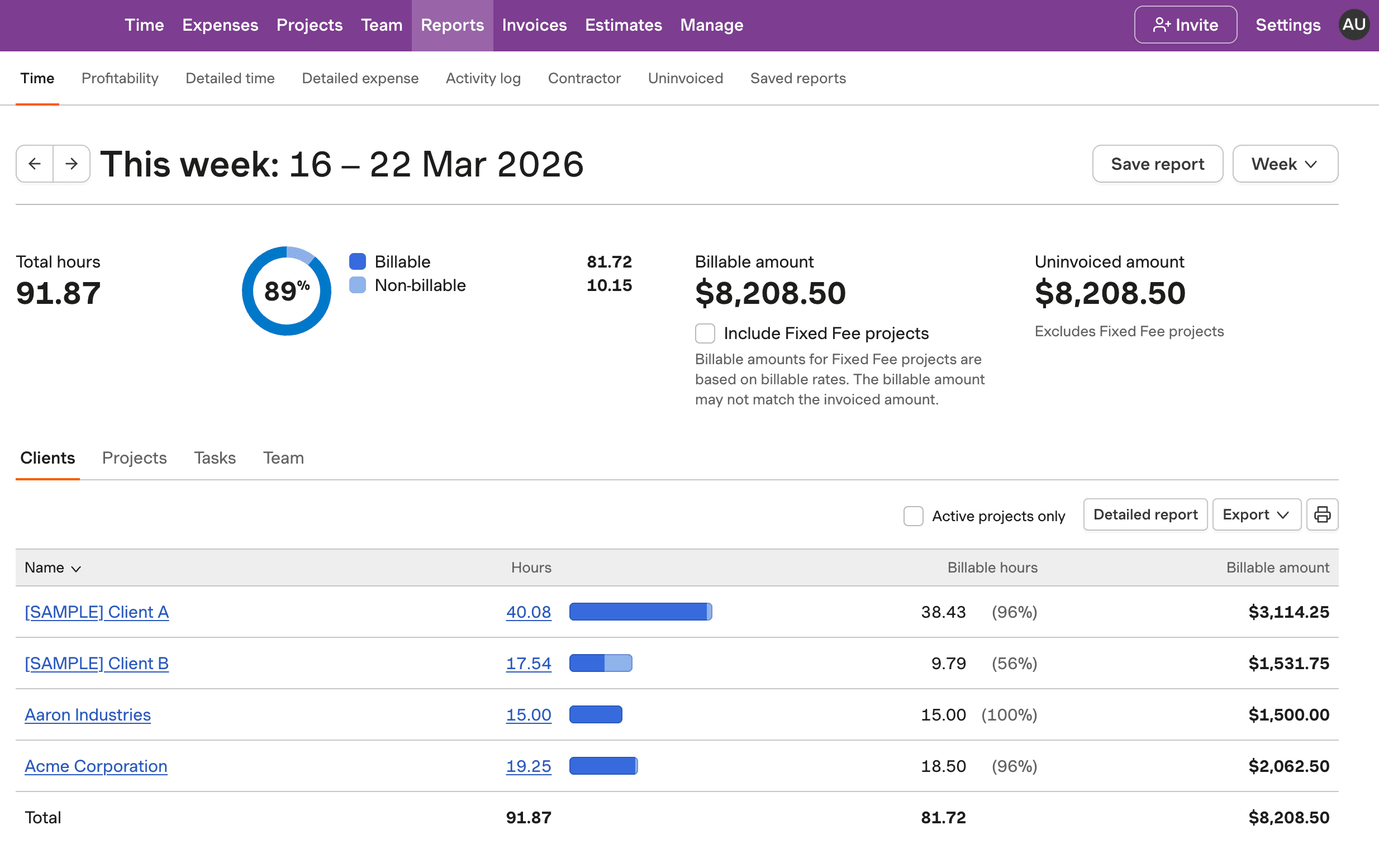
Showcasing Harvest's CRM integration, this preview highlights how you can manage projects efficiently and boost client satisfaction.

Screenshot of Harvest showing CRM integration in project management.

Project Management With Crm Integration FAQs

  • CRM integration enhances project management by unifying customer data with project workflows, improving efficiency and collaboration. This leads to better project outcomes, as evidenced by 87% of businesses reporting improvements post-integration. Additionally, CRM systems can increase sales revenue by 29% and boost customer retention by up to 27%.

  • Key features include centralized data organization, workflow automation, task and timeline tracking, and real-time analytics. These functionalities help streamline processes and enable data-driven decision-making, which can significantly improve project efficiency and client satisfaction.

  • Common challenges include poor user adoption, data quality issues, and integration complexity. Addressing these with comprehensive training, data quality management, and selecting compatible tools can mitigate risks and enhance integration success.

  • Success can be measured by tracking key performance indicators like sales revenue increases, forecast accuracy, and customer retention rates. Regular feedback and process optimization based on real-time data also help ensure the integration meets business needs.

  • Benefits include improved efficiency, enhanced customer satisfaction, and increased sales revenue. CRM integration provides a 360-degree view of customer interactions, enabling better decision-making and fostering cross-functional collaboration, which improves project outcomes.

  • Harvest offers time tracking and invoicing capabilities that complement CRM integration, helping teams manage projects efficiently and enhance client interactions. Its features support seamless data synchronization and workflow automation.

  • Industries such as construction, creative agencies, consulting, and IT services benefit significantly from CRM integration. These sectors see improved project timelines, enhanced client engagement, and streamlined internal processes, leading to better project outcomes.