
Harvest
Time Tracking
Sign up free

Project Management With Time Tracking

Ineffective time management costs billions annually. Harvest enhances project management with integrated time tracking and budgeting insights.

Try Harvest Free

Will this project be profitable?

Estimate your project cost, set the right price, and know exactly how many hours your team can spend before margin disappears.

Total hours across all team members
$
Average rate across all roles on the project
15%
Scope creep is real. Most projects need 10-25% buffer to stay profitable.
Recommended project price $0
Base cost (before buffer) $0
Hours per person per week 0h
Weekly burn rate $0
Max hours before loss 0h

Track project hours with Harvest

Walk through the entire flow below. Start a timer, check your reports, and create a real invoice — all in three clicks.

Go ahead — start tracking!

One click and you're timing. Try it right here: start a timer, add an entry, edit the details. This is exactly how it feels in Harvest.

  • One-click timer from browser, desktop & mobile
  • Works inside Jira, Asana, Trello, GitHub & 50+ tools
  • Duration or start/end — your call
  • Day, week & calendar views to stay on top of it all
  • Friendly reminders so no hour gets left behind
Acme Corp
Website Redesign
Homepage layout revisions
1:24:09
Content Strategy
Blog calendar planning
1:30:00
SEO Audit
Technical audit report
0:45:00
Brand Guidelines
Color system documentation
2:15:00
Logo Concepts
Initial sketches round 1
1:00:00

The Strategic Imperative of Time Tracking in Project Management

Time tracking is a strategic asset in project management, enabling organizations to optimize resources and manage budgets effectively. U.S. companies lose an estimated $588 billion annually due to inefficiencies in time management, primarily from distractions and inefficient task handling. Harvest addresses these challenges by offering robust time logging and resource management features.

Employees are productive for less than 3 hours a day, spending over half their time on low-value tasks such as redundant meetings and excessive emailing. By leveraging Harvest’s one-click timers and detailed reporting, teams can reclaim lost productivity and focus on high-value activities. This not only bridges the productivity gap but also transforms time tracking into a tool for strategic decision-making and improved project outcomes.
Core Benefits: Enhancing Budget, Resources, and Profitability

Integrated time tracking significantly enhances budget management, resource allocation, and project profitability. Harvest provides real-time visibility into project burn rates, allowing for accurate budget and cost management. By comparing planned versus actual hours, teams can prevent cost overruns and optimize resource deployment.

With Harvest, managers can balance workloads by identifying under or over-utilized resources, making informed staffing decisions. Additionally, using historical time data, teams can improve project forecasting, ensuring more realistic timelines and estimates. This transparency also extends to client invoicing, where Harvest ensures fair and defensible billing, strengthening client trust and satisfaction.

Essential Features of Integrated Time Tracking Solutions

Effective time tracking solutions like Harvest boast features that elevate project management. Granular time entry allows for task-level tracking with timers and manual timesheets, ensuring precise data capture. Financial controls in Harvest enable tracking of billable versus non-billable hours and comparing budgets to actuals, providing financial oversight.

Harvest’s reporting and analytics offer customizable dashboards for insights into project progress and team performance. Seamless integration with existing systems such as accounting and HR ensures a unified data ecosystem, eliminating data silos and enhancing accuracy. These comprehensive features make Harvest a critical tool for modern project management teams.

Best Practices for Successful Implementation and Adoption

Implementing a time tracking system like Harvest requires strategic planning and clear communication. Cultivating a culture of transparency is crucial, as it builds trust and accountability among teams. By clearly communicating the purpose of time tracking, organizations can foster a positive environment where employees understand its role in improving planning and workload fairness.

Starting with a phased rollout and providing thorough training ensures smooth adoption. Harvest facilitates this with user-friendly interfaces and comprehensive support. Regular reviews and feedback loops further enhance the process, allowing teams to refine practices and improve accuracy. Rather than focusing on micromanagement, Harvest empowers data-driven decision-making that enhances overall productivity.

Maximizing Value: Tracking Billable vs. Non-Billable Hours

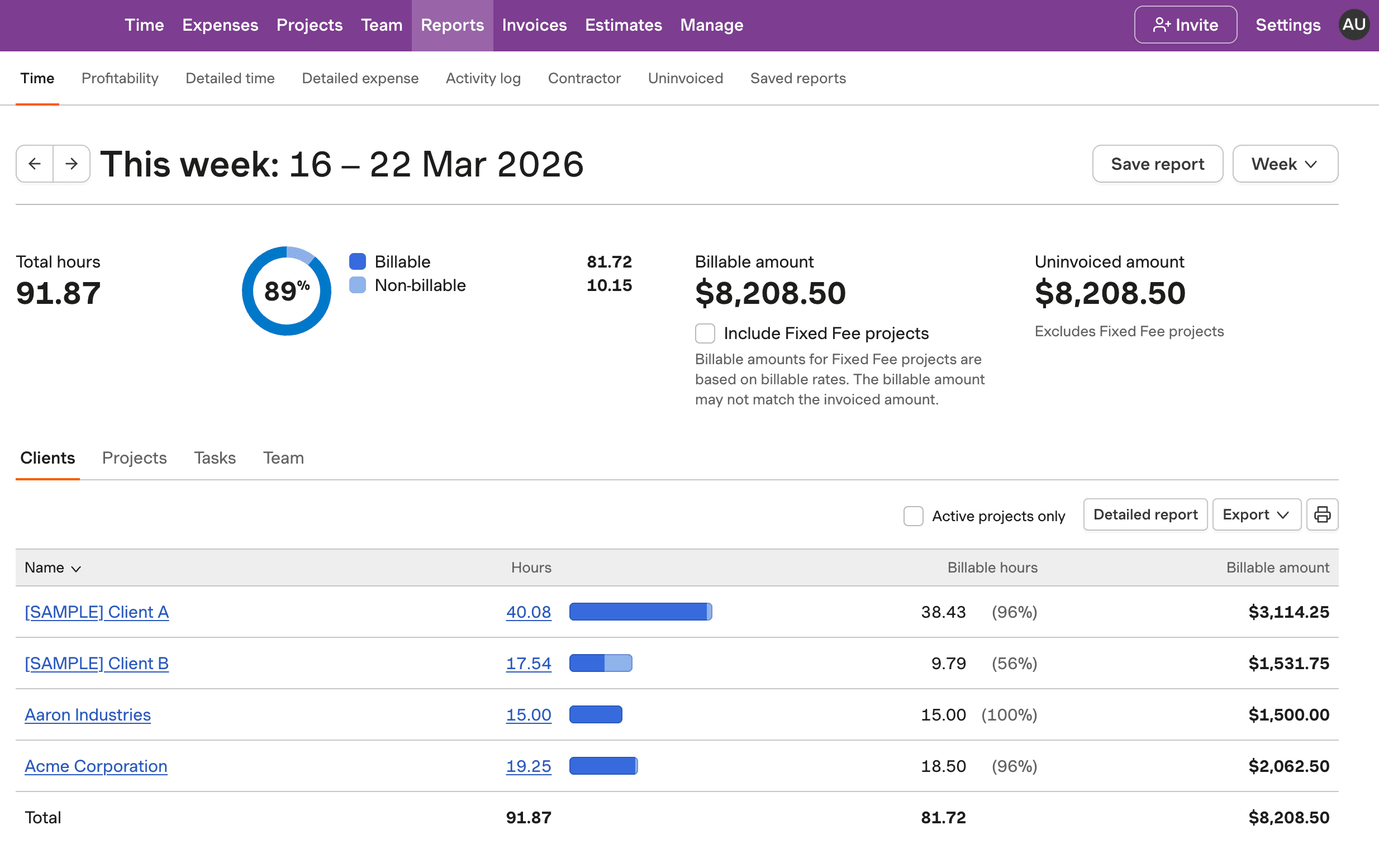
Understanding the distinction between billable and non-billable hours is crucial for project profitability. Harvest tracks both, allowing teams to assess profitability accurately and optimize resource allocation. By identifying profit drains and achieving target ratios, such as 70% billable to 30% non-billable, organizations can improve their financial performance.

Harvest’s insights into non-billable data help uncover hidden costs and improve internal efficiencies. This strategic use of time data informs staffing and pricing strategies, ensuring that every hour contributes effectively to project success and profitability.

Project Management With Time Tracking in Harvest

See how Harvest integrates time tracking with project management to optimize budgets and resources.

Screenshot of Harvest's project management time tracking dashboard

Project Management With Time Tracking FAQs

  • Time tracking enhances project management by providing transparency, optimizing resource allocation, and enabling accurate budget management. It boosts productivity and accountability, supporting effective future planning.

  • Tracking billable vs. non-billable hours improves profitability by identifying profit drains, ensuring accurate client invoicing, and aiding in better resource allocation. It supports data-driven decision-making and tracks internal efficiency.

  • Yes, seamless integration is crucial to avoid data silos and improve accuracy. Harvest integrates with tools like Asana, Trello, and QuickBooks, ensuring a unified data ecosystem.

  • Look for task-based time entry, budget tracking, billable/non-billable controls, approvals, reporting, and seamless integration with existing systems. Harvest offers these comprehensive features.

  • Harvest tracks both billable and non-billable hours, offering insights into project profitability. This helps teams identify areas for improvement and optimize resource allocation effectively.

  • To ensure accuracy, communicate the purpose clearly, provide training, and set clear guidelines. Harvest supports accuracy with one-click timers and detailed reporting, reducing manual errors.

  • Challenges include manual errors and time theft. Harvest addresses these with automated tracking, detailed reports, and integrations with tools like Slack for improved accuracy and accountability.