
Harvest
Time Tracking
Sign up free

Billable Hours Tracker for Recruiters

Harvest offers recruiters a powerful solution for tracking billable hours, reducing revenue loss by up to 25% and enhancing client reporting capabilities.

Try Harvest Free

How much revenue is your team leaving on the table?

Most agencies run at 55-60% utilization. Even a small improvement means significant revenue. See what closing the gap looks like for your team.

Number of people who track billable time
$
Blended rate across roles (junior, senior, lead)
55%
Percentage of total hours that are billable. Industry average is 55-60%.
75%
A realistic target for service businesses is 70-80%.
Monthly revenue gap $0
Revenue at current utilization $0/mo
Revenue at target utilization $0/mo
Extra billable hours needed per person/day 0h
Annual revenue opportunity $0

Start tracking team utilization

Walk through the entire flow below. Start a timer, check your reports, and create a real invoice — all in three clicks.

Go ahead — start tracking!

One click and you're timing. Try it right here: start a timer, add an entry, edit the details. This is exactly how it feels in Harvest.

  • One-click timer from browser, desktop & mobile
  • Works inside Jira, Asana, Trello, GitHub & 50+ tools
  • Duration or start/end — your call
  • Day, week & calendar views to stay on top of it all
  • Friendly reminders so no hour gets left behind
Acme Corp
Website Redesign
Homepage layout revisions
1:24:09
Content Strategy
Blog calendar planning
1:30:00
SEO Audit
Technical audit report
0:45:00
Brand Guidelines
Color system documentation
2:15:00
Logo Concepts
Initial sketches round 1
1:00:00

The Imperative of Billable Hour Tracking for Recruiters

Effective tracking of billable hours is crucial for recruiters, as it not only enhances operational efficiency but also ensures accurate client invoicing. Without a reliable tracking system, agencies risk significant revenue loss, with mid-sized firms potentially losing up to $430,000 annually due to manual time tracking errors. Additionally, up to 21.5% of billable hours can go unbilled, which can translate into a 15-25% loss in billable revenue.

Understanding the distinction between billable and non-billable activities is critical. Billable activities typically include candidate sourcing, screening, and interview coordination, while administrative tasks fall under non-billable hours. By implementing a structured tracking system, recruiters can build client trust through transparent and accurate billing, ultimately enhancing business relationships and profitability.
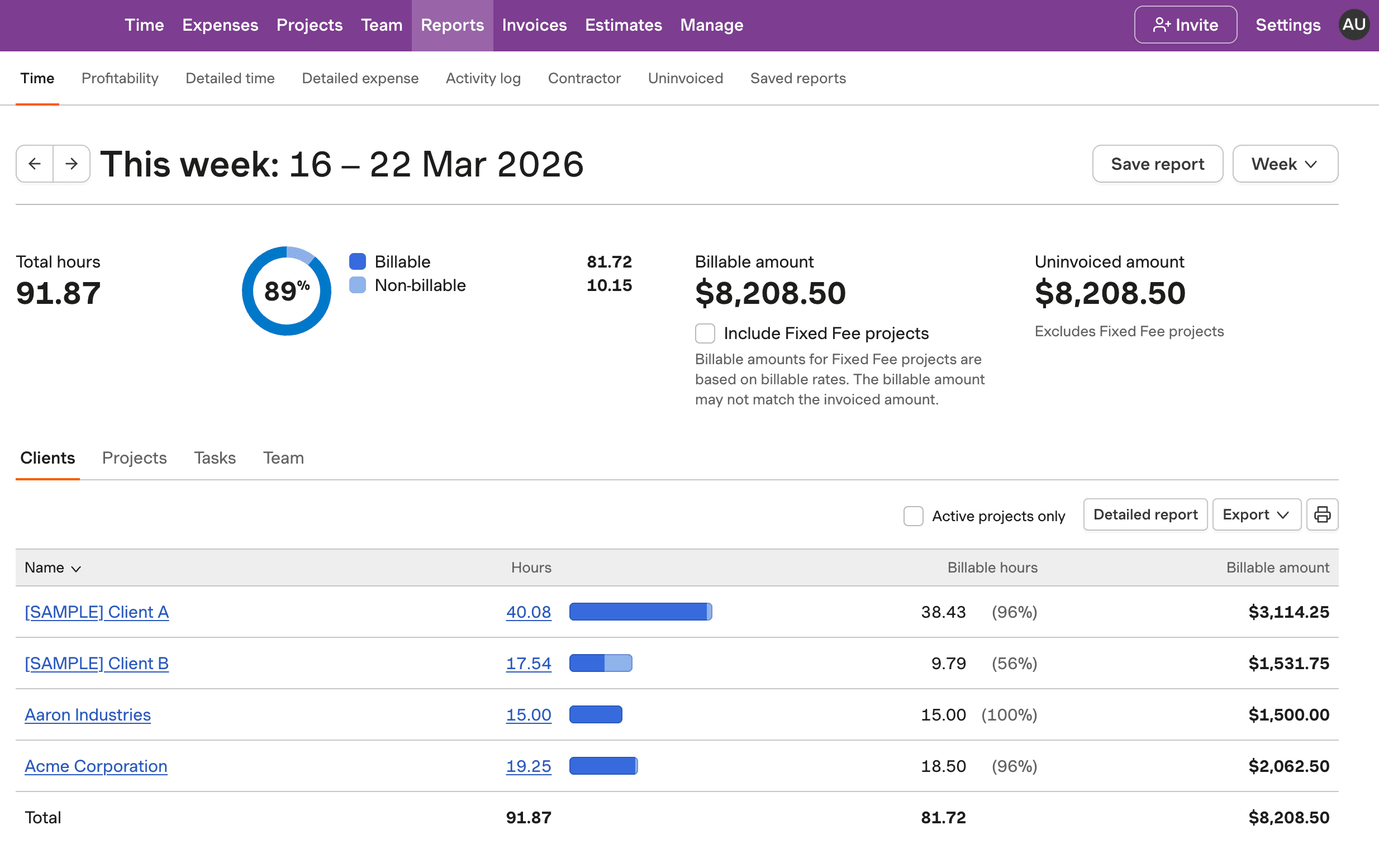
Key Features of a Billable Hours Tracker for Recruiters

A modern billable hours tracker should offer features tailored to the unique needs of recruiters. Essential functionalities include automated time capture and the ability to categorize projects and tasks. These tools must also provide robust client reporting capabilities, supporting customizable templates and automated calculations for transparent invoicing.

Seamless integration with existing software systems, such as Applicant Tracking Systems (ATS), HR platforms, and payroll services, is crucial. This integration facilitates a streamlined workflow and reduces administrative overhead. Additionally, advanced analytics can provide insights into productivity and profitability, aiding recruiters in making data-driven decisions. Mobile accessibility and a user-friendly interface further ensure that recruiters can track hours efficiently, regardless of location.

Best Practices for Maximizing Billable Hours and Compliance

To maximize billable hours and ensure compliance, recruiters should implement several best practices. Real-time tracking is essential, as it prevents the loss of billable minutes and improves the accuracy of time logs. Daily review workflows can help catch errors promptly, maintaining the integrity of time records.

Standardizing time logging increments, such as 6 or 15 minutes, ensures consistency across the team, while detailed task descriptions in time entries provide clarity and prevent client disputes. Furthermore, adherence to legal record-keeping requirements, like the FLSA's mandate for maintaining records for 2-3 years, is essential for compliance. Training teams on these practices fosters a culture of accurate time management, enhancing both efficiency and accountability.

Choosing the Right Billable Hours Tracker: Considerations and Options

Selecting the right billable hours tracker involves evaluating various factors. Pricing models, such as subscription, freemium, or usage-based, should align with the agency's budget and needs. Free and low-cost solutions can be ideal for smaller operations, offering basic functionalities without financial strain.

Integration capabilities with existing tech stacks are crucial for a seamless workflow, as is the scalability of the solution to accommodate growing agencies. Customization options allow for tailored features that meet specific operational requirements. By considering these factors, agencies can choose a tracker that not only fits their current needs but also supports future growth.

Track Billable Hours with Harvest

See how Harvest helps recruiters track billable hours and generate detailed client reports, enhancing transparency and efficiency.

Screenshot of Harvest's billable hours tracker for recruiters

Billable Hours Tracker for Recruiters FAQs

  • A billable hours tracker for recruiters should include automated time tracking, project and task categorization, client report generation, and invoicing capabilities. Integration with ATS and payroll systems is also crucial.

  • Recruiters can generate client reports using tools like Harvest, which offer customizable templates and export options such as PDF and Excel. These reports can detail hours worked per placement, enhancing transparency.

  • Yes, some platforms offer free plans with basic time tracking functionalities. These options often support unlimited users, making them suitable for small agencies or independent recruiters.

  • Harvest integrates seamlessly with various tools, including Applicant Tracking Systems (ATS), HR software, and project management platforms like Asana and Trello, facilitating a streamlined workflow.

  • Best practices include real-time tracking, categorizing tasks, consistent time logging increments, and providing detailed task descriptions. Regular reviews and compliance with legal record-keeping are also important.

  • Real-time tracking is crucial for recruiters as it ensures accurate billing and prevents the loss of billable minutes. It also improves the accuracy of time records and facilitates timely client invoicing.

  • Harvest allows recruiters to log unbilled time for tasks like candidate-client coordination and administrative work, helping agencies track all activities and improve operational insights.