
Harvest
Time Tracking
Sign up free

Labor Law Time Tracking

Harvest offers precise time tracking and reporting features that help ensure compliance with labor laws, avoiding legal disputes and penalties.

Try Harvest Free

How many hours did you work this week?

Enter your clock-in and clock-out times for each day. The calculator handles breaks, overtime, and weekly totals automatically.

Day Clock In Clock Out Break Hours
Total hours this week 0h
Regular hours (≤40) 0h
Overtime hours 0h
Average hours/day 0h
Total break time 0h

Track time automatically with Harvest

Walk through the entire flow below. Start a timer, check your reports, and create a real invoice — all in three clicks.

Go ahead — start tracking!

One click and you're timing. Try it right here: start a timer, add an entry, edit the details. This is exactly how it feels in Harvest.

  • One-click timer from browser, desktop & mobile
  • Works inside Jira, Asana, Trello, GitHub & 50+ tools
  • Duration or start/end — your call
  • Day, week & calendar views to stay on top of it all
  • Friendly reminders so no hour gets left behind
Acme Corp
Website Redesign
Homepage layout revisions
1:24:09
Content Strategy
Blog calendar planning
1:30:00
SEO Audit
Technical audit report
0:45:00
Brand Guidelines
Color system documentation
2:15:00
Logo Concepts
Initial sketches round 1
1:00:00

Understanding Federal Time Tracking Requirements: The FLSA Framework

Federal labor laws, primarily governed by the Fair Labor Standards Act (FLSA), establish foundational requirements for time tracking in the workplace. Under the FLSA, employers must accurately track all hours worked by non-exempt employees, including overtime, which must be compensated at a rate of 1.5 times the regular pay rate after 40 hours in a workweek. This ensures fair compensation and compliance with federal standards.

The FLSA provides flexibility in how employers track time, as long as the system is accurate and complete. Common methods include time clocks and manual time cards, but any reliable method is acceptable. Additionally, short rest breaks (5-20 minutes) must be paid, while meal periods can be unpaid if the employee is entirely free from duties. Employers can also round time entries to the nearest 5, 10, or 15 minutes, provided it is done neutrally and consistently, not always in favor of the employer.
Recordkeeping and Retention: What Employers Must Document

Accurate recordkeeping is a critical component of labor law compliance. The FLSA mandates that employers maintain detailed payroll and timekeeping records for each non-exempt employee, which must be readily available for inspection by the U.S. Department of Labor. These records include the employee's full name, Social Security number, address, and detailed work hours for each day and week.

Employers must retain payroll records for at least three years and supporting documents such as time cards and work schedules for at least two years. These records are essential for audits and verifying compliance with wage and hour laws. Any discrepancies or missing documentation can lead to significant legal and financial penalties, underscoring the importance of meticulous recordkeeping.

Navigating State-Specific Time Tracking Laws

State-specific regulations often impose stricter requirements than federal laws, making it crucial for employers to understand and comply with both. States like California, New York, and Washington have additional rules regarding overtime, meal breaks, and recordkeeping. For instance, California requires overtime pay after eight hours in a single day and mandates specific meal and rest breaks based on shift length, impacting how time must be tracked.

Employers operating in multiple states must be aware of varying state laws to ensure compliance across all locations. State laws can affect not only how time is tracked but also how records must be maintained and retained, adding complexity to time tracking practices. Failure to adhere to these laws can result in penalties, including back wages and statutory fines.

Exempt vs. Non-Exempt Employees: Different Rules for Different Roles

The distinction between exempt and non-exempt employees under the FLSA significantly impacts time tracking obligations. Non-exempt employees, typically paid hourly, must have all hours worked tracked and compensated according to minimum wage and overtime requirements. In contrast, exempt employees, usually salaried, are not required to track hours for FLSA purposes but can be required by employers for attendance or project tracking.

Misclassification of employees can lead to severe consequences, including back pay claims for unpaid overtime and legal penalties. Employers must ensure proper classification to apply the correct wage and hour rules, protecting themselves from legal disputes and financial liabilities.

Consequences of Non-Compliance and Best Practices for Employers

Non-compliance with labor law time tracking requirements can lead to significant penalties, including fines, back wages, and legal fees. Employers might also face reputational damage and the potential loss of contracts. Common mistakes include failing to pay for "off-the-clock" work, inaccurate rounding practices, and miscalculating overtime.

To avoid these pitfalls, employers should implement clear timekeeping policies, provide employee training, and utilize automated time tracking systems like Harvest. Harvest's robust time tracking and reporting features support accurate timesheet management, helping employers maintain compliance and avoid disputes. Regular audits and reviews of timekeeping practices further ensure adherence to legal standards.

Harvest and Labor Law Compliance

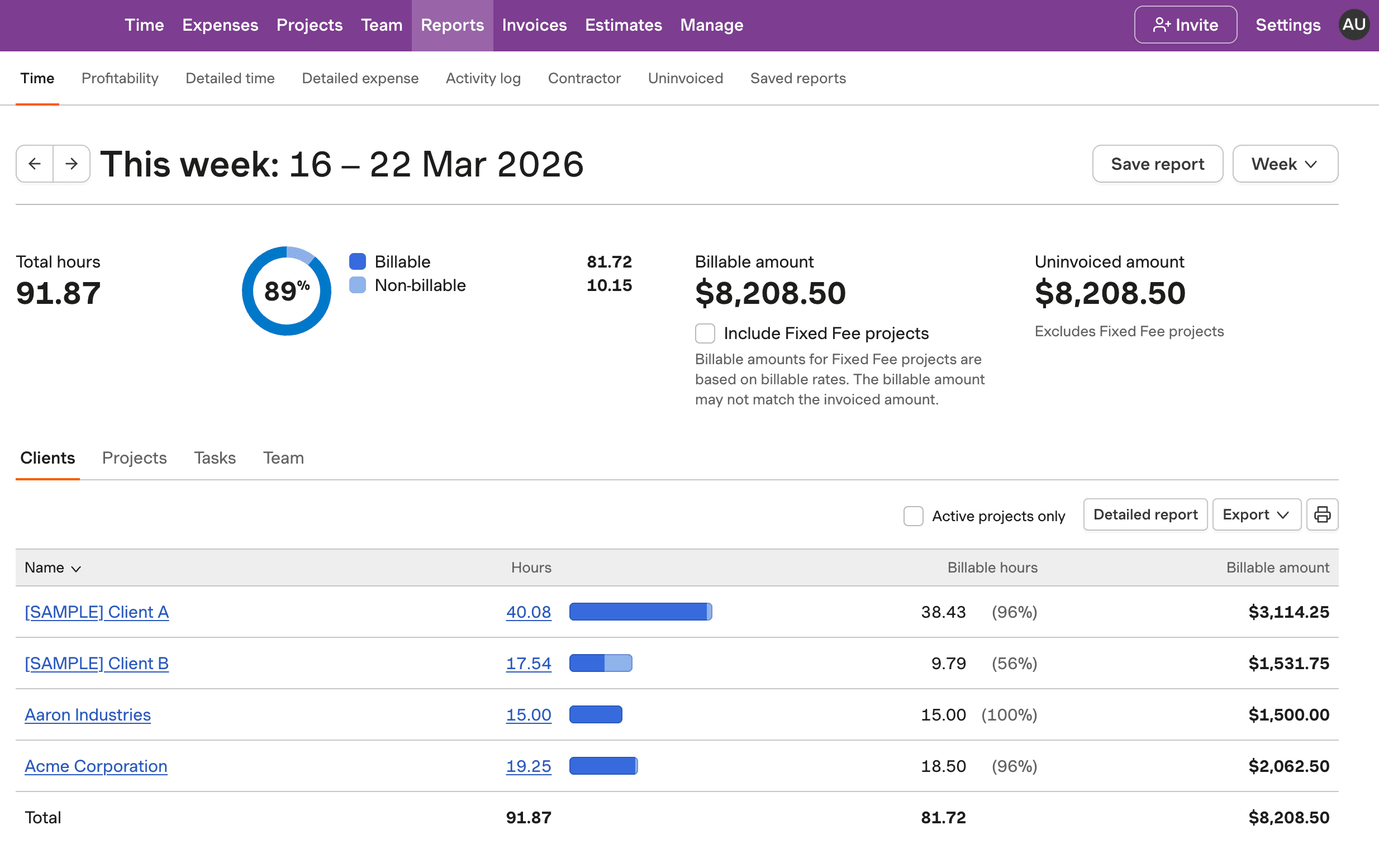
See how Harvest's time tracking features support compliance with labor laws, ensuring accurate records and avoiding disputes.

Harvest time tracking interface for labor law compliance

Labor Law Time Tracking FAQs

  • The Fair Labor Standards Act (FLSA) requires employers to track all hours worked by non-exempt employees, including overtime. Employers must maintain accurate records but have flexibility in the timekeeping method used.

  • State laws can impose stricter requirements than federal law, such as California's daily overtime rules and mandatory breaks. Employers must comply with both federal and state regulations to avoid penalties.

  • Employers must keep detailed records for each non-exempt employee, including hours worked, wages paid, and personal details. These records must be accessible for at least three years.

  • Non-compliance can lead to fines, back wages, and legal fees. Employers may also face reputational damage and potential loss of contracts. Accurate tracking helps avoid these issues.

  • Yes, non-exempt (hourly) employees must have all hours tracked and paid according to FLSA. Exempt (salaried) employees typically do not need to track hours but can be required for attendance or projects.

  • Harvest's time tracking and reporting features provide precise timesheet management, helping to avoid legal disputes and ensure compliance with wage and hour laws.

  • The FLSA allows rounding to the nearest 5, 10, or 15 minutes if applied consistently. However, some states, like California, may have stricter rules against rounding.

  • "Off-the-clock" work is any work done without compensation. It is illegal under labor laws, and employers must ensure all work is tracked and paid.

  • Harvest integrates with various tools and offers flexible time tracking options to help comply with different state regulations, ensuring accurate recordkeeping.