
Harvest
Time Tracking
Sign up free

Project Billing Calculator

Harvest simplifies project billing by providing detailed profitability analysis and efficient management, addressing issues like inaccurate billing and lost revenue.

Try Harvest Free

Will this project be profitable?

Estimate your project cost, set the right price, and know exactly how many hours your team can spend before margin disappears.

Total hours across all team members
$
Average rate across all roles on the project
15%
Scope creep is real. Most projects need 10-25% buffer to stay profitable.
Recommended project price $0
Base cost (before buffer) $0
Hours per person per week 0h
Weekly burn rate $0
Max hours before loss 0h

Track project hours with Harvest

Walk through the entire flow below. Start a timer, check your reports, and create a real invoice — all in three clicks.

Go ahead — start tracking!

One click and you're timing. Try it right here: start a timer, add an entry, edit the details. This is exactly how it feels in Harvest.

  • One-click timer from browser, desktop & mobile
  • Works inside Jira, Asana, Trello, GitHub & 50+ tools
  • Duration or start/end — your call
  • Day, week & calendar views to stay on top of it all
  • Friendly reminders so no hour gets left behind
Acme Corp
Website Redesign
Homepage layout revisions
1:24:09
Content Strategy
Blog calendar planning
1:30:00
SEO Audit
Technical audit report
0:45:00
Brand Guidelines
Color system documentation
2:15:00
Logo Concepts
Initial sketches round 1
1:00:00

Understanding Project Billing Models: Choosing the Right Fit

Choosing the right project billing model is crucial for ensuring profitability and clarity in project execution. Common models include Time and Materials (T&M), Fixed-Price, Milestone, Retainer-Based, and Value-Based Billing. Each model has distinct advantages depending on the project's scope and client relationship.

For instance, T&M is ideal when project scopes are uncertain, allowing for billing based on actual hours worked and materials used, often with a 30-60% markup on labor to cover overhead. In contrast, fixed-price billing is best for projects with well-defined parameters, offering predictability for both parties. Interestingly, research indicates that fixed-price models account for nearly 50% of net revenue in agencies.

Milestone billing ties payments to specific project phases, providing cash flow aligned with progress, while retainer-based billing secures ongoing engagement by reserving service availability. Value-based billing aligns fees with the impact delivered, potentially yielding higher profit margins by focusing on what the client values most. Harvest supports these strategies, enabling businesses to choose the best fit for their unique needs.
Calculating Project Profitability: Rates, Overheads, and Margins

Accurate calculation of project profitability is essential for maintaining a healthy business. This involves understanding components like direct labor costs, overhead, and profit margins. A healthy project profit margin typically ranges from 20% to 30%, while gross profit margins, excluding overhead, can be between 25% and 45%.

To calculate hourly rates, consider the fully loaded hourly rate, which includes salary, benefits, taxes, and a portion of overhead. The overhead multiplier is crucial, calculated by dividing total overhead costs by direct labor costs. For instance, an overhead multiplier of 1.50 means $1.50 is charged to cover $1 of overhead expenses.

Fixed-price projects often incorporate a 10-20% scope buffer and a 15-25% contingency buffer to safeguard against unforeseen changes. Harvest helps you calculate these rates and margins, providing detailed reports that aid in assessing project profitability and ensuring accurate financial planning.

Best Practices for Accurate and Transparent Project Billing

Implementing best practices in project billing helps prevent disputes and ensures financial transparency. Start with clear contracts and Statements of Work (SOW) that define project scope, deliverables, and billing methods upfront. This clarity is crucial for avoiding scope creep, a common challenge that threatens project profitability.

Accurate time and expense tracking is vital. Encourage daily logging of both billable and non-billable hours. Harvest streamlines this process with one-click timers and manual entry options, ensuring time is tracked efficiently. It also allows for tracking project-specific expenses, aiding in accurate billing.

Automating invoicing reduces manual errors and accelerates payment cycles. Harvest's integration capabilities help automate this process, ensuring invoices reflect actual work done. Regularly reviewing budgets and burn rates, especially in fixed-fee contracts, allows for early detection of overruns, maintaining project health.

Navigating Project Billing Challenges and Compliance

Project billing involves navigating challenges such as inaccurate time tracking, expense allocation, and compliance with tax laws. Understanding these challenges is key to maintaining project profitability and compliance with regulatory standards like GAAP and ASC 606.

Inaccurate time tracking can lead to revenue loss. Harvest addresses this with clear time entry guidelines and robust tracking tools, allowing teams to log time daily. Ensuring compliance with regional tax laws and industry-specific regulations is also crucial, particularly for multinational projects.

Managing long-term projects with unpredictable costs requires strategic planning. Harvest aids in this by offering detailed reports and tracking tools that keep teams informed about project progress and financial status. This ensures that projects remain profitable while adhering to necessary compliance standards.

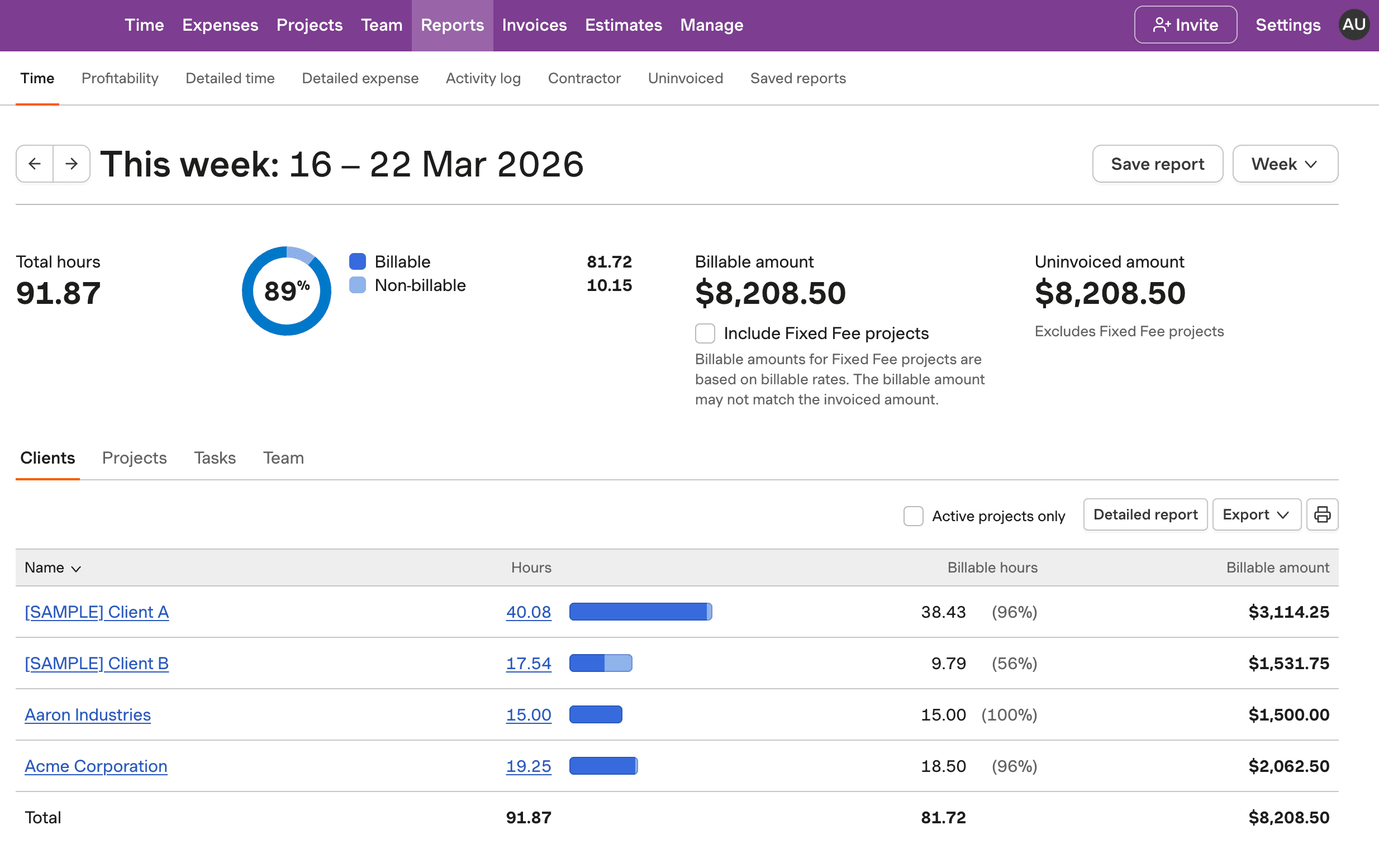
Discover Harvest's Project Billing Calculator

Harvest's project billing calculator provides detailed cost breakdowns and tracks billable hours, ensuring accurate profitability analysis.

Screenshot of Harvest's project billing calculator with detailed breakdowns.

Project Billing Calculator FAQs

  • A project billing calculator is a tool used to determine the total cost of a project, including labor, materials, overhead, and profit margins. It helps businesses accurately price their projects and generate invoices, ensuring financial transparency and profitability.

  • To calculate project profitability, consider all direct costs like labor and materials, as well as indirect costs like overhead. Subtract these from your total revenue to determine your net profit, aiming for a healthy margin of 20-30%. Harvest provides tools to track these elements accurately.

  • Harvest supports various billing models including Time and Materials, Fixed-Price, Milestone, Retainer-Based, and Value-Based Billing. This flexibility allows you to choose the best model for your project needs and client relationships.

  • Yes, Harvest allows you to track both delivery and billable hours. This ensures accurate billing and profitability analysis by capturing all hours worked and distinguishing between billable and non-billable time.

  • Preventing scope creep involves clear project definitions and effective change order management. Harvest helps by providing tools to document changes and track time, ensuring that all adjustments are accounted for in billing.

  • A healthy profit margin for a project typically ranges from 20% to 30%. This ensures that all costs are covered and a reasonable profit is made. Harvest provides detailed reporting to help you monitor and achieve these margins.

  • Harvest enables tracking of project-specific expenses and pass-through costs, ensuring accurate billing. This helps maintain profitability by capturing all costs associated with a project.