
Harvest
Time Tracking
Sign up free

Time and Attendance System

Payroll errors can cost businesses up to 8% of their total payroll expenses. Harvest addresses this with real-time project analysis and labor cost insights.

Try Harvest Free

How many hours did you work this week?

Enter your clock-in and clock-out times for each day. The calculator handles breaks, overtime, and weekly totals automatically.

Day Clock In Clock Out Break Hours
Total hours this week 0h
Regular hours (≤40) 0h
Overtime hours 0h
Average hours/day 0h
Total break time 0h

Track time automatically with Harvest

Walk through the entire flow below. Start a timer, check your reports, and create a real invoice — all in three clicks.

Go ahead — start tracking!

One click and you're timing. Try it right here: start a timer, add an entry, edit the details. This is exactly how it feels in Harvest.

  • One-click timer from browser, desktop & mobile
  • Works inside Jira, Asana, Trello, GitHub & 50+ tools
  • Duration or start/end — your call
  • Day, week & calendar views to stay on top of it all
  • Friendly reminders so no hour gets left behind
Acme Corp
Website Redesign
Homepage layout revisions
1:24:09
Content Strategy
Blog calendar planning
1:30:00
SEO Audit
Technical audit report
0:45:00
Brand Guidelines
Color system documentation
2:15:00
Logo Concepts
Initial sketches round 1
1:00:00

Understanding Time and Attendance Systems

A time and attendance system is crucial for any business looking to efficiently manage employee hours and enhance payroll accuracy. These digital solutions automate the monitoring of working hours, attendance, breaks, and overtime, transitioning from traditional manual methods to a seamless digital process. With businesses losing up to 7% of gross payroll due to time-tracking issues, an automated system reduces errors significantly. Over 75% of businesses are impacted by time theft, costing U.S. employers an estimated $373 million annually, emphasizing the necessity of accurate timekeeping.

Key features of modern systems include biometric scanners, RFID cards, PINs, mobile apps with GPS, and web portals. These methods prevent fraudulent activities like "buddy punching" and ensure compliance with labor laws. For instance, the Fair Labor Standards Act (FLSA) mandates record-keeping for hourly employees, and non-compliance can lead to penalties averaging $845 per employee annually. Therefore, a reliable time and attendance system is not just a convenience but a compliance necessity.
Key Benefits of Automated Time Tracking

Automated time tracking systems offer numerous benefits that enhance business operations. First and foremost, they provide enhanced accuracy by eliminating manual data entry mistakes, resulting in precise payroll calculations. Payroll errors can cost businesses 1-8% of their total payroll expenses, making these systems invaluable. Additionally, automated systems reduce time theft and unnecessary overtime, leading to significant cost savings.

These systems also improve operational efficiency by automating tedious tasks, thus freeing up time for HR and management. Real-time data facilitates better scheduling and resource allocation. Importantly, companies using automated systems reported a 90% decrease in compliance issues, a stark contrast to those relying on manual methods. Furthermore, robust compliance management helps businesses adhere to federal and state labor laws, preventing costly penalties. Features to look for include real-time tracking, automated overtime calculation, leave management, payroll integration, mobile access, and comprehensive reporting.

Navigating Compliance and Policy Challenges

Compliance with federal and state labor laws is a critical concern for businesses implementing time and attendance systems. Adhering to the Fair Labor Standards Act (FLSA) is essential, covering minimum wage, overtime, and record-keeping requirements. Non-compliance can result in significant penalties, with the Department of Labor collecting over $270 million in back wages due to violations. State-specific laws, such as California's stringent break requirements, add another layer of complexity.

To ensure compliance, businesses must maintain accurate, tamper-proof records and consider data privacy regulations like GDPR. Common pitfalls include misclassification of employees, incorrect overtime calculations, and failure to provide mandated breaks. Establishing clear, written attendance policies is vital, as is conducting regular audits and compliance checks. Training employees on system usage and compliance protocols further mitigates risks.

Implementing and Customizing Time and Attendance Solutions

Choosing the right time and attendance system requires careful consideration of business size, employee types, and industry-specific needs. For instance, the construction industry benefits from GPS tracking and job costing features, while hospitality industries require solutions that handle split shifts and tip credits. The healthcare sector needs systems that accommodate strict staffing ratios and fatigue rules, while retail must address diverse labor roles and minor labor laws.

Integration with existing HR, payroll, and scheduling systems is crucial for seamless data transfer and reduced manual entry errors. Businesses should prioritize scalability and flexibility to adapt to growth and evolving labor laws. Successful implementation also hinges on employee adoption strategies, which include communicating system benefits, providing training, and offering self-service options to encourage acceptance.

Harvest Time and Attendance System

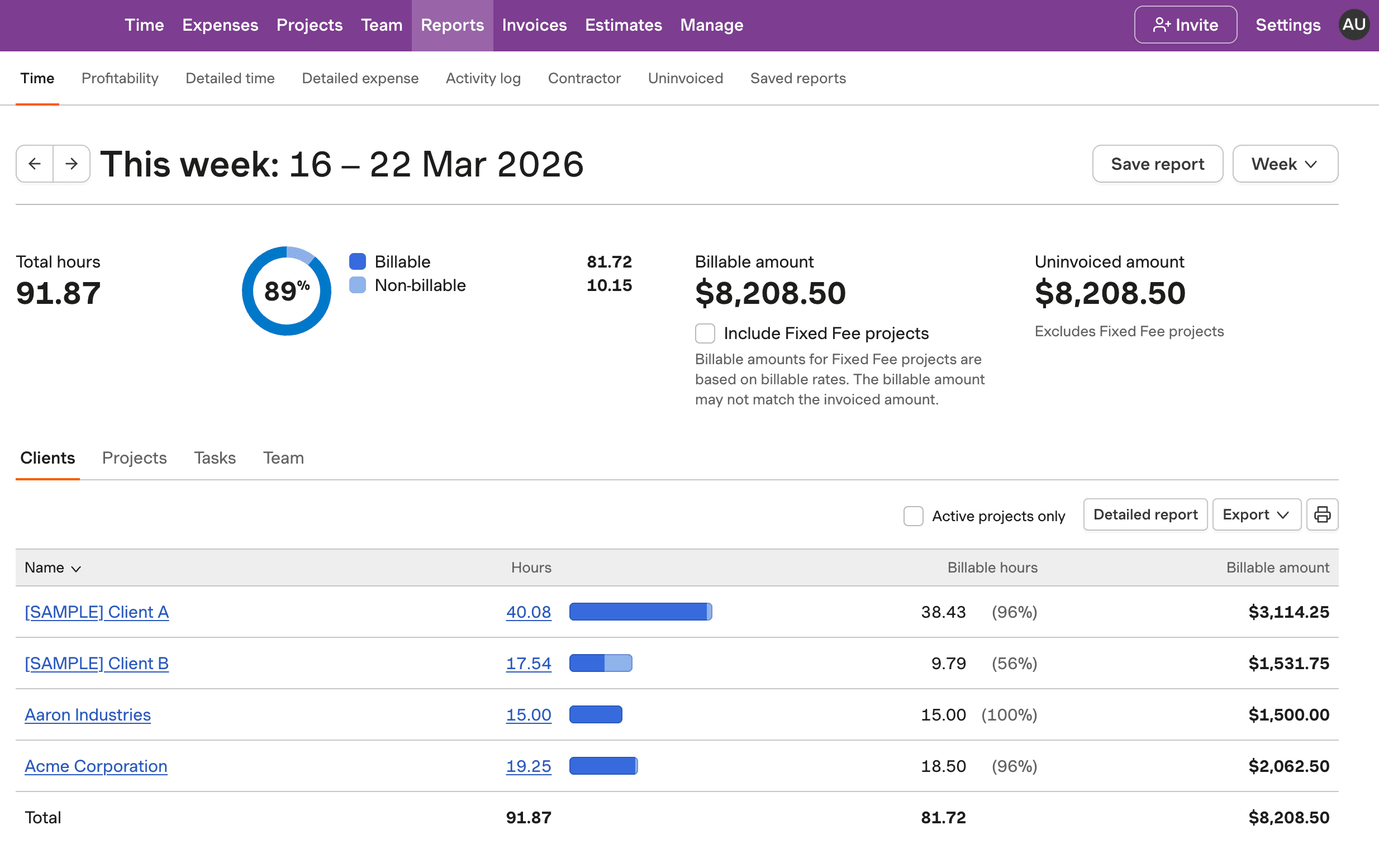
The preview shows Harvest's detailed project analysis and real-time insights, helping manage employee hours and payroll accuracy.

Harvest time tracking tool for managing employee hours and payroll accuracy

Time and Attendance System FAQs

  • Look for features such as accurate time tracking, automated overtime calculation, leave management, payroll integration, and reporting. Systems with biometric authentication and mobile apps with GPS tracking are also beneficial to prevent time theft.

  • By automating data entry and calculations, these systems eliminate manual errors. This ensures precise payroll processing, reducing payroll errors that can cost businesses 1-8% of their total payroll expenses.

  • Ensure compliance with federal laws like the Fair Labor Standards Act (FLSA) and state-specific regulations. Key areas include accurate record-keeping, correct overtime calculations, and privacy laws like GDPR.

  • Automated systems significantly decrease compliance issues by ensuring accurate time records and adherence to labor laws. Companies using these systems report a 90% reduction in compliance problems compared to manual methods.

  • Yes, many systems offer seamless integration with payroll and HR software, facilitating automatic data transfer and reducing the chances of manual entry errors.

  • Implement features like biometric authentication or GPS tracking to prevent fraudulent activities such as "buddy punching." These features ensure employees are physically present when clocking in and out.

  • Industries like construction, hospitality, healthcare, and retail benefit greatly from these systems due to their specific needs for tracking labor, managing shifts, and ensuring compliance with industry-specific regulations.

  • While Harvest specializes in project analysis and reporting, it offers real-time insights into labor costs and productivity, essential for effective time management and payroll accuracy.