
Harvest
Time Tracking
Sign up free

Time Clock for Multiple Locations

Managing employee attendance across multiple locations can be challenging, but Harvest simplifies it with standardized time tracking and unified reporting.

Try Harvest Free

How much revenue is your team leaving on the table?

Most agencies run at 55-60% utilization. Even a small improvement means significant revenue. See what closing the gap looks like for your team.

Number of people who track billable time
$
Blended rate across roles (junior, senior, lead)
55%
Percentage of total hours that are billable. Industry average is 55-60%.
75%
A realistic target for service businesses is 70-80%.
Monthly revenue gap $0
Revenue at current utilization $0/mo
Revenue at target utilization $0/mo
Extra billable hours needed per person/day 0h
Annual revenue opportunity $0

Start tracking team utilization

Walk through the entire flow below. Start a timer, check your reports, and create a real invoice — all in three clicks.

Go ahead — start tracking!

One click and you're timing. Try it right here: start a timer, add an entry, edit the details. This is exactly how it feels in Harvest.

  • One-click timer from browser, desktop & mobile
  • Works inside Jira, Asana, Trello, GitHub & 50+ tools
  • Duration or start/end — your call
  • Day, week & calendar views to stay on top of it all
  • Friendly reminders so no hour gets left behind
Acme Corp
Website Redesign
Homepage layout revisions
1:24:09
Content Strategy
Blog calendar planning
1:30:00
SEO Audit
Technical audit report
0:45:00
Brand Guidelines
Color system documentation
2:15:00
Logo Concepts
Initial sketches round 1
1:00:00

The Multi-Location Time Tracking Challenge: Why a Unified Approach Matters

Managing employee attendance across multiple locations can be a logistical nightmare without a unified time tracking system. Inconsistencies in timekeeping practices often lead to compliance risks, increased labor costs, and administrative headaches. For example, traditional systems might miss nuances like state-specific time-tracking laws that require daily records for all employees, as seen in states like Illinois and Rhode Island. Additionally, varying overtime regulations and predictive scheduling laws in California, Oregon, and Washington add layers of complexity.

To address these challenges, a unified system like Harvest can offer real-time oversight and streamline management across dispersed locations. Harvest's standardized time tracking methods ensure consistency, while its role-based access control enables local managers to approve time and expenses efficiently. This centralized approach helps mitigate compliance risks and improves operational efficiency across all sites.
Essential Features of Modern Multi-Location Time Clock Systems

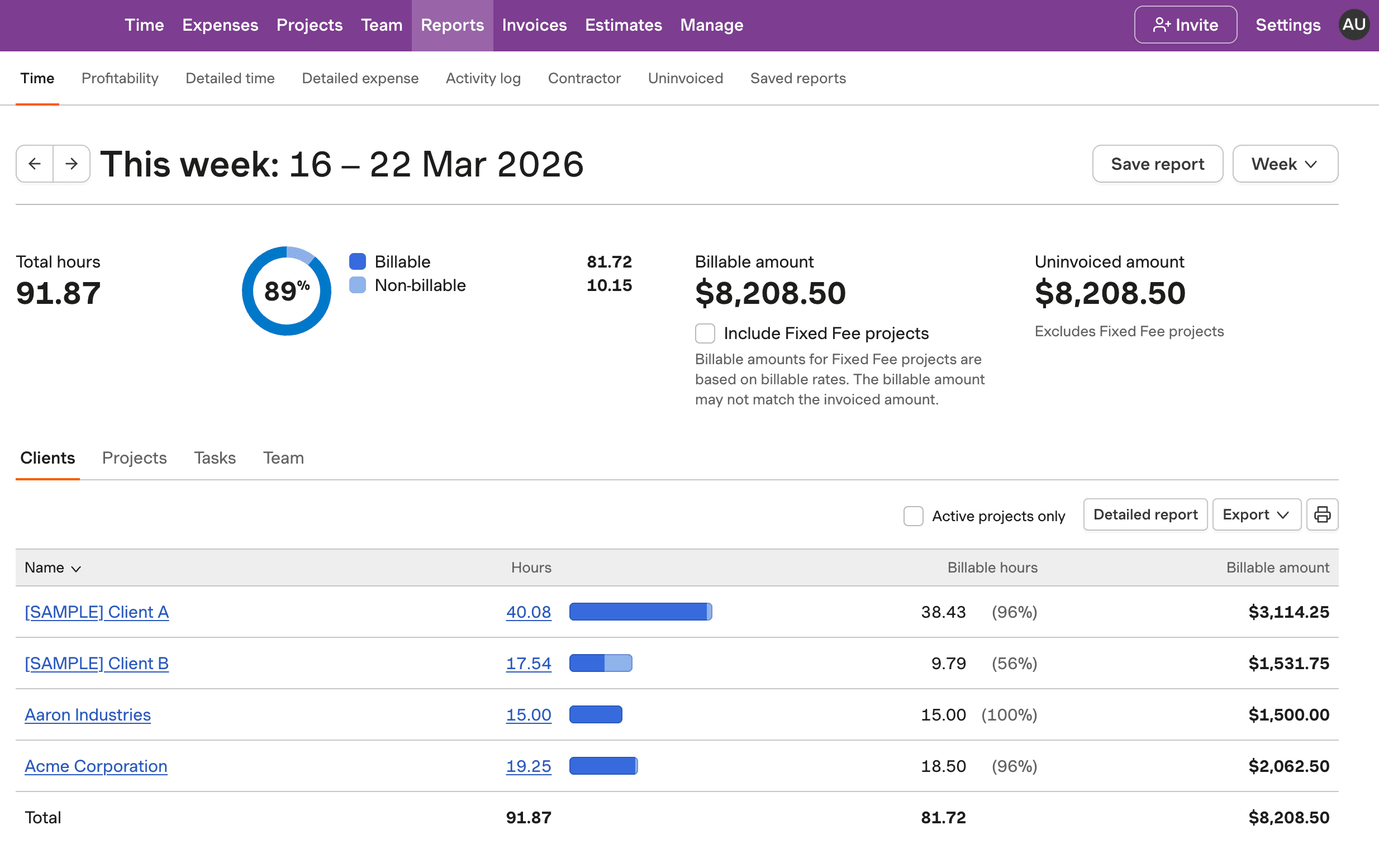
When evaluating time clock systems for multiple locations, it's crucial to look for features that enhance operational efficiency and compliance. A centralized dashboard with cloud integration is essential for real-time visibility and data consolidation from a single interface. For example, Harvest provides unified reporting capabilities, allowing managers to compare performance across different sites seamlessly.

Other critical features include GPS tracking and geofencing to verify employee locations at clock-in/out, reducing time theft and ensuring accountability. Multiple clock-in methods, such as mobile apps and biometric devices, cater to diverse work environments. Furthermore, systems with automated scheduling and alerts streamline shift management and ensure adequate staffing, while offline capabilities ensure continuous tracking even without internet access.

Navigating Compliance: Labor Laws and Risk Mitigation

Ensuring compliance with federal and state labor laws is a top priority for businesses operating across multiple locations. The Federal Labor Standards Act (FLSA) requires accurate records of employee working hours, and non-exempt employees must receive overtime pay at 1.5 times their regular rate for hours worked over 40 per week. Additionally, states like California have adopted predictive scheduling laws, demanding advance shift notices.

To mitigate risks, businesses should use systems that provide detailed, tamper-proof records for compliance audits. Harvest excels in this area with its standardized time tracking and comprehensive audit trails. Understanding GPS tracking legality is also crucial; in states like California and Illinois, consent is required for tracking on any device. These measures help businesses avoid costly compliance fines and disputes.

Implementing a Multi-Location Time Clock: Best Practices and Considerations

Implementing a time clock system that spans multiple locations requires careful planning and execution. Standardizing timekeeping policies across all locations is the first step. This includes establishing clear clock-in/out procedures and break tracking rules. Harvest supports this with its standardized time tracking methods, reducing inconsistencies and ensuring compliance.

Gaining employee buy-in is also essential. Addressing privacy concerns and communicating the benefits of the system can foster trust and adoption. Scalability is another key consideration; choose a system like Harvest that can grow with your business. Finally, providing comprehensive training for managers and employees on system usage and compliance will ensure smooth implementation and operation.

Cost Implications and Return on Investment (ROI)

Understanding the cost implications of implementing a multi-location time clock system is crucial for achieving a positive return on investment. Pricing models vary, with some systems offering subscription tiers based on the number of employees and locations. For instance, fees might start at $19.00 per month for 1-10 employees at a single location, increasing to $28.00 for two locations.

While initial costs may include implementation fees and training, the potential savings from reducing time theft and minimizing payroll errors are significant. Multi-state employers in the U.S. spend over $20 billion annually on wage-and-hour violations, highlighting the importance of compliance. Harvest's time tracking capabilities help avoid such fines and improve operational efficiency, delivering a substantial ROI.

Manage Time Across Locations with Harvest

Harvest offers a unified time tracking solution for multiple locations, featuring standardized tracking methods and role-based access control.

Harvest time clock interface for managing multiple locations

Time Clock for Multiple Locations FAQs

  • Look for features like a centralized dashboard, GPS tracking, multiple clock-in methods, and cloud integration. These ensure real-time visibility and data consolidation. Harvest offers these essential features, enhancing operational efficiency and compliance.

  • A time clock system ensures compliance by providing accurate records of working hours, adhering to FLSA and state-specific laws. Harvest's audit trails and standardized time tracking methods help businesses meet these requirements, reducing the risk of fines.

  • GPS tracking verifies employee locations at clock-in/out, preventing time theft and ensuring accountability. In states requiring consent, systems like Harvest address these legalities, providing a compliant solution for multi-location tracking.

  • Time clock systems integrate with payroll and HR software to streamline operations and reduce manual data entry. Harvest offers seamless integration, ensuring consistent data flow and minimizing errors.

  • Costs vary by system, often including subscription tiers based on employees and locations. Potential savings from reduced time theft and payroll errors can offset initial costs. Harvest provides a cost-effective solution with a strong ROI.

  • Yes, Harvest is designed to manage time tracking for remote and field employees. With features like GPS tracking and mobile clock-ins, it ensures accurate records and compliance across various job sites.

  • Harvest prioritizes data security and privacy by using advanced measures to protect employee data. It clearly communicates what data is tracked and how it's used, addressing privacy concerns effectively.