
Harvest
Time Tracking
Sign up free

Time Tracking for Capacity Planning

Harvest addresses the critical need for precise time tracking in capacity planning, optimizing resource management and ensuring project success.

Try Harvest Free

How much revenue is your team leaving on the table?

Most agencies run at 55-60% utilization. Even a small improvement means significant revenue. See what closing the gap looks like for your team.

Number of people who track billable time
$
Blended rate across roles (junior, senior, lead)
55%
Percentage of total hours that are billable. Industry average is 55-60%.
75%
A realistic target for service businesses is 70-80%.
Monthly revenue gap $0
Revenue at current utilization $0/mo
Revenue at target utilization $0/mo
Extra billable hours needed per person/day 0h
Annual revenue opportunity $0

Start tracking team utilization

Walk through the entire flow below. Start a timer, check your reports, and create a real invoice — all in three clicks.

Go ahead — start tracking!

One click and you're timing. Try it right here: start a timer, add an entry, edit the details. This is exactly how it feels in Harvest.

  • One-click timer from browser, desktop & mobile
  • Works inside Jira, Asana, Trello, GitHub & 50+ tools
  • Duration or start/end — your call
  • Day, week & calendar views to stay on top of it all
  • Friendly reminders so no hour gets left behind
Acme Corp
Website Redesign
Homepage layout revisions
1:24:09
Content Strategy
Blog calendar planning
1:30:00
SEO Audit
Technical audit report
0:45:00
Brand Guidelines
Color system documentation
2:15:00
Logo Concepts
Initial sketches round 1
1:00:00

The Strategic Imperative of Time Tracking for Capacity Planning

Time tracking is a fundamental component in effective capacity planning, offering the data-driven insights necessary for precise resource management. Organizations that leverage time tracking can achieve utilization rates of 70-80%, ensuring that team members are neither overburdened nor underutilized. This balance is crucial for maintaining employee morale and optimizing team productivity. By accurately tracking time, businesses can significantly improve project forecasting accuracy, ultimately reducing financial risks and boosting profitability.

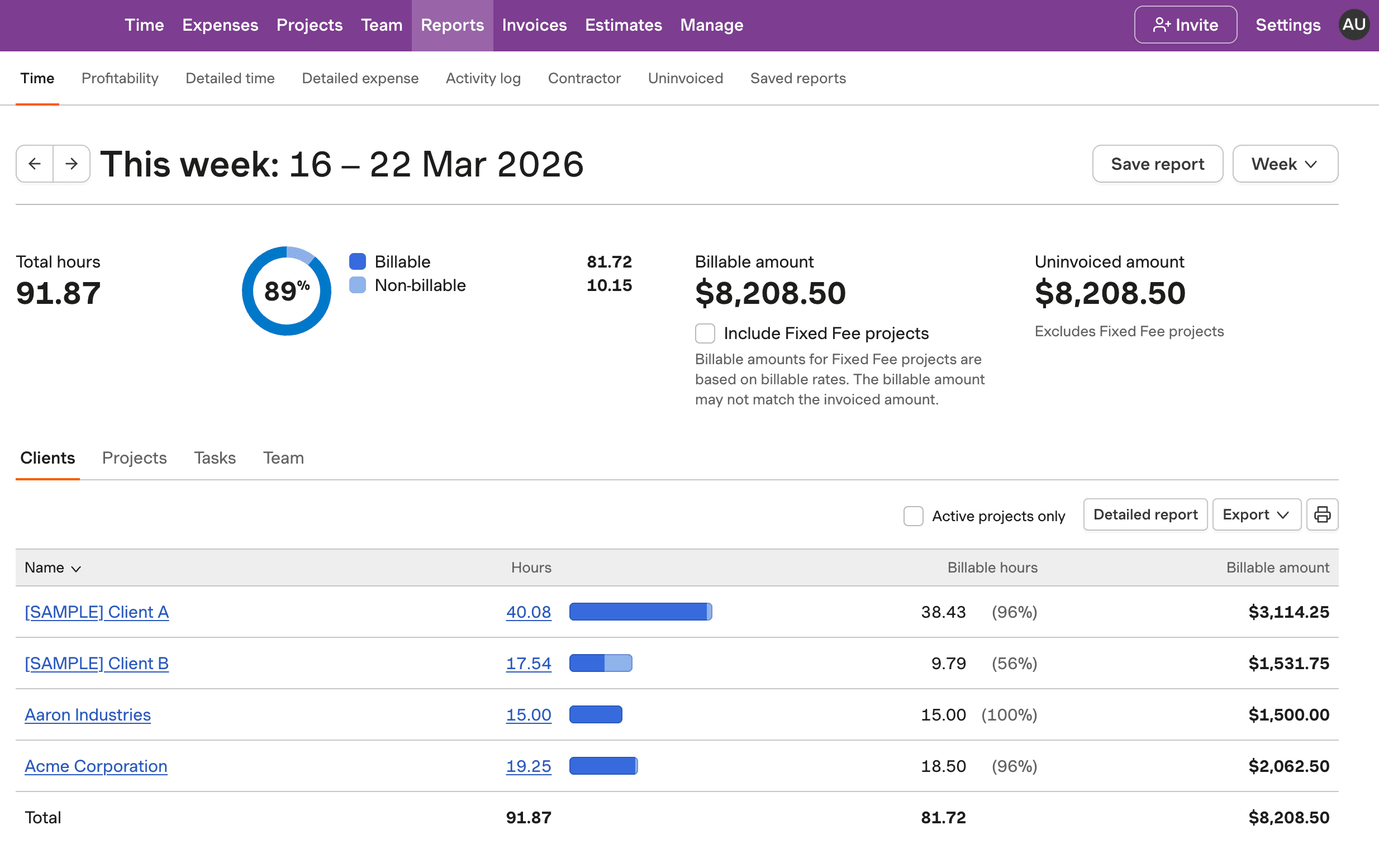
Harvest stands out in this space by providing detailed reports on resource utilization. These insights inform key capacity decisions, allowing teams to allocate resources efficiently and prevent costly project overruns. For companies that bill clients based on hours worked, precise time tracking directly impacts profitability by ensuring accurate invoicing and maximizing billable hours. With Harvest, businesses gain transparency into project progress and can communicate this effectively to clients and stakeholders.
Core Features of Effective Capacity Planning Tools

Effective capacity planning tools must offer a range of features that streamline resource management. Real-time visibility is essential, with dashboards and heatmaps illustrating current resource utilization and availability. This visibility enables dynamic adjustments, ensuring teams can handle workload fluctuations without compromising on deadlines or quality.

Harvest excels in demand forecasting and scenario analysis, allowing managers to predict future workloads and model various resource allocation scenarios. This capability is enhanced by Harvest’s seamless integration with project management tools like Asana and Trello, which centralizes data and facilitates informed decision-making. Additionally, Harvest's reporting and analytics features provide customizable insights into utilization rates, helping identify areas for improvement.

Implementing Best Practices for Optimal Capacity Planning

To maximize the benefits of time tracking in capacity planning, organizations must implement best practices that foster a culture of strategic resource management. Treating time tracking as a tool for team well-being and success, rather than micromanagement, is crucial. Standardizing task categories across the organization ensures consistent data entry, which is vital for accurate analysis.

Harvest supports this strategic approach by allowing teams to track all hours, including non-billable activities, providing a comprehensive view of workforce capacity. Regular review of capacity metrics helps teams proactively adapt plans to address bottlenecks or underutilization. By leveraging automation, such as Harvest's customizable workflows and automated alerts for overbooked resources, organizations can reduce manual data entry and enhance data accuracy.

Overcoming Common Challenges in Capacity Planning

Capacity planning often encounters challenges such as inaccurate forecasting and lack of real-time visibility. Harvest addresses these issues by integrating time tracking data with project management tools, providing up-to-date insights into resource availability and project progress. This integration enables more realistic estimates and dynamic adjustments to resource allocation.

By accounting for both billable and non-billable time, Harvest prevents over-allocation of resources, which can negatively impact team morale. Additionally, tracking resource skills and competencies ensures that tasks are assigned to the most suitable team members, mitigating skill shortages. Investing in purpose-built tools like Harvest allows organizations to avoid time-consuming manual processes, enhancing overall efficiency in capacity planning.

Discover Harvest for Capacity Planning

See how Harvest's time tracking enhances capacity planning with insights into resource management and project success.

Harvest time tracking interface for capacity planning

Time Tracking for Capacity Planning FAQs

  • Time tracking provides valuable data that informs resource allocation, improves project planning, and identifies bottlenecks. By understanding how time is spent, organizations can optimize workflows and prevent employee burnout.

  • Look for features such as real-time visibility, demand forecasting, workload management, and integration capabilities with project management software. These features help streamline resource management and enhance forecasting accuracy.

  • Yes, Harvest integrates with various project management tools like Asana and Trello, enabling seamless workflows and centralized data management. This integration enhances project forecasting and resource allocation.

  • Harvest, when integrated with Forecast, provides real-time visibility into team capacity and sends automated alerts for overbooked resources, helping prevent burnout and ensuring balanced workloads.

  • Yes, some tools offer free plans with limited features, often suitable for smaller teams. Harvest provides a free 30-day trial, allowing users to explore its comprehensive features for time tracking and capacity planning.

  • Multitasking can reduce productivity by up to 45%. Time tracking helps identify time-consuming tasks, allowing teams to refine workflows and enhance overall productivity.

  • Harvest improves forecasting accuracy by integrating time tracking data with project management tools, providing real-time insights into project progress and resource availability. This enables more precise planning and allocation.

  • Tracking non-billable time gives a complete picture of workforce capacity, helping prevent over-allocation of resources and ensuring accurate capacity assessments. Harvest allows for comprehensive time tracking, including non-billable activities.