
Harvest
Time Tracking
Sign up free

Time Tracking Notion Integration

Struggling with time tracking in Notion? Harvest offers seamless integration through browser extensions, enhancing your workflow efficiency.

Try Harvest Free

What should you charge per hour?

Most freelancers and consultants dramatically undercharge. This calculator accounts for what most people miss: non-billable time, taxes, and overhead.

$
Accounting for vacation, holidays, sick days
60%
Most freelancers can bill 50-70% of their time. The rest goes to admin, marketing, proposals, and learning.
$
Software, insurance, equipment, accounting, taxes beyond income tax, etc.
Your break-even rate $0
Recommended rate (+20% buffer) $0
Billable hours per week 0h
Equivalent daily rate $0

Start tracking your billable hours

Walk through the entire flow below. Start a timer, check your reports, and create a real invoice — all in three clicks.

Go ahead — start tracking!

One click and you're timing. Try it right here: start a timer, add an entry, edit the details. This is exactly how it feels in Harvest.

  • One-click timer from browser, desktop & mobile
  • Works inside Jira, Asana, Trello, GitHub & 50+ tools
  • Duration or start/end — your call
  • Day, week & calendar views to stay on top of it all
  • Friendly reminders so no hour gets left behind
Acme Corp
Website Redesign
Homepage layout revisions
1:24:09
Content Strategy
Blog calendar planning
1:30:00
SEO Audit
Technical audit report
0:45:00
Brand Guidelines
Color system documentation
2:15:00
Logo Concepts
Initial sketches round 1
1:00:00

Foundations of Time Tracking in Notion: Manual Methods and Formulas

Integrating time tracking within Notion can significantly enhance productivity for freelancers and teams. However, Notion lacks a native timer function, requiring users to adopt manual methods for time logging. By creating a database specifically for time tracking, users can utilize properties like "Start time" and "End time" to manually log hours. This setup is crucial for those who prefer a hands-on approach to time management.

Using Notion's formula property, users can calculate the duration between start and end times with simple formulas like dateBetween(prop("End Time"), prop("Start Time"), "minutes"). This allows for a conversion of minutes into hours, making it easier to track billable time accurately. While manual entry may seem cumbersome, it empowers users with full control over their time management process.
Automating Time Tracking in Notion with Buttons and Relations

For those seeking efficiency, automating time tracking in Notion is a game-changer. By leveraging the "Button" property, users can implement one-click actions to start and stop time tracking. This feature simplifies the process by automatically updating "Start time" and "End time" fields, thereby reducing the risk of human error.

Furthermore, integrating this setup with existing project databases through "Relation" and "Roll-up" properties allows for aggregated time tracking. This means users can sum up hours across multiple tasks or projects, providing a comprehensive view of time allocation. Such automation not only streamlines operations but also ensures accurate reporting and billing.

Advanced Time Tracking Strategies: Customization and External Integrations

As users become more adept at time tracking in Notion, exploring advanced strategies can unlock greater potential. Customizing formulas to format durations as HH:MM can enhance data presentation, making reports more intuitive. For users needing real-time tracking and advanced analytics, third-party integrations might be the answer.

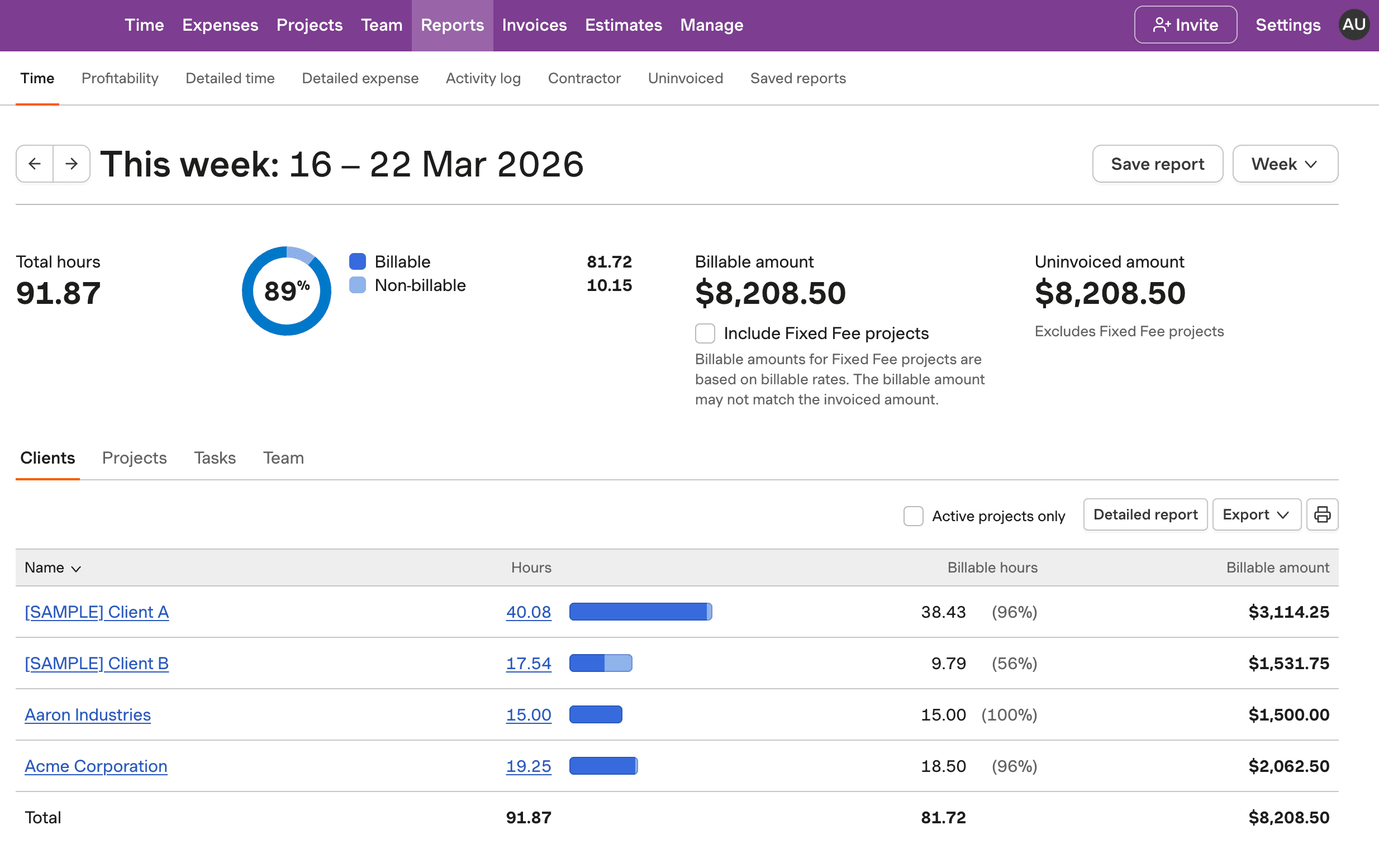
External tools often provide additional features such as automatic timers, detailed analytics, and payroll functions. For instance, integrating Harvest with Notion through browser extensions can automate time entry, offering a seamless tracking experience. This approach is ideal for teams looking to balance Notion's flexibility with sophisticated tracking capabilities.

Time Tracking with Harvest

Discover how Harvest integrates with Notion for seamless time tracking, enhancing productivity and project management.

Screenshot of Harvest integrated with Notion for time tracking

Time Tracking Notion Integration FAQs

  • To manually track time in Notion, create a database for time entries with "Start time" and "End time" date properties. Use formulas like dateBetween() to calculate durations. This method allows for detailed tracking without additional tools.

  • Yes, you can automate time tracking in Notion using the "Button" property. Configure buttons to automatically record "Start time" and "End time" for tasks, reducing manual input and improving accuracy.

  • Harvest complements Notion by providing robust time tracking through browser extensions. This integration offers real-time tracking, detailed reports, and seamless project management capabilities.

  • To set up time tracking buttons in Notion, create a "Start Tracking" button to record the "Start time" and a "Stop Tracking" button for the "End time." Automate these buttons to update times with one click.

  • Third-party integrations offer features like automatic timers, advanced analytics, and payroll functions. These tools enhance Notion's capabilities, providing a more comprehensive time tracking experience.

  • Yes, Harvest can integrate with Notion through browser extensions, allowing users to track time seamlessly while managing projects in Notion. This enhances both productivity and accuracy.

  • Formulas in Notion are used to calculate time durations between "Start time" and "End time." They convert minutes into hours, providing clear insights into time spent on tasks.