
Harvest
Time Tracking
Sign up free

Track Overtime Hours

Harvest helps you efficiently track overtime hours, ensuring compliance with FLSA and state-specific regulations through seamless time tracking and reporting.

Try Harvest Free

What will your overtime pay be?

Calculate regular and overtime earnings based on your hours and rate. Supports standard time-and-a-half and double-time multipliers.

$
Standard is 40 hours/week (FLSA threshold)
1.5x
1.5x = time and a half (most common). 2x = double time (CA after 12h, holidays).
Some states require 2x pay after 12 hours/day or on 7th consecutive day.
Total gross pay $0
Regular pay $0
Overtime pay (1.5x) $0
Double-time pay (2x) $0
Effective hourly rate $0

Track overtime hours with Harvest

Walk through the entire flow below. Start a timer, check your reports, and create a real invoice — all in three clicks.

Go ahead — start tracking!

One click and you're timing. Try it right here: start a timer, add an entry, edit the details. This is exactly how it feels in Harvest.

  • One-click timer from browser, desktop & mobile
  • Works inside Jira, Asana, Trello, GitHub & 50+ tools
  • Duration or start/end — your call
  • Day, week & calendar views to stay on top of it all
  • Friendly reminders so no hour gets left behind
Acme Corp
Website Redesign
Homepage layout revisions
1:24:09
Content Strategy
Blog calendar planning
1:30:00
SEO Audit
Technical audit report
0:45:00
Brand Guidelines
Color system documentation
2:15:00
Logo Concepts
Initial sketches round 1
1:00:00

Understanding Overtime: Federal Laws and Employee Classifications

Overtime tracking is crucial for compliance with labor laws and employee satisfaction. Under the Fair Labor Standards Act (FLSA), non-exempt employees are entitled to overtime pay for hours worked over 40 in a workweek, calculated at one and a half times their regular pay rate. A workweek is defined as a fixed, recurring period of 168 hours. Non-exempt employees must receive at least $684 per week to be classified as exempt from overtime.

Accurate record-keeping is essential, as the FLSA requires employers to maintain detailed records of work hours and wages for up to three years. This includes time cards, pay rates, and overtime earnings. Employers must understand whether their employees are exempt or non-exempt, as this classification directly impacts overtime entitlement and compliance with FLSA provisions.
Calculating Overtime: Formulas and Practical Examples

Calculating overtime pay can be straightforward when using the right formulas. For non-exempt employees, the overtime rate is 1.5 times the regular pay rate. For example, if an employee earns $10 per hour and works 46 hours in a week, their overtime pay for the 6 extra hours is $90, bringing their total to $490 for the week. This calculation is crucial for accurate payroll processing.

Employers must also determine the regular rate of pay, which may include non-discretionary bonuses and commissions. Understanding what constitutes "hours worked"—such as training and travel time—is essential to ensuring all compensable work hours are captured. This comprehensive approach minimizes payroll errors and ensures fair compensation for employees.

Navigating State-Specific Overtime Regulations

State overtime laws can vary significantly from federal regulations, adding complexity to compliance. For instance, states like California and Nevada require overtime pay for hours worked over eight in a day, in addition to the weekly threshold. California also mandates double-time pay for hours worked beyond 12 in a day.

Employers must stay informed about local laws and apply the regulations that benefit employees the most. This ensures compliance and protects businesses from legal repercussions. Regular audits and updates to company policies can help employers stay aligned with changing state-specific regulations, reflecting a commitment to fair labor practices.

Streamlining Overtime Tracking: Tools and Best Practices

Efficient overtime tracking is vital for accurate payroll and compliance. While manual methods like spreadsheets are viable for small teams, automated software offers significant advantages. Tools with features such as real-time data capture, automated rule application, and payroll integration streamline the process, reducing administrative burdens.

Harvest provides a robust solution by integrating with project management tools like Asana and Trello, offering customizable reporting to analyze overtime trends. Establishing clear overtime policies, training supervisors, and ensuring transparent tracking are best practices that enhance accuracy and employee trust. With the right tools and practices, managing overtime becomes a seamless part of business operations.

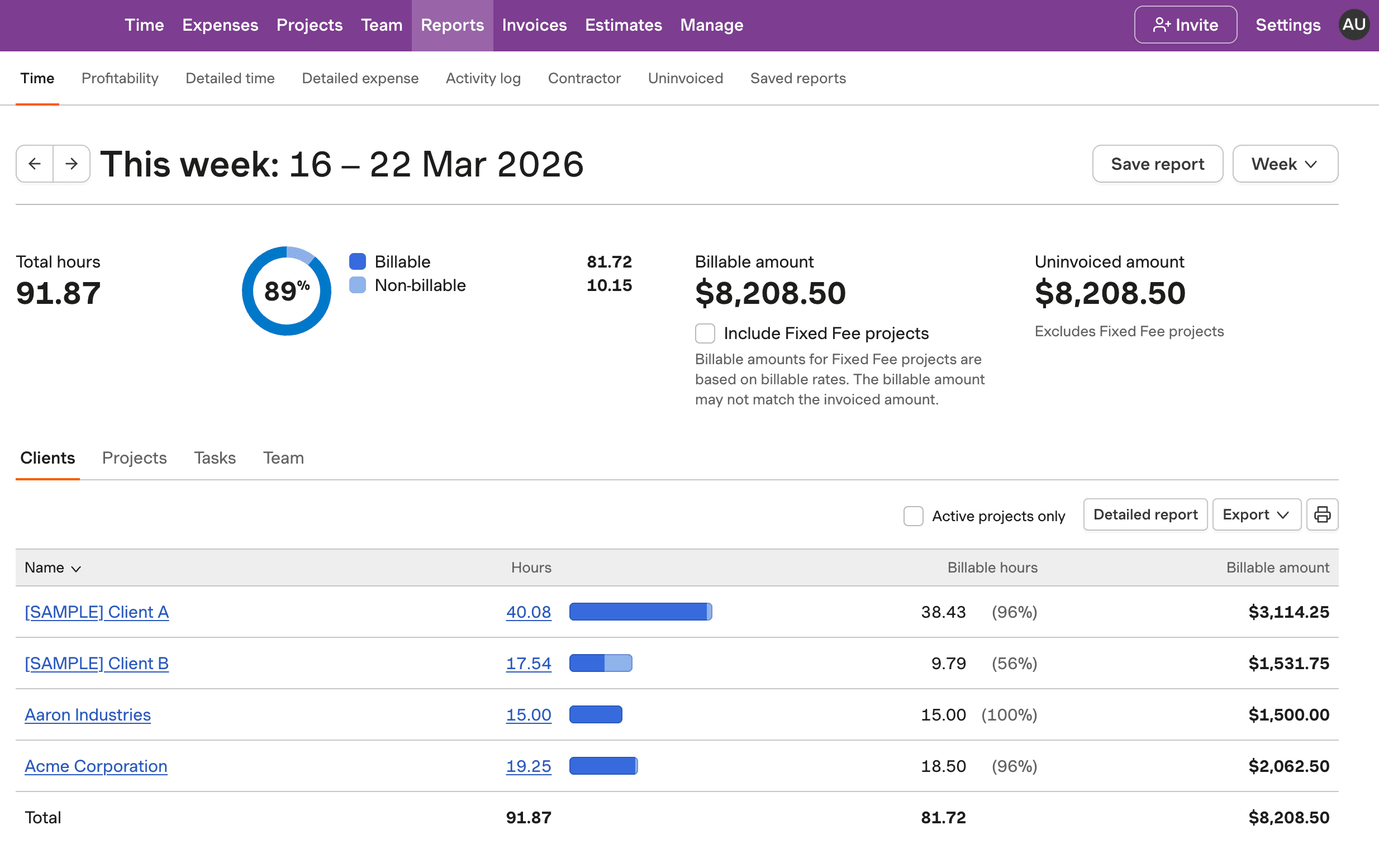
Track Overtime Hours with Harvest

Harvest provides a comprehensive view of tracked and overtime hours, ensuring compliance with labor laws through detailed reporting.

Harvest screenshot showing overtime tracking and reporting features.

Track Overtime Hours FAQs

  • To calculate overtime pay, multiply the employee's regular hourly rate by 1.5, then multiply by the number of overtime hours worked. For example, if the regular rate is $10/hour and 6 overtime hours are worked, the overtime pay would be $90.

  • Automated tools like Harvest offer seamless integration with project management apps and provide customizable reports to track overtime accurately. They can significantly reduce manual tracking errors and improve compliance.

  • Yes, under the FLSA, employers must keep accurate records of work hours and wages for at least three years. This includes detailed logs of hours worked each day and total hours worked each workweek.

  • Using time tracking software like Harvest, which integrates with payroll systems, can automate overtime calculations and reporting, ensuring compliance with federal and state laws.

  • Look for features like real-time data capture, automatic overtime calculations, payroll integration, reporting tools, and mobile accessibility. These ensure accuracy and ease of use.

  • Yes, Harvest can track overtime hours through its manual setup process, offering detailed reports to analyze overtime trends and costs for better workforce management.

  • "Hours worked" generally include all time an employee is required to be on duty or at the workplace, including training and travel between work sites during the day.