
Harvest
Time Tracking
Sign up free

Web Based Time Clock

Businesses can lose up to 20% of revenue due to time theft. Harvest offers a web-based time clock solution that enhances accuracy and efficiency, reducing payroll errors by up to 75%.

Try Harvest Free

How many hours did you work this week?

Enter your clock-in and clock-out times for each day. The calculator handles breaks, overtime, and weekly totals automatically.

Day Clock In Clock Out Break Hours
Total hours this week 0h
Regular hours (≤40) 0h
Overtime hours 0h
Average hours/day 0h
Total break time 0h

Track time automatically with Harvest

Walk through the entire flow below. Start a timer, check your reports, and create a real invoice — all in three clicks.

Go ahead — start tracking!

One click and you're timing. Try it right here: start a timer, add an entry, edit the details. This is exactly how it feels in Harvest.

  • One-click timer from browser, desktop & mobile
  • Works inside Jira, Asana, Trello, GitHub & 50+ tools
  • Duration or start/end — your call
  • Day, week & calendar views to stay on top of it all
  • Friendly reminders so no hour gets left behind
Acme Corp
Website Redesign
Homepage layout revisions
1:24:09
Content Strategy
Blog calendar planning
1:30:00
SEO Audit
Technical audit report
0:45:00
Brand Guidelines
Color system documentation
2:15:00
Logo Concepts
Initial sketches round 1
1:00:00

Understanding Web-Based Time Clocks: Features and Benefits

A web-based time clock is an essential tool for modern businesses seeking efficiency and accuracy in tracking employee hours. These digital platforms allow employees to log their time from any internet-enabled device, providing unparalleled accessibility. With features like clock-in/out, break tracking, and PTO management, these systems streamline workforce management. Advanced capabilities such as GPS tracking, geofencing, and photo capture further enhance security and accuracy by preventing time theft, which can account for up to 20% of revenue loss due to practices like "buddy punching" and unauthorized overtime.

The benefits of using a web-based time clock extend beyond simple timekeeping. By automating these processes, companies can reduce the administrative burden and minimize errors, saving up to 75% of the time typically spent on payroll processing. Furthermore, real-time data insights allow for better decision-making, ultimately improving overall productivity and compliance with labor laws.
Seamless Integration and Payroll Efficiency

Integrating a web-based time clock with your payroll and HR systems can drastically improve operational efficiency. These systems facilitate direct data transfers, eliminating the need for manual entry and significantly reducing errors in payroll calculations. By automating the transfer of work hours, overtime, and break data, businesses can ensure accuracy and compliance with labor laws, such as the Fair Labor Standards Act (FLSA), which mandates precise record-keeping.

Moreover, web-based time clocks provide comprehensive payroll reports that help manage labor costs effectively. This capability not only streamlines payroll processing but also aids in strategic workforce management by offering detailed insights into employee productivity and time utilization. Companies can capitalize on these functionalities to enhance their payroll efficiency and ensure that all employees are compensated fairly for their time worked.

Security, Compliance, and Customization

Security and compliance are paramount in managing employee data through web-based time clocks. These systems typically feature cloud-based storage with robust security measures, including encryption, secure authentication, and regular data backups. Such practices ensure that sensitive employee information is protected against unauthorized access.

Compliance with labor regulations, especially FLSA requirements for record retention and overtime calculation, is seamlessly managed through automated tracking systems. Web-based time clocks also offer extensive customization options, allowing businesses to tailor settings to their specific needs, including custom pay rules, overtime policies, and reporting preferences. This adaptability makes them suitable for various industries, from healthcare to construction, ensuring compliance with industry-specific regulations and enhancing operational efficiency.

Implementing a Web-Based Time Clock: Best Practices and Cost Considerations

Successfully implementing a web-based time clock requires careful planning and execution. Start by defining clear objectives for the system, such as improving billing transparency or enhancing productivity. Choosing the right tool involves considering features, scalability, and integration capabilities that align with your business needs.

Establish clear guidelines for clock-in/out procedures and provide comprehensive training to encourage employee adoption. Addressing employee concerns and highlighting the benefits of such systems can foster acceptance and ease the transition. When it comes to cost, pricing models typically range from $2 to $10 per employee per month, with potential base fees. Free options are available for small teams, though larger organizations may need to consider additional costs, such as hardware support or text messaging fees.

Web Based Time Clock with Harvest

See how Harvest's web-based time clock tracks employee hours accurately, integrates with payroll, and reduces errors. Try Harvest today.

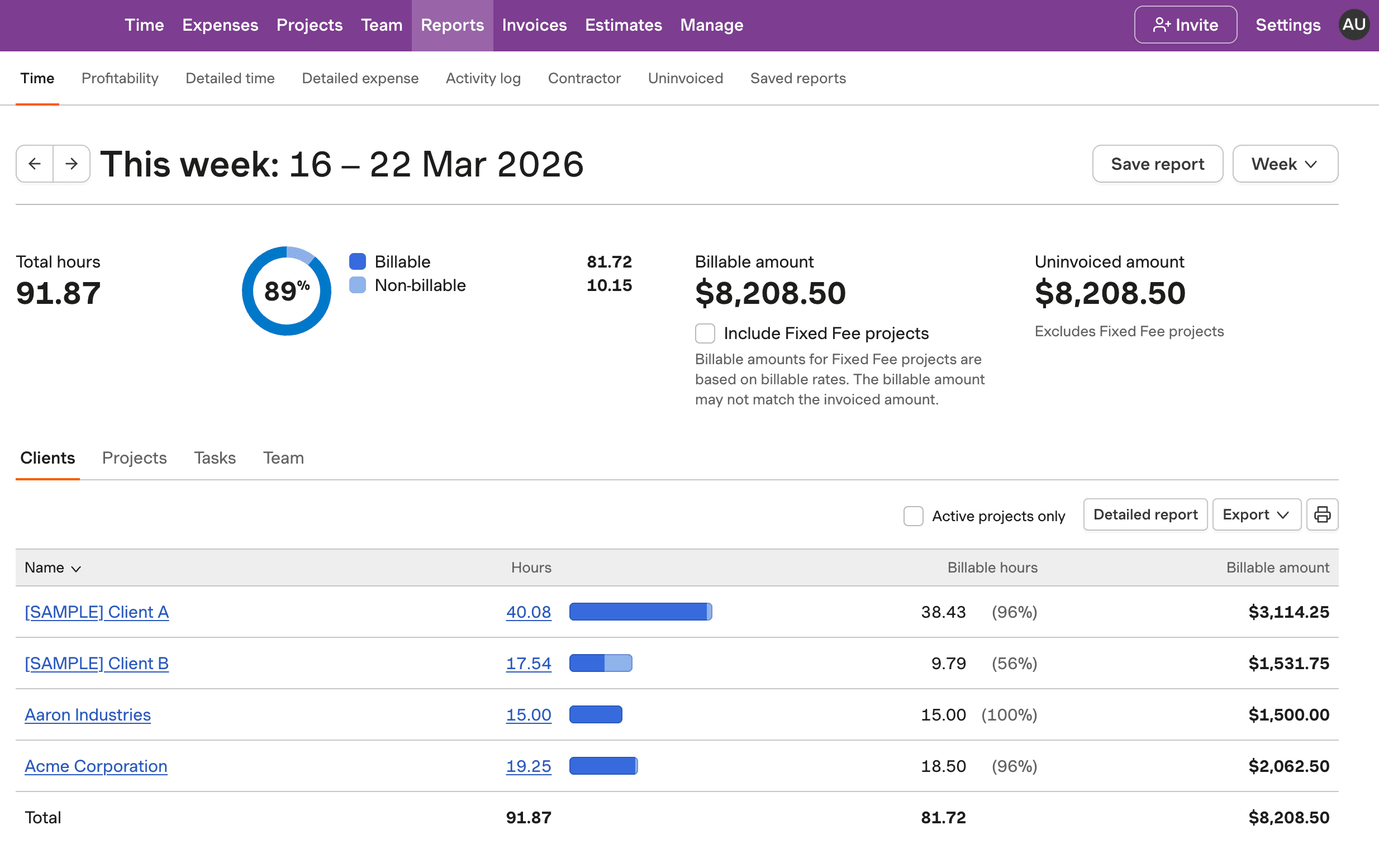
Harvest dashboard showcasing web-based time clock features.

Web Based Time Clock FAQs

  • When evaluating web-based time clocks, look for essential features such as clock-in/out functionality, break tracking, and PTO management. Advanced options like GPS tracking, geofencing, and photo verification can prevent time theft and ensure compliance. Integration with payroll systems is also crucial for seamless data transfer.

  • Yes, some web-based time clocks offer free plans, typically for small teams or businesses with a limited number of users, such as up to 10 employees. These free options often include basic features, while more advanced functionalities may require a paid subscription.

  • Web-based time clocks integrate with payroll systems by automatically transferring recorded work hours, overtime, and break data. This automation reduces manual entry, minimizes errors, and ensures compliance with labor laws, making payroll processing more efficient and accurate.

  • Security measures for web-based time clocks typically include cloud-based storage with encryption, secure authentication, and regular data backups. These measures protect sensitive employee information from unauthorized access and data loss, ensuring compliance with privacy regulations.

  • Yes, web-based time clocks offer extensive customization options. Businesses can tailor settings to their specific needs, including custom pay rules, overtime policies, and reporting preferences. This flexibility ensures that the system aligns with business workflows and regulatory requirements.

  • Web-based time clocks prevent time theft through features like GPS tracking, photo capture, and biometric verification. These tools ensure that employees clock in and out from authorized locations and verify their identity, minimizing the risk of "buddy punching" and unauthorized overtime.

  • The Fair Labor Standards Act (FLSA) mandates accurate record-keeping of employee hours, including start and end times, total hours worked, and the basis of wage payment. Web-based time clocks help businesses comply with these requirements by automating time tracking and ensuring all hours are accurately recorded.

  • Many web-based time clocks allow employees to access their time records and request time off directly through the platform. This feature empowers employees to manage their schedules and ensures transparency in time tracking, fostering trust and accuracy in record-keeping.