
Harvest
Time Tracking
Sign up free

Billable Hours Calculator for Solo Practitioners

Solo practitioners often struggle with accurately tracking billable hours, leading to lost revenue. Harvest offers a solution with tools designed to optimize time management and billing accuracy.

Try Harvest Free

What should you charge per hour?

Most freelancers and consultants dramatically undercharge. This calculator accounts for what most people miss: non-billable time, taxes, and overhead.

$
Accounting for vacation, holidays, sick days
60%
Most freelancers can bill 50-70% of their time. The rest goes to admin, marketing, proposals, and learning.
$
Software, insurance, equipment, accounting, taxes beyond income tax, etc.
Your break-even rate $0
Recommended rate (+20% buffer) $0
Billable hours per week 0h
Equivalent daily rate $0

Start tracking your billable hours

Walk through the entire flow below. Start a timer, check your reports, and create a real invoice — all in three clicks.

Go ahead — start tracking!

One click and you're timing. Try it right here: start a timer, add an entry, edit the details. This is exactly how it feels in Harvest.

  • One-click timer from browser, desktop & mobile
  • Works inside Jira, Asana, Trello, GitHub & 50+ tools
  • Duration or start/end — your call
  • Day, week & calendar views to stay on top of it all
  • Friendly reminders so no hour gets left behind
Acme Corp
Website Redesign
Homepage layout revisions
1:24:09
Content Strategy
Blog calendar planning
1:30:00
SEO Audit
Technical audit report
0:45:00
Brand Guidelines
Color system documentation
2:15:00
Logo Concepts
Initial sketches round 1
1:00:00

Understanding Billable Hours for Solo Practitioners

Billable hours are the cornerstone of revenue for solo practitioners, yet they often face challenges in maximizing this vital metric. Typically, solo practitioners like attorneys bill only a small fraction of their workday, around 37%, meaning only 2.9 hours of an 8-hour day are billable. This underutilization is significant, as many solo attorneys report billing as low as 2 hours per day. The gap between billable and total hours can result in a notable revenue disparity when compared to peers in larger firms.

Standard billing practices, such as using 6-minute (0.1-hour) increments, ensure precision and client transparency. Solo practitioners should aim for around 1,128 billable hours annually, derived from a 55% utilization rate out of 1,880 available work hours post-vacations. Understanding these metrics is crucial for setting realistic goals and ensuring financial stability.
The Role of Accurate Time Tracking

Accurate time tracking is essential for solo practitioners to capture revenue efficiently and maintain client trust. Delayed time entries can lead to significant revenue losses: recording time at the end of the day can result in a 10% loss, next-day entries a 25% loss, and end-of-week entries up to 50%. Therefore, real-time tracking is vital, capturing 95-98% of billable hours as opposed to 65-75% with delayed entries.

Harvest aids solo practitioners by providing one-click timers and manual entry options, ensuring every minute is accounted for. By categorizing tasks as either billable or non-billable, Harvest helps users maximize their billable hours while maintaining accurate records. This distinction is crucial for legal professionals who must balance client work with administrative duties.

Maximizing Billable Hours with Best Practices

Maximizing billable hours involves strategic planning and effective use of time. Solo practitioners should implement real-time tracking, using consistent billing increments to ensure accuracy. Harvest supports this by offering automated timers that facilitate precise time management. Additionally, daily reviews of time entries help correct errors and forgotten tasks, optimizing overall billing efficiency.

Leveraging technology like Harvest's platform reduces administrative burdens, allowing solo practitioners to focus on high-value, billable tasks. Furthermore, setting boundaries to prioritize billable work and delegating non-billable tasks can significantly enhance productivity and profitability. By adopting these best practices, solo practitioners can effectively manage their time and increase their billable output.

Setting Optimal Hourly Rates

Determining the right hourly rate is fundamental for covering expenses and achieving desired income levels. The average hourly rate for solo practitioners is $288, which is less than the $345 average for larger firms. To set a competitive rate, practitioners must consider their expenses, desired income, and regional market conditions. For instance, a solo attorney with $12,500 in monthly expenses should aim for a $156.25 hourly rate by billing 80 hours monthly.

Harvest assists practitioners in calculating and tracking these rates by offering flexible per-project and per-person rates, ensuring that users can align their pricing strategy with their financial goals. By understanding the market and leveraging tools like Harvest, solo practitioners can set rates that ensure both competitiveness and profitability.

Billable Hours with Harvest

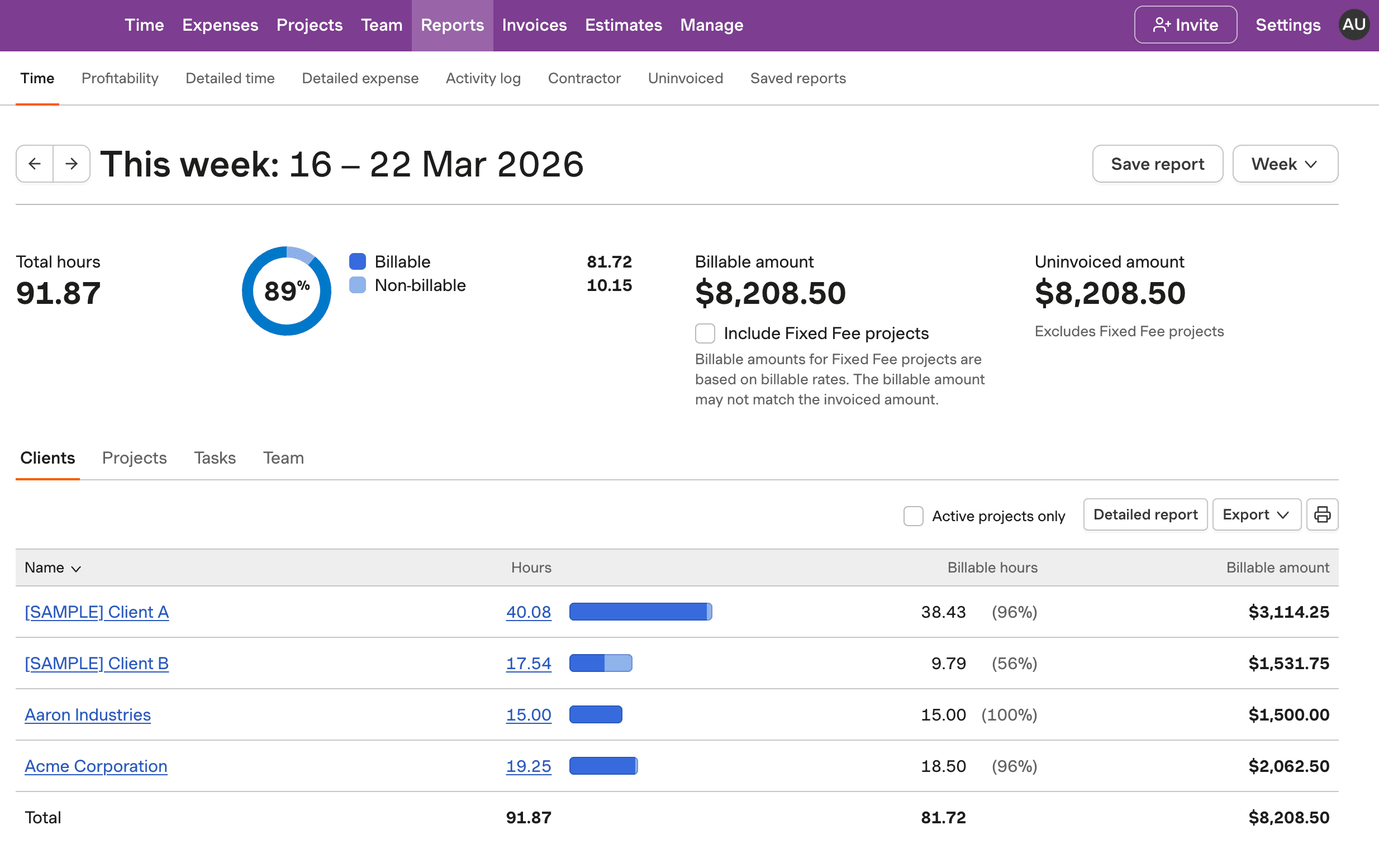
See how Harvest helps solo practitioners track billable hours and set optimal rates. Enhance your time management and billing efficiency.

Harvest billable hours calculator for solo practitioners screenshot.

Billable Hours Calculator for Solo Practitioners FAQs

  • The best way to calculate billable hours is to use real-time tracking tools. Harvest provides one-click timers and manual entry options to ensure you capture every minute of billable work, minimizing revenue loss.

  • To determine your optimal hourly rate, calculate your total monthly expenses and divide by the number of billable hours you aim to work. Harvest can help track these hours and expenses, making it easier to set competitive rates.

  • Billable hours refer to time spent on tasks directly related to client work, such as communication, research, or court appearances. Non-billable hours involve administrative tasks like scheduling or marketing. Harvest helps you track both, ensuring you maximize billable time.

  • Harvest integrates seamlessly with tools like Asana, Trello, and Slack, allowing you to track time directly from these platforms. This integration ensures your time tracking is comprehensive and efficient.

  • Yes, Harvest allows you to track expenses by capturing receipts and logging costs directly into projects. This feature helps maintain accurate financial records alongside time tracking.

  • Harvest minimizes revenue leakage by providing real-time tracking and accurate reporting. This ensures all billable hours are captured and invoiced promptly, preventing potential loss due to delayed entries.

  • Consider factors such as your monthly expenses, desired income, market conditions, and practice area when setting your hourly rate. Harvest's flexible rate tracking helps you align your pricing with these factors.