
Harvest
Time Tracking
Sign up free

Utilization Rate Calculator in the Middle East

Harvest is your go-to solution for tracking and optimizing utilization rates in the Middle East, helping businesses enhance efficiency and profitability.

Try Harvest Free

How much revenue is your team leaving on the table?

Most agencies run at 55-60% utilization. Even a small improvement means significant revenue. See what closing the gap looks like for your team.

Number of people who track billable time
$
Blended rate across roles (junior, senior, lead)
55%
Percentage of total hours that are billable. Industry average is 55-60%.
75%
A realistic target for service businesses is 70-80%.
Monthly revenue gap $0
Revenue at current utilization $0/mo
Revenue at target utilization $0/mo
Extra billable hours needed per person/day 0h
Annual revenue opportunity $0

Start tracking team utilization

Walk through the entire flow below. Start a timer, check your reports, and create a real invoice — all in three clicks.

Go ahead — start tracking!

One click and you're timing. Try it right here: start a timer, add an entry, edit the details. This is exactly how it feels in Harvest.

  • One-click timer from browser, desktop & mobile
  • Works inside Jira, Asana, Trello, GitHub & 50+ tools
  • Duration or start/end — your call
  • Day, week & calendar views to stay on top of it all
  • Friendly reminders so no hour gets left behind
Acme Corp
Website Redesign
Homepage layout revisions
1:24:09
Content Strategy
Blog calendar planning
1:30:00
SEO Audit
Technical audit report
0:45:00
Brand Guidelines
Color system documentation
2:15:00
Logo Concepts
Initial sketches round 1
1:00:00

Understanding Utilization Rates in the Middle East

Utilization rates are crucial metrics for businesses in the Middle East, serving as key indicators of operational efficiency and resource optimization. Calculated by dividing the actual number of hours worked by the total available hours, this rate provides insights into how effectively resources are being used. For example, the Gulf Cooperation Council's chemical industry achieved a remarkable average capacity utilization rate of 93% in 2019 and 2020, significantly higher than the global average. This underscores the importance of regional context, as industries like petrochemicals and construction have distinct dynamics in the Middle East.

Understanding these nuances is essential for accurate utilization rate calculations. Factors such as the labor force participation, which was 77.71% in the UAE in 2024, and the specific working conditions, including extreme climate impacts on equipment, must be considered. In the construction sector, for instance, the demand for specialized equipment and skilled labor is driven by ambitious projects under Saudi Vision 2030, necessitating precise utilization tracking to avoid costly rework and resource misallocation.
Optimizing Resource Allocation with Utilization Rate Calculators

For businesses operating in the Middle East, utilizing a dedicated utilization rate calculator is essential for optimizing resource allocation and enhancing profitability. These calculators enable companies to benchmark their performance against industry standards, such as the 75-85% utilization rate common in professional services. In the Middle East, where the construction equipment market alone is projected to grow to USD 21,178 million by 2030, maintaining optimal utilization rates can significantly impact financial outcomes.

Using a utilization rate calculator involves defining billable and non-billable activities, determining total available hours, and accurately tracking actual hours worked. This process helps businesses identify underutilized resources and adjust strategies accordingly. Harvest, although not specifically tailored to regional nuances, offers flexible time tracking and reporting tools that can assist in these calculations. By leveraging such tools, companies can improve resource management and reduce operational costs, thereby enhancing overall profitability.

Regional Challenges and Best Practices in Utilization Tracking

Tracking utilization rates in the Middle East presents unique challenges due to regional labor laws, climate conditions, and industry-specific demands. For instance, the UAE's labor laws require documentation in both Arabic and English, affecting how companies manage their workforce and equipment. Additionally, the extreme desert climate necessitates specialized maintenance practices, particularly in the construction industry, impacting equipment uptime and utilization rates.

Best practices for managing these challenges include leveraging technology for accurate tracking and analysis. Implementing robust time-tracking systems and integrating advanced technologies like AI-driven analytics and IoT telemetry can streamline utilization monitoring. Regularly reviewing utilization data against industry benchmarks enables companies to take corrective actions, such as optimizing resource allocation and improving project planning. By adopting these practices, businesses can navigate regional complexities and achieve sustainable growth.

Leveraging Technology for Effective Utilization Management

In the Middle East, the adoption of technology is transforming how businesses manage utilization rates. Digital transformation initiatives, such as those driven by Saudi Vision 2030, are encouraging companies to integrate technologies like BIM, AI analytics, and IoT telemetry into their operations. This shift enables more precise tracking of resource utilization and enhances decision-making processes.

Tools like Harvest, which offer flexible time tracking and reporting capabilities, can support businesses in the Middle East in managing utilization rates effectively. These tools help track billable and non-billable hours, providing detailed insights into team efficiency and project profitability. By utilizing such technologies, companies can better align their resource management strategies with regional economic goals, ensuring they remain competitive in a rapidly evolving market.

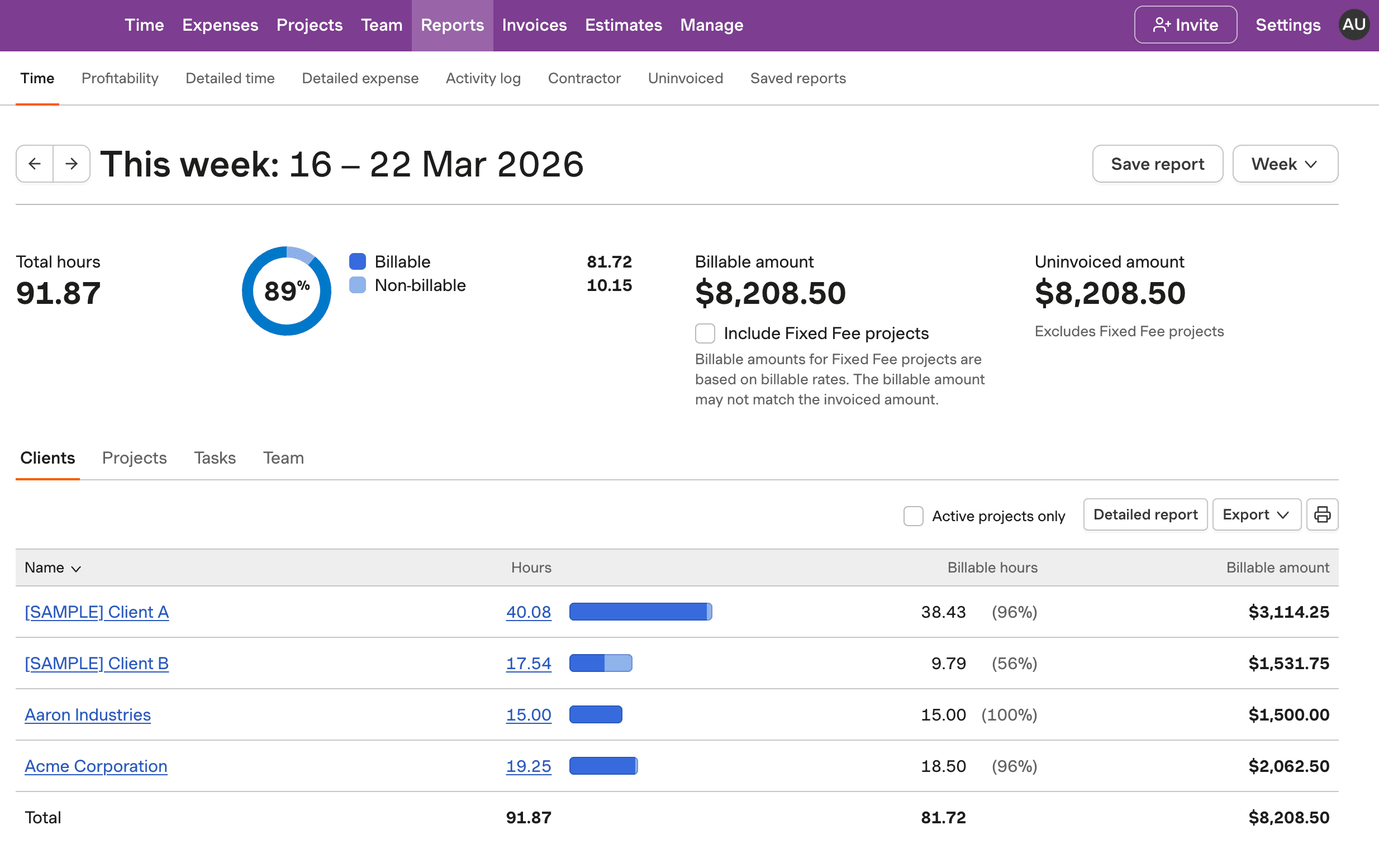
Harvest Utilization Rate Tracking

See how Harvest tracks and optimizes utilization rates in the Middle East, enhancing efficiency and profitability for businesses.

Screenshot of Harvest showing utilization rate tracking in the Middle East.

Utilization Rate Calculator in the Middle East FAQs

  • A utilization rate is the percentage of total available hours that are actually spent on productive or billable work. It is calculated as (Actual Hours Worked / Total Available Hours) x 100%. This metric helps businesses assess how efficiently they are using their resources.

  • To calculate utilization rates, define billable and non-billable activities, determine total available hours considering regional work schedules, and track actual hours worked. Multiply the result by 100 to get the utilization percentage. Consider local factors like public holidays and labor laws.

  • Utilization rates in the Middle East are influenced by labor force participation, regional labor laws, climate conditions, and industry demands. For example, extreme desert climates impact equipment maintenance and staffing needs, affecting overall resource utilization.

  • Harvest provides flexible time tracking and reporting tools that help businesses track billable and non-billable hours, offering detailed insights into team efficiency and project profitability. This aids in optimizing resource management and improving utilization rates.

  • Using a utilization rate calculator provides insights into team efficiency, supports informed staffing decisions, and improves project profitability. It helps businesses allocate resources effectively, reducing non-billable hours and enhancing overall performance.

  • In certain industries, such as petrochemicals, the Middle East shows higher utilization rates compared to global averages. For instance, the GCC's chemical industry had a 93% utilization rate in 2020, surpassing the global average of 78.6%.

  • Challenges include consistent time tracking, distinguishing billable from non-billable activities, and accounting for leave or downtime. In the Middle East, additional complexities arise from regional labor laws and climate-related operational adjustments.

  • While theoretically possible with overtime, consistently exceeding 100% utilization is unsustainable and indicates potential employee burnout. It may suggest overwork, requiring adjustments to ensure long-term resource health and efficiency.