
Harvest
Contracts
Sign up

Videography Contract Template

Harvest helps videographers efficiently manage milestone payments and track overtime, ensuring smooth project execution while detailed contract terms are handled separately.

Start from a template

AGREEMENT DRAFT

Add your logo here

Scope of work

Payment terms

Duration

Signatures

Client

Sign here

Contractor

Sign here

Get paid via:
Credit card / Debit card
ACH
Wire transfer

Customize contract

Appearance

Add a logo
Show contract title

Contract settings

Include payment terms Total fee, deposit, and schedule
Include termination clause Notice required to end the contract
Include signature blocks Both parties sign at the bottom

Understanding Essential Clauses in a Videography Contract

A well-structured videography contract is crucial for protecting both the videographer and the client. Key clauses include payment terms, deliverables, and cancellation policies. Payment terms often involve a non-refundable deposit, milestone payments, and a clear schedule for when payments are due. For instance, a typical schedule might require 50% upfront, 25% upon first edit, and the remaining 25% upon final delivery. Including a clause for late payment penalties, such as a 1.5% per month fee, can further safeguard your interests.

Deliverables should be clearly outlined, specifying what the client will receive, such as the number of videos, their length, and any additional elements like b-roll footage. It's equally important to define what constitutes a revision round and to limit the number of revisions to avoid endless cycles. Cancellation policies should articulate the conditions under which either party can terminate the contract, possibly including a "right to cure" provision that allows videographers time to address any breaches.

These clauses not only help prevent misunderstandings but also enhance professionalism, reassuring clients of the videographer's commitment to delivering quality work. While Harvest can manage milestone payments and track project timelines, specific legal terms like late fees and cancellation policies should be drafted separately with legal guidance.

Legal Considerations for Videography Contracts

When crafting a videography contract, understanding legal implications is vital to ensure compliance and protection. Contracts typically include copyright and licensing clauses, where videographers retain ownership of the raw footage but grant clients a limited license for usage. It's important to specify the scope and duration of this usage to prevent disputes over content rights.

Including a liability clause can cap your financial exposure, limiting it to the total amount paid by the client. This protects against claims arising from the agreement, especially for indirect or consequential damages. Force majeure clauses are also critical, as they limit liability for delays or failures beyond your control, such as equipment failure or natural disasters.

It's advisable to have a legal professional review your contract to ensure it aligns with local laws and covers all necessary legal bases. While Harvest can help manage project timelines and budgets, incorporating these legal elements requires a separate contractual agreement.

Customizing Your Videography Contract Template

Customizing a videography contract template is essential to address the unique aspects of your services and client base. Start by familiarizing yourself with a professional template that covers all basic clauses. Then, tailor it to fit the specific needs of your projects, whether they involve weddings, corporate events, or creative collaborations.

For instance, if you often shoot weddings, include a detailed "must-have" shot list to prevent disputes over missed shots. For corporate clients, clearly define the project scope, including timelines and deliverables, to ensure mutual understanding. Also, consider integrating niche-specific disclaimers, such as those for weather contingencies or equipment damage, to cover all potential liabilities.

Once customized, it's prudent to have the contract reviewed by a legal professional to ensure its validity and compliance. While Harvest can support the management of milestone payments and overtime tracking, the contract itself should remain a separate document, detailing all legal obligations and client expectations.

Managing Project Milestones and Payments with Harvest

Efficiently managing project milestones and payments is crucial for videographers to maintain cash flow and ensure timely completion of projects. Harvest can play a significant role in this process by enabling you to set up invoices tied to each project phase, such as pre-production, production, and post-production. This ensures that payments are aligned with the progress of your work.

In addition to managing milestone payments, Harvest allows you to track overtime by creating specific tasks, which can be billed at different rates. This feature is particularly useful for projects that extend beyond the initial agreed hours, helping you accurately charge for extra work without manual calculations.

While Harvest facilitates the financial management of projects, it's important to remember that detailed contract terms, such as specific payment schedules, late fees, and cancellation policies, should be drafted separately. This dual approach ensures that both financial and legal aspects of your videography business are effectively managed.

Explore Videography Contracts with Harvest

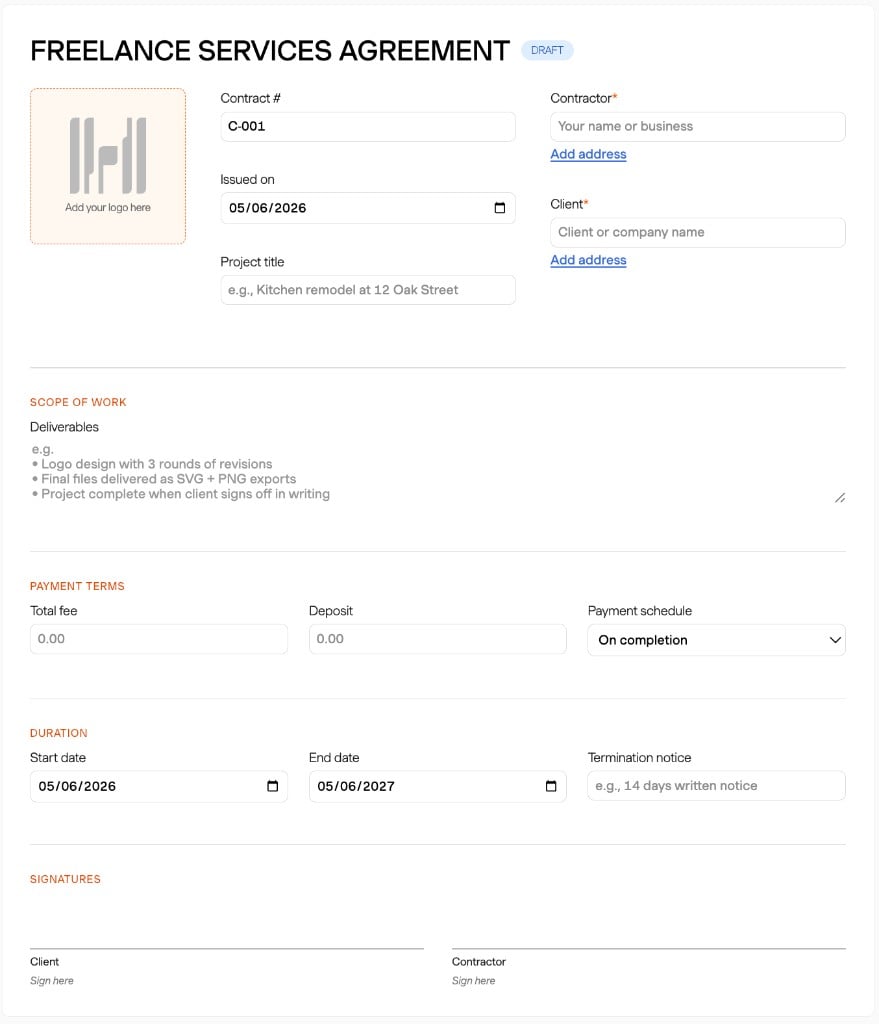
Harvest showcases a videography contract template, allowing videographers to manage payments efficiently while maintaining detailed contract terms separately.

Videography contract template interface in Harvest

Videography Contract Template FAQs

  • Essential clauses in a videography contract include payment terms, deliverables, cancellation policies, and copyright ownership. It's crucial to define the payment schedule, such as deposits and milestone payments, and clearly outline what will be delivered to avoid disputes.

  • To customize a videography contract template, start by identifying the specific needs of your projects, such as weddings or corporate events. Include detailed deliverables, timelines, and any niche-specific disclaimers. Legal review is recommended to ensure compliance.

  • Yes, videography contracts are legally binding when properly executed. They should include clear terms and conditions, and it's advisable to have them reviewed by a legal professional to ensure they meet local legal standards.

  • Harvest supports videography projects by managing milestone payments and tracking overtime, ensuring smooth financial operations. However, detailed contract terms should still be handled separately.

  • A force majeure clause limits liability for delays or failures due to unforeseen circumstances, such as natural disasters or equipment failure. Including this clause can protect videographers from liabilities beyond their control.

  • Specifying revision rounds in contracts helps prevent endless cycles of changes, which can delay project completion and increase costs. Clearly defining the number of revisions and time frame for feedback ensures smoother project management.

  • The deliverables section should specify the number and length of videos, any additional elements like b-roll footage, and deadlines for each deliverable. This clarity helps manage client expectations and reduce disputes.