
Harvest
Contracts
Sign up

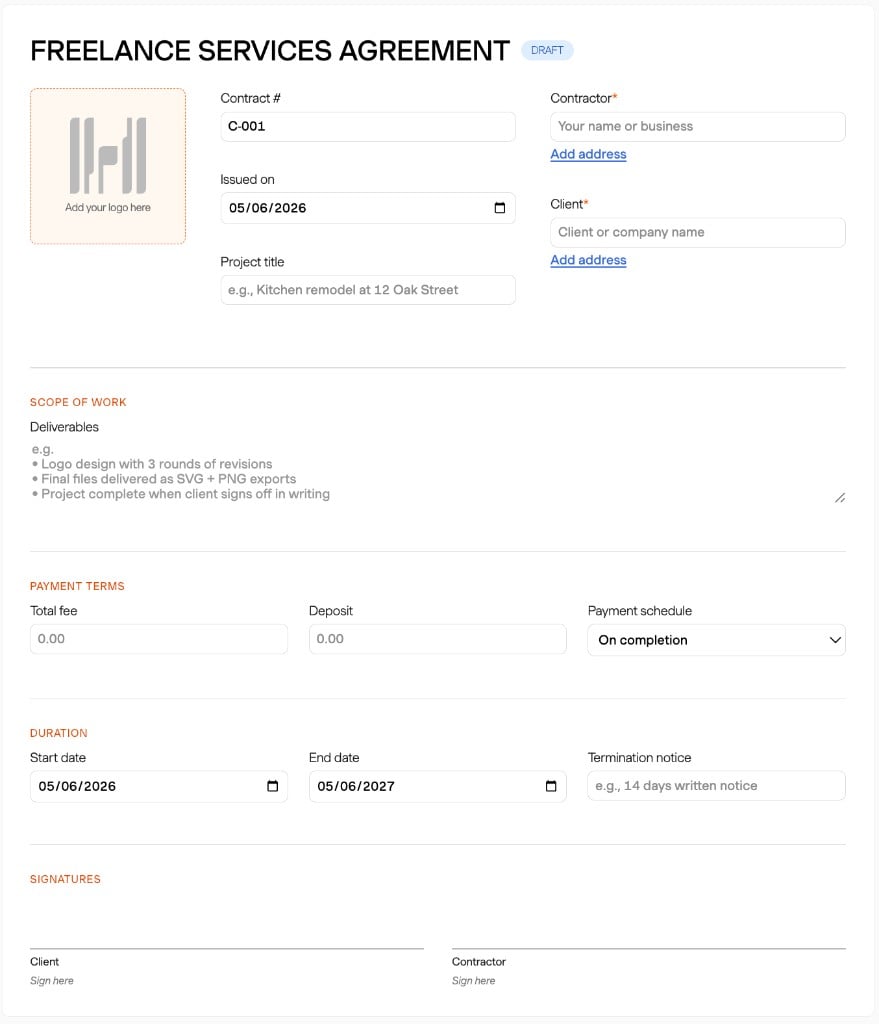
Contract Template for Software Contractors

Managing contracts for software projects can be complex, but with Harvest, you can easily track time, manage invoices, and streamline project budgets, ensuring clarity and efficiency.

Start from a template

AGREEMENT DRAFT

Add your logo here

Scope of work

Payment terms

Duration

Signatures

Client

Sign here

Contractor

Sign here

Get paid via:
Credit card / Debit card
ACH
Wire transfer

Customize contract

Appearance

Add a logo
Show contract title

Contract settings

Include payment terms Total fee, deposit, and schedule
Include termination clause Notice required to end the contract
Include signature blocks Both parties sign at the bottom

Essential Clauses in a Software Contractor Agreement

When drafting a contract template for software contractors, several key clauses are essential to ensure clarity and legal protection for both parties. These include intellectual property rights, which define ownership of the software and related materials upon project completion. Without clear IP terms, disputes can arise, leading to potential loss of funding or business opportunities. Additionally, confidentiality agreements protect sensitive information from being disclosed without permission. It's crucial that these clauses are tailored to the specifics of the software project to avoid misinterpretation.

Payment terms are another crucial component, specifying not only the amount but also the schedule and conditions under which payments are made. This is particularly important in software projects where changes in scope can occur. Harvest can aid in managing these terms by offering tools for invoicing and expense tracking, ensuring that any modifications to the project scope are reflected in the billing process.

Finally, termination clauses should be included to address potential delays or breaches, offering a clear path for either party to exit the contract if necessary. While Harvest does not provide specific legal clauses, it supports the financial and project management aspects of the contract through its robust invoicing and time tracking capabilities.

Drafting a Customized Software Contract Template

Customizing a software contract template involves more than just filling in the blanks. A successful contract must reflect the unique aspects of the project and accommodate potential changes. Begin by clearly defining the project scope, including deliverables, timelines, and acceptance criteria. This reduces the risk of misunderstandings and scope creep, a common issue in software development where additional features or changes are requested after the project has started.

To manage these changes effectively, consider using Harvest to track time and expenses associated with each project phase. Harvest's tools allow software contractors to organize work around milestone-based deliverables, ensuring that any adjustments are documented and billed accordingly. This not only supports financial transparency but also keeps both parties aligned on project expectations.

Additionally, it's advisable to integrate the contract template with project management software, linking tasks and milestones to ensure that contractual obligations are met. While Harvest focuses on time tracking and invoicing, its features can complement broader contract management systems, streamlining the overall workflow.

Protecting Intellectual Property in Software Contracts

Intellectual property (IP) disputes are a significant concern in software contracting, often arising from unclear ownership terms. To prevent such issues, contracts must clearly state that all deliverables, including code and documentation, become the client's property upon payment. This is particularly important for projects spanning multiple jurisdictions, where IP laws may vary significantly.

Although Harvest does not offer specific IP clauses, it supports software contractors by managing the financial aspects of project delivery. By using Harvest's invoicing and expense management tools, contractors can ensure that all project costs, including IP-related expenses, are accurately tracked and billed. This financial clarity provides a solid foundation for addressing IP ownership in the contract.

For added protection, consider consulting a legal professional to tailor IP clauses to your specific project needs. This ensures that all parties are aware of their rights and responsibilities, minimizing the risk of disputes and facilitating smoother project execution.

Managing Scope Changes and Payment Terms

Scope changes are an inevitable part of software development, and managing them effectively is crucial for maintaining project timelines and budgets. Contracts should include specific language addressing how changes will be handled, including any additional fees and timeline implications. This framework allows for professional discussions about new requests, ensuring that both parties agree on the costs and expectations.

Harvest plays a key role in this process by allowing contractors to track time and expenses related to scope changes. This ensures that any adjustments to the project are reflected in the billing, maintaining transparency and alignment between the client and the contractor. Harvest's invoicing capabilities can incorporate these changes, simplifying the financial side of contract management.

Furthermore, by using Harvest to monitor project budgets and deliverables, software contractors can provide clients with regular updates on progress and financial status. This proactive approach helps prevent misunderstandings and keeps the project on track, even as changes occur.

Integrating Contract Templates with Project Management

Integrating contract templates with project management tools can enhance efficiency and compliance throughout the software development lifecycle. This integration allows for seamless tracking of contract milestones and deliverables, ensuring that all legal and project obligations are met.

Harvest supports this integration by offering comprehensive tools for time tracking and invoicing, which can be linked to project management systems. This ensures that every aspect of the contract, from scope changes to payment terms, is accurately monitored and managed. By centralizing contract data and automating alerts for key dates and compliance requirements, Harvest helps streamline contract management processes.

For larger projects or agencies, using Harvest in conjunction with dedicated contract management software can further optimize resource allocation and risk management. This collaborative approach ensures that all parties are aware of their responsibilities, reducing the likelihood of disputes and improving overall project outcomes.

Explore Harvest Contract Management

See how Harvest's tools simplify contract management for software projects. Easily track time, manage invoices, and streamline budgets.

Screenshot of a Harvest contract template for software contractors.

Contract Template for Software Contractors FAQs

  • A software contractor agreement should include clauses on intellectual property rights, confidentiality, payment terms, and termination conditions. These clauses ensure that both parties understand their rights and responsibilities, reducing the risk of disputes.

  • To customize a contract template, define the project scope, deliverables, and timelines clearly. Include specific clauses for scope changes and payment terms. Consider using tools like Harvest to manage time tracking and invoicing, which can support customization needs.

  • Scope creep occurs when additional features or changes are requested beyond the initial agreement. This can lead to increased costs and extended timelines. Contracts should include clauses to manage these changes effectively, ensuring that any adjustments are documented and billed.

  • Harvest aids in managing software contracts by providing tools for time tracking and invoicing. These tools help contractors track expenses and manage payments, ensuring that any scope changes are reflected in the billing process.

  • Intellectual property (IP) is crucial because it defines ownership of the software and related materials. Clear IP clauses prevent disputes and ensure that all deliverables become the client's property upon payment, protecting both parties' interests.

  • Yes, Harvest can manage invoices and payments, including terms for project scope changes. This ensures that any adjustments to the project are accurately documented and billed, maintaining financial transparency.

  • Integrating contract templates with project management tools enhances efficiency by linking tasks and milestones to contract obligations. Harvest supports this integration, helping streamline contract management and ensuring compliance with all project requirements.