
Harvest
Contracts
Sign up

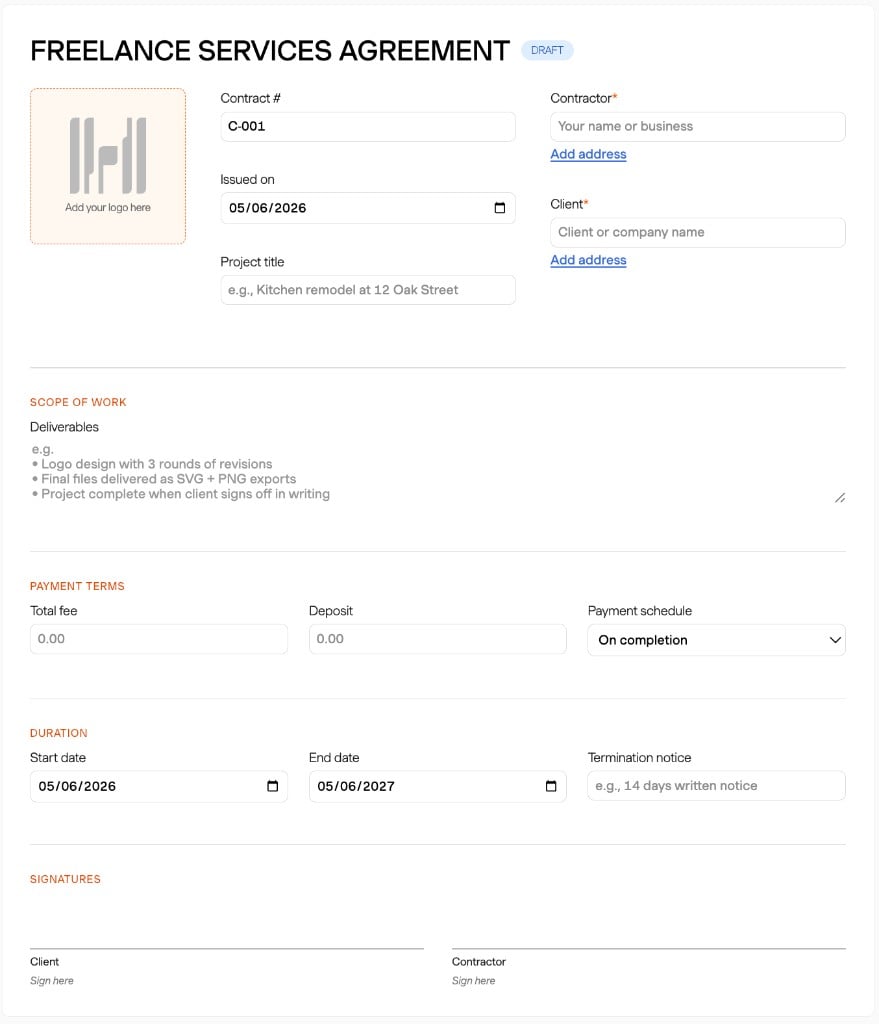
Subcontractor Agreement Generator

Harvest supports contractors in managing project budgets and expenses, offering tools that help track financial aspects of subcontractor work efficiently.

Start from a template

AGREEMENT DRAFT

Add your logo here

Scope of work

Payment terms

Duration

Signatures

Client

Sign here

Contractor

Sign here

Get paid via:
Credit card / Debit card
ACH
Wire transfer

Customize contract

Appearance

Add a logo
Show contract title

Contract settings

Include payment terms Total fee, deposit, and schedule
Include termination clause Notice required to end the contract
Include signature blocks Both parties sign at the bottom

Understanding Subcontractor Agreements

Subcontractor agreements are crucial documents that outline the terms and conditions between a contractor and a subcontractor. These agreements serve to protect both parties by clearly defining the scope of work, payment terms, timelines, and other critical elements. A well-drafted subcontractor agreement can prevent misunderstandings and disputes, ensuring that projects run smoothly and efficiently.

Given the complexity of these agreements, many contractors are turning to digital solutions to streamline the creation process. Automation and digital tools can significantly reduce the time and effort required to draft comprehensive agreements. For example, automated contract processes can reduce turnaround times by up to three times, freeing up valuable resources. Furthermore, research shows that 91% of contractors using subcontractor management technology report improved productivity, highlighting the benefits of digital transformation.

While Harvest does not generate subcontractor agreements, it supports contractors by tracking time, expenses, and project budgets. This functionality helps manage the financial aspects of subcontracting work, ensuring that all costs are accounted for and invoiced accurately.

Key Components of a Subcontractor Agreement

Creating a subcontractor agreement involves several essential components that must be tailored to the specific project. These include a detailed scope of work, clear payment terms, and a comprehensive project schedule. Industry experts emphasize the importance of clarity and comprehensiveness in these agreements to protect both parties and facilitate dispute resolution.

Common clauses in subcontractor agreements may cover payment and performance bonds, change order procedures, and indemnification provisions. In the construction industry, for instance, including specific terms like "pay-when-paid" and "pay-if-paid" clauses can be critical. However, these clauses must be crafted carefully to avoid enforceability issues. While Harvest is not designed to create these legal clauses, it can assist with documenting change orders by tracking time and expenses related to changes in subcontractor agreements.

To further streamline the process, some contractors utilize standardized contract templates, which can improve operational consistency across multiple projects. Standardization can lead to a 50% improvement in construction productivity, as suggested by McKinsey & Company research.

Leveraging Automation for Subcontractor Agreements

Automation is revolutionizing the way subcontractor agreements are handled, offering significant efficiency and cost benefits. By using intelligent generators, contractors can quickly customize agreements based on specific project needs. This approach not only reduces drafting time but also minimizes errors that could lead to expensive legal disputes.

The growing adoption of AI and digital tools in subcontractor management is evident, with 78% of trade contractors either using or in the process of implementing AI workflows. These tools enhance compliance by ensuring consistency in contract language and validating data. Additionally, automated processes can lead to significant productivity gains, with fully digital construction companies reporting an average of 4% higher profit margins compared to their less digitized counterparts.

While Harvest does not provide automated subcontractor agreement generation, it offers robust tools for managing project budgets and expenses, which are integral to effective subcontractor management. By integrating these financial elements into project workflows, contractors can maintain better control over project costs and timelines.

Best Practices for Drafting Subcontractor Agreements

Drafting a subcontractor agreement requires attention to detail and adherence to best practices to ensure all parties are adequately protected. One key practice is to clearly define the scope of work using detailed specifications and performance criteria. This prevents ambiguities that could lead to disputes. Payment terms should be explicitly stated, covering aspects like subcontract price, payment schedule, and provisions for retainage.

Another best practice is to establish clear procedures for change management. This includes setting protocols for initiating, approving, and documenting changes to the subcontractor's work. Ensuring that pricing for change orders is fair and consistent with the Prime Contract is essential to avoid conflicts.

While Harvest does not handle the legal aspects of subcontractor agreements, it can facilitate the management of financial aspects by organizing expenses and invoices for subcontractor work. This support helps contractors maintain financial clarity and project oversight.

Efficient Subcontractor Management with Harvest

Harvest helps contractors manage project budgets and expenses, enhancing efficiency in subcontractor agreements.

Screenshot of Harvest's subcontractor agreement management interface.

Subcontractor Agreement Generator FAQs

  • A subcontractor agreement is a legal document outlining the terms between a contractor and a subcontractor. It includes details like scope of work, payment terms, and timelines, ensuring both parties understand their obligations.

  • To customize a subcontractor agreement, start by clearly defining the project scope and payment terms. Use intelligent contract generators to tailor the agreement to your specific needs, ensuring all critical clauses are included.

  • Yes, subcontractor agreements should comply with relevant legal requirements, which can vary by jurisdiction. Key clauses often include scope of work, payment terms, and indemnification provisions. Legal review is recommended for important agreements.

  • Many online tools offer the ability to download subcontractor agreements in formats like PDF or Word, making it easy to share and edit documents as needed.

  • Common clauses include scope of work, payment terms, change order procedures, and indemnification. These clauses help define the responsibilities and expectations of both parties involved in the contract.

  • Automation streamlines the creation and management of subcontractor agreements, reducing turnaround times and minimizing errors. This leads to improved productivity and compliance with legal standards.

  • Harvest helps manage subcontractor work by tracking project budgets and expenses. It provides tools to document change orders and organize financial aspects, ensuring clarity and efficiency in subcontractor management.

  • Digital tools enhance subcontractor management by improving efficiency, reducing costs, and ensuring compliance. They automate processes, standardize contracts, and offer real-time monitoring for better decision-making.