
Harvest
Contracts
Sign up

Event Contract Template

Harvest helps event planners manage time, expenses, and invoicing, streamlining financial aspects of event management for a seamless experience.

Start from a template

AGREEMENT DRAFT

Add your logo here

Scope of work

Payment terms

Duration

Signatures

Client

Sign here

Contractor

Sign here

Get paid via:
Credit card / Debit card
ACH
Wire transfer

Customize contract

Appearance

Add a logo
Show contract title

Contract settings

Include payment terms Total fee, deposit, and schedule
Include termination clause Notice required to end the contract
Include signature blocks Both parties sign at the bottom

Key Elements of an Event Contract Template

Creating an effective event contract is crucial for ensuring smooth operations and successful outcomes. A well-structured event contract should include several key elements that protect both the planner and the client. Essential components include identification of parties, which clarifies who is involved in the contract, and event specifics, such as date, time, and venue. Additionally, the scope of services must be detailed to outline exactly what services will be provided, leaving no room for ambiguity.

Payment terms are another critical aspect, specifying deposit requirements and payment schedules to ensure financial transparency. Cancellation policies are key in managing unexpected changes, protecting both parties from unforeseen liabilities. Furthermore, including a force majeure clause can safeguard against events beyond control, such as natural disasters. By clearly defining these elements, event contracts not only reduce the risk of disputes but also contribute to a 20% higher success rate in meeting client expectations.

Customizing Event Contracts for Different Needs

Customization is vital when using event contract templates to address the unique requirements of each event. While templates provide a solid foundation, tailoring them to include specific details such as event name, dates, times, and venues ensures relevance and clarity. Defining the scope of services helps in preventing scope creep, a common challenge where client expectations expand beyond the initial agreement.

To further customize, consider adding clauses that reflect the nature of the event, such as additional services or specific liability clauses. While Harvest does not offer specific clauses for liability or cancellation policies, it does support event planners by helping manage time and expenses, ensuring that financial aspects are organized and transparent. This flexibility allows planners to focus on delivering quality services, building trust and credibility with clients.

Legal Considerations for Event Contracts

Legal considerations are paramount in crafting event contracts to ensure enforceability and compliance with applicable laws. While event contracts are subject to general contract law principles, it is important to customize templates to align with local regulations. The Governing Law clause in a contract specifies the state laws that apply, which is crucial for legal validity.

With the rise of digital contracts and e-signatures, compliance with electronic signature laws such as the ESIGN Act is essential. This shift towards digital platforms not only increases efficiency but also reduces operational costs by approximately 19%, thus enhancing the overall ROI of events by around 22%. While Harvest does not provide specific legal clauses, it can streamline the financial management of events, supporting time tracking and invoicing to maintain financial transparency.

Harvest's Role in Event Financial Management

Harvest plays a significant role in managing the financial aspects of event planning, helping streamline processes and improve financial transparency. By facilitating the management of time, expenses, and invoicing, Harvest aids in organizing the financial elements of an event. This includes setting up invoice templates that can accommodate deposits and final payments based on event milestones, a crucial feature for ensuring timely payments and financial clarity.

Moreover, while Harvest does not offer specific clauses like cancellation or liability tailored to events, it supports planners in tracking the time spent on various tasks and managing expenses. This transparency can help address potential financial disputes and ensure that all parties are clear about the financial obligations, ultimately contributing to a more seamless event management experience.

Practical Tips for Using Event Contract Templates

Utilizing event contract templates effectively can significantly streamline the planning process. Start by selecting a comprehensive base template that adheres to industry standards. Next, customize the template by filling in event-specific details, such as the name, dates, and venue, to ensure the contract is relevant and comprehensive.

Clearly define the services and scope to avoid misunderstandings. Specify payment terms, including deposit amounts and payment schedules, to maintain financial transparency. Additionally, ensure the inclusion of key clauses such as cancellation policies and force majeure to protect against unforeseen events. Finally, it is advisable to review the contract with legal counsel to ensure compliance with applicable laws and obtain signatures from all parties, preferably using e-signature solutions for efficiency.

Streamline Event Planning with Harvest

Harvest helps you customize event contract templates, manage time, expenses, and invoices for seamless event management.

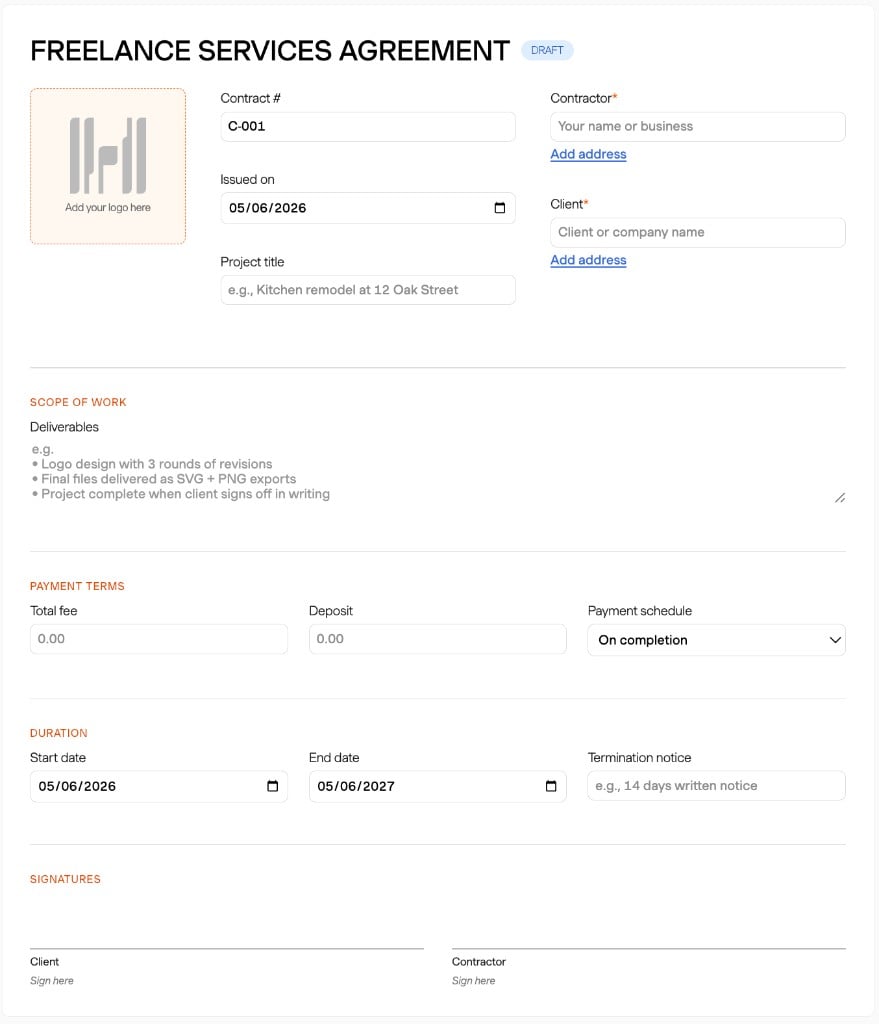
Screenshot of Harvest's event contract template tool in action.

Event Contract Template FAQs

  • Key elements of an event contract include identification of parties, event specifics like date and venue, scope of services, payment terms, and cancellation policies. These elements ensure clarity and protect both the client and the planner.

  • Start by filling in specific event details such as names, dates, and venues. Define the scope of services and payment terms clearly. Add any necessary clauses that reflect the unique aspects of your event, such as additional services or liability considerations.

  • Ensure compliance with local laws by customizing the Governing Law clause. With digital contracts, adhere to electronic signature laws like the ESIGN Act to ensure enforceability. Consult with legal professionals to address specific legal requirements.

  • Harvest supports event planners by managing time, expenses, and invoicing. It helps set up invoice templates for deposits and final payments, ensuring financial clarity and transparency in event management.

  • A cancellation policy is crucial as it outlines the conditions under which the contract can be terminated and any financial implications. It protects both parties from unforeseen cancellations and ensures fair compensation for work completed.

  • Digital platforms enhance event management by increasing efficiency and reducing operational costs by about 19%. They enable the use of digital contracts and e-signatures, streamlining processes and improving ROI by approximately 22%.

  • Avoid vague scopes of work and incomplete payment terms. Ensure all modifications are in writing and signed by both parties. Customize templates to align with local regulations to prevent legal issues.