
Harvest
Change orders
Sign up

Change Order Template

Harvest helps contractors manage the financial impacts of change orders on projects by tracking time and expenses. This support ensures accurate project budgets and timelines.

Start from a template

CHANGE ORDER DRAFT

Add your logo here

What's changing

Cost delta

Schedule impact

Approval

Client

Approve change

Contractor

Approve change

Get paid via:
Credit card / Debit card
ACH
Wire transfer

Customize change order

Appearance

Add a logo
Show change order title

Change order settings

Include cost breakdown Show labor, materials, overhead delta
Include schedule impact New completion date and days added
Require both parties to approve Standard for construction industry

Understanding Change Orders in Construction Projects

Change orders are an essential component of construction project management, often necessitated by unforeseen conditions or client requests. According to industry research, approximately 35% of construction projects encounter at least one major change throughout their lifecycle. The average number of change orders can range from 1.7 for smaller projects to 11.18 for larger ones. These changes can significantly impact project costs, with cost overruns typically falling between 4% and 5%, though they can sometimes reach up to 15%.

Mismanagement of change orders is a leading cause of project delays and cost overruns, with McKinsey noting that 98% of megaprojects face such issues. This highlights the importance of managing change orders effectively. While Harvest does not provide a dedicated change order form, it supports contractors by tracking the financial impacts of these changes on project budgets and timelines. This allows businesses to maintain oversight and control over project finances as changes occur.

Key Elements of an Effective Change Order Template

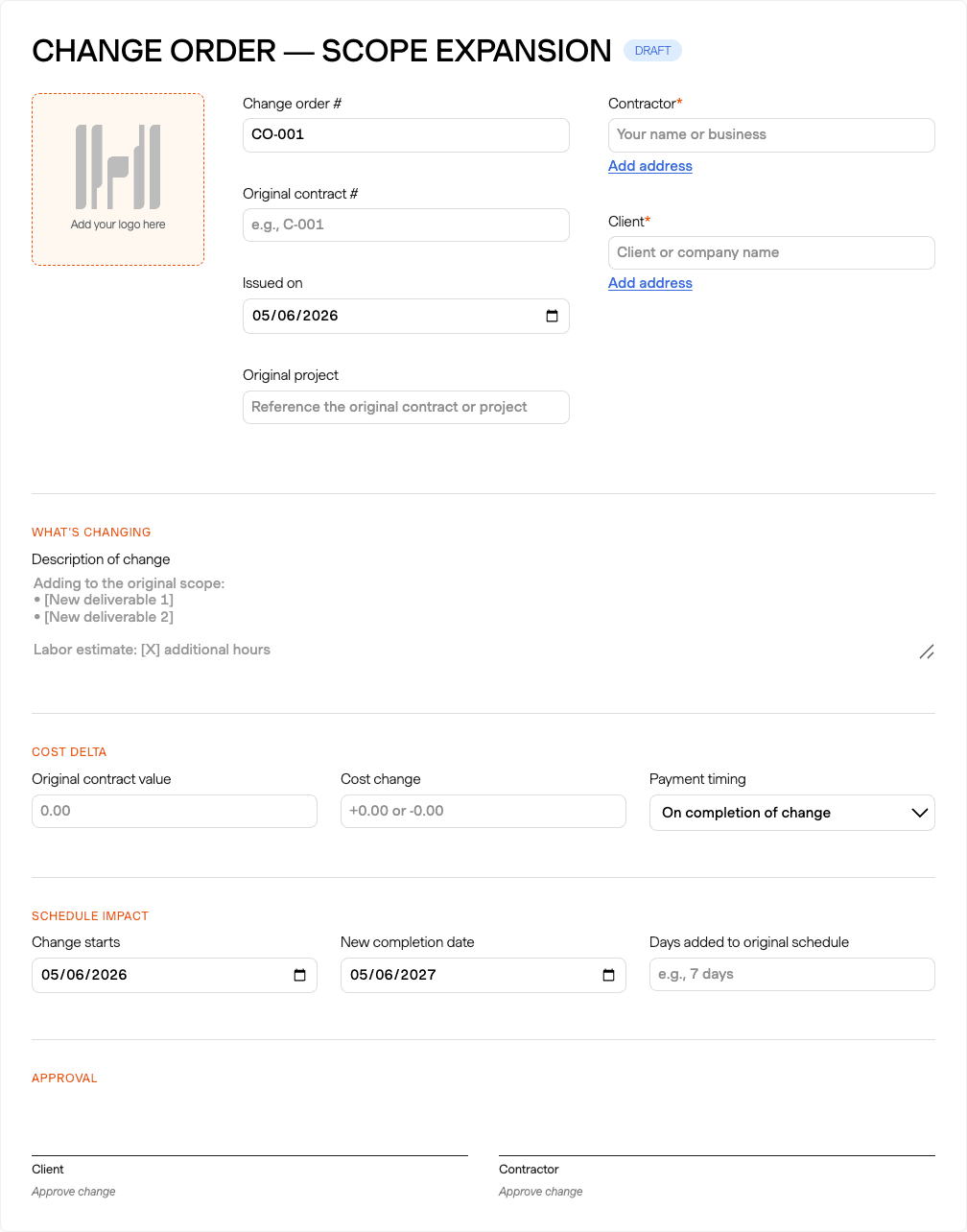
A well-structured change order template is crucial for documenting project modifications. Essential fields often include project identification, detailed descriptions of the changes, cost breakdowns, timeline impacts, and space for all necessary signatures. However, a common challenge is the reliance on verbal agreements which can lead to disputes and financial discrepancies.

While Harvest does not provide standardized change order templates, it offers robust tools for tracking project budgets and expenses, which are critical in managing the financial impact of changes. By integrating time and expense tracking, Harvest helps contractors ensure accuracy in their financial documentation, thereby reducing the risk of errors and disputes associated with change orders.

Best Practices for Managing Change Orders

Effective change order management involves a clear and proactive approach. It is recommended to submit change orders promptly after identifying the need, ideally before any related work begins. This helps prevent delays and ensures that all parties are aligned on the changes. Experts suggest documenting every change, no matter how small, to avoid potential disputes later.

Harvest can play a crucial role in this process by helping track the impact of change orders on project timelines and budgets. By maintaining accurate records of time and expenses, Harvest supports contractors in effectively managing project changes and maintaining transparency with stakeholders.

Leveraging Technology for Efficient Change Order Management

Digital transformation in change order management can lead to significant efficiency gains. Digital change orders are noted to save 2 to 4 hours per change compared to traditional paper-based methods. Harvest aids in this digital approach by allowing contractors to track time and expenses digitally, thereby streamlining the documentation process.

While Harvest does not handle the creation or submission of change order forms, its ability to export data to Excel or CSV formats provides flexibility for further processing. This feature supports contractors in maintaining comprehensive records that are crucial for managing project budgets effectively.

Manage Change Orders with Harvest

See how Harvest tracks time and expenses to manage the financial impacts of change orders on projects, ensuring accurate budgets and timelines.

Harvest interface showing change order tracking features in a construction project.

Change Order Template FAQs

  • An effective change order template should include project identification, a detailed description of the changes, cost breakdowns, timeline impacts, and spaces for necessary signatures. These elements ensure clarity and accountability.

  • Avoid common mistakes by providing clear, itemized cost breakdowns and ensuring all changes are documented before work begins. Using Harvest to track expenses can help maintain accuracy and prevent errors.

  • Change orders are vital for formally documenting project modifications, preventing disputes, and ensuring all parties agree to new terms. They help manage costs and project timelines effectively.

  • Harvest aids in managing change orders by tracking the financial impacts on project budgets and timelines. It provides tools for accurate time and expense tracking, crucial for effective change management.

  • Digital change orders can save 2 to 4 hours per change, increasing efficiency. Harvest supports digital tracking of time and expenses, streamlining the process and reducing administrative burdens.

  • Change orders can increase project costs by 4% to 5% on average, reaching up to 15% in some cases. Effective management with tools like Harvest can help mitigate these impacts by maintaining budget oversight.