
Harvest
Contracts
Sign up

Independent Contractor Agreement Template in Indonesian

Harvest supports contractors by efficiently tracking time, expenses, and invoicing, crucial for managing freelance work in Indonesia's booming gig economy.

Start from a template

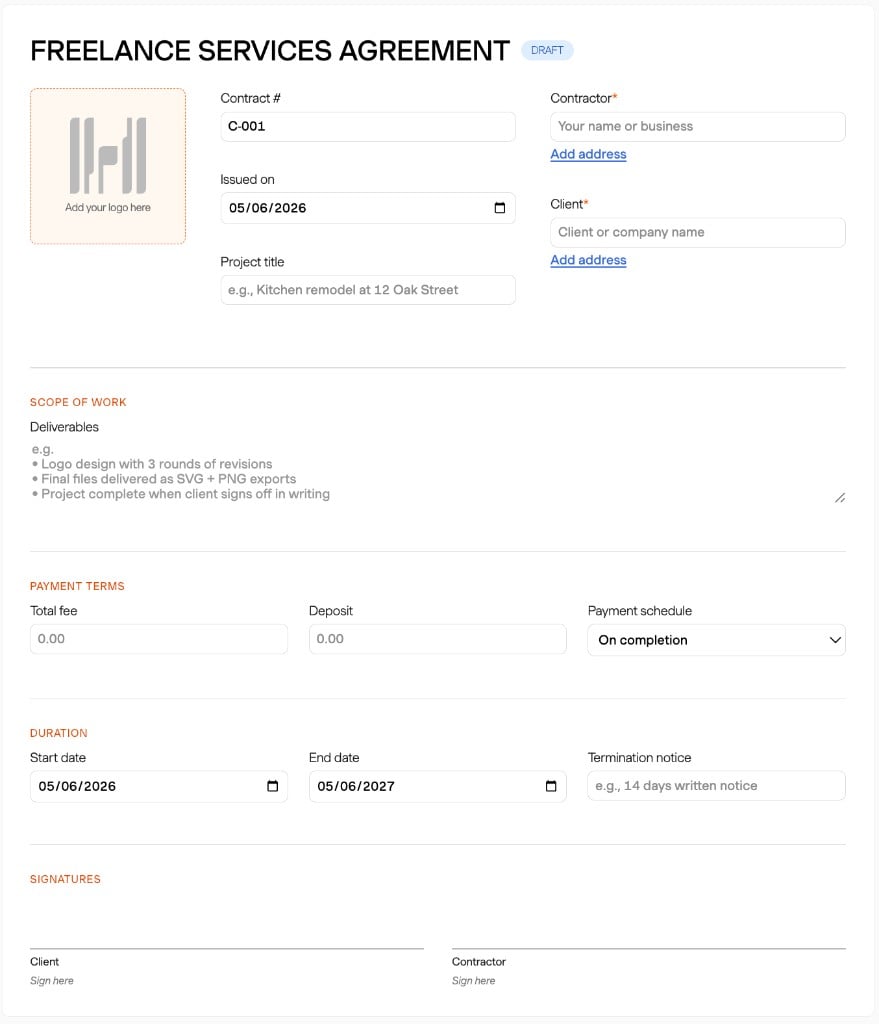
AGREEMENT DRAFT

Add your logo here

Scope of work

Payment terms

Duration

Signatures

Client

Sign here

Contractor

Sign here

Get paid via:
Credit card / Debit card
ACH
Wire transfer

Customize contract

Appearance

Add a logo
Show contract title

Contract settings

Include payment terms Total fee, deposit, and schedule
Include termination clause Notice required to end the contract
Include signature blocks Both parties sign at the bottom

Understanding Independent Contractor Agreements in Indonesia

Independent contractor agreements in Indonesia are essential for defining the relationship between businesses and contractors. These agreements must be carefully crafted to ensure compliance with local laws and protect both parties' interests. The Indonesian gig economy is booming, with an estimated 430,000 to 2.3 million workers relying on it as their primary income source as of 2023. This growth underscores the need for clear and compliant contracts.

To ensure a legally sound agreement, it's crucial to include key elements such as payment terms, project scope, and confidentiality obligations. Indonesian law requires these agreements to be written in Bahasa Indonesia to be enforceable in court. Additionally, failure to properly classify workers can lead to severe penalties, including fines and imprisonment. Therefore, clarity in contract language is vital to avoid misclassification.

Essential Components of an Independent Contractor Agreement

Creating a comprehensive independent contractor agreement involves several key components. First, it should clearly define the project scope and deliverables, outlining what the contractor is expected to achieve. Payment terms are another critical element, specifying how and when the contractor will be compensated. Industry experts recommend including clauses for intellectual property rights, confidentiality agreements, and dispute resolution mechanisms.

In Indonesia, misclassifying an employee as a contractor can result in significant tax penalties and legal repercussions, with fines reaching up to IDR 1 billion. Thus, using precise language in agreements, such as "service fee" instead of "salary," can help distinguish independent contractors from employees. This careful distinction not only aligns with legal requirements but also protects businesses from potential liabilities.

Legal and Compliance Considerations

Legal compliance is a major consideration when drafting independent contractor agreements in Indonesia. Contracts must be registered with the Indonesian Ministry of Manpower within three days of signing. This registration ensures the agreement is recognized and enforceable under Indonesian law. Additionally, contracts must be in Bahasa Indonesia to be valid in local courts, even though English is often used for international dealings.

Businesses should also be mindful of the cultural expectation of a 13th-month bonus, known as THR, during Eid al-Fitr, which, while not legally required for contractors, can impact contractor satisfaction and retention. Employing a Contractor of Record (COR) can help foreign companies manage these compliance risks by providing a localized approach to contractor engagement.

How Harvest Supports Contractor Management

While Harvest does not offer legal templates for contractor agreements, it provides invaluable tools for managing contractor workflows. Harvest helps track time, expenses, and invoicing, ensuring that contractors and businesses maintain clear and accurate records. This is particularly important in Indonesia, where compliance with invoicing requirements, such as including VAT numbers, is crucial.

By using Harvest, contractors can efficiently organize their work, monitor project budgets, and ensure timely payments. Although Harvest doesn’t offer specific legal guidance on employment classifications, it supports the operational side of contractor management, allowing businesses to focus on compliance with local laws and regulations.

Harvest for Contractor Management

Harvest helps manage workflows for contractors in Indonesia, focusing on time, expenses, and invoicing.

Screenshot of Harvest interface tailored for contractor agreement management.

Independent Contractor Agreement Template in Indonesian FAQs

  • An independent contractor agreement in Indonesia should include clear payment terms, project scope, intellectual property rights, confidentiality clauses, and dispute resolution mechanisms. It's crucial to use precise language to differentiate contractors from employees, as misclassification can lead to severe penalties.

  • Contracts in Indonesia must be written in Bahasa Indonesia to be enforceable in court. While English is often used in international agreements, the local language requirement ensures that contracts comply with Indonesian legal standards and are recognized by the courts.

  • Harvest helps manage contractor workflows by tracking time, expenses, and invoicing. It supports compliance with Indonesian invoicing requirements, such as including VAT numbers, ensuring clear and accurate financial records.

  • Misclassifying an employee as a contractor in Indonesia can incur significant tax penalties, interest charges, and potential criminal liability. Fines can reach up to IDR 1 billion, and there may be imprisonment for unpaid social security contributions.

  • The gig economy in Indonesia is rapidly growing, with estimates of 430,000 to 2.3 million workers relying on it for their primary income. This trend is fueled by the digital economy's expansion and a shift toward remote work.

  • In Indonesia, there is a cultural expectation for a 13th-month bonus, known as THR, during Eid al-Fitr. While not legally required for contractors, addressing this expectation can improve contractor satisfaction and retention.

  • A Contractor of Record (COR) helps foreign companies manage compliance in Indonesia by providing localized services that ensure contracts meet local legal standards, helping avoid misclassification and other compliance issues.