
Harvest
Contracts
Sign up

Independent Contractor Agreement Template in Filipino

Harvest supports international contractor workflows with time tracking and invoicing, helping manage payments and currency considerations efficiently.

Start from a template

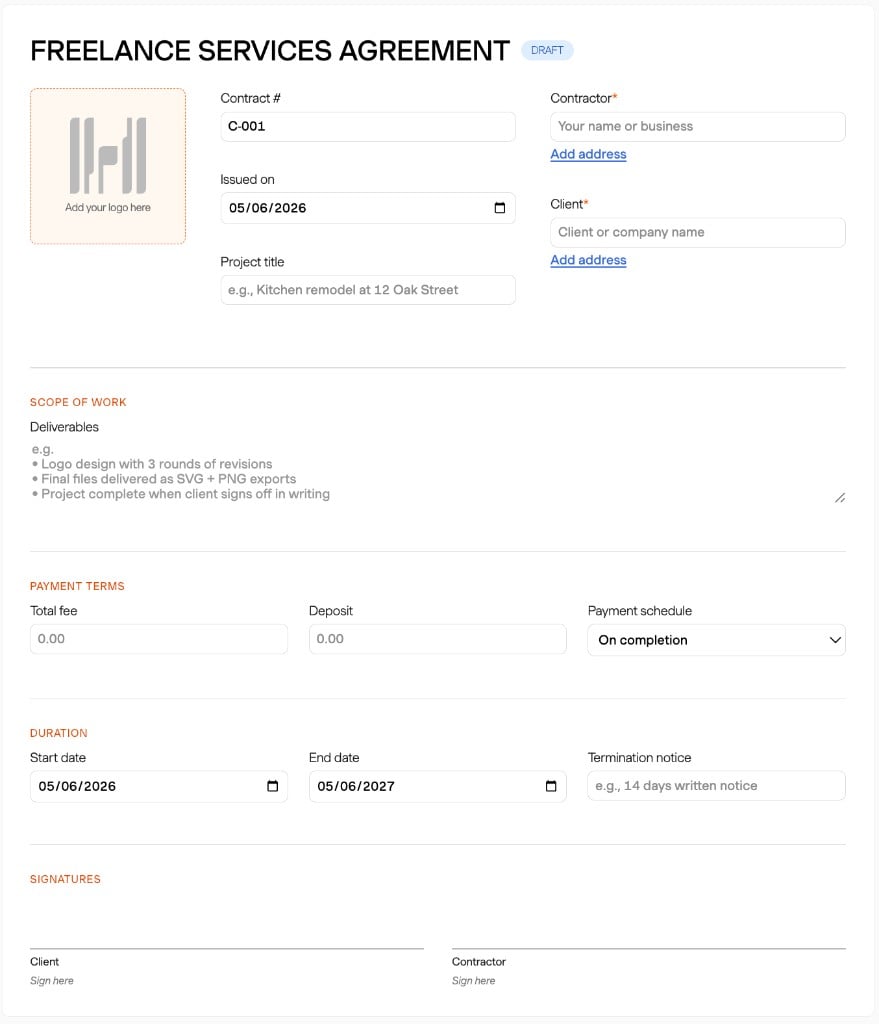
AGREEMENT DRAFT

Add your logo here

Scope of work

Payment terms

Duration

Signatures

Client

Sign here

Contractor

Sign here

Get paid via:
Credit card / Debit card
ACH
Wire transfer

Customize contract

Appearance

Add a logo
Show contract title

Contract settings

Include payment terms Total fee, deposit, and schedule
Include termination clause Notice required to end the contract
Include signature blocks Both parties sign at the bottom

Understanding Independent Contractor Agreements in the Philippines

An independent contractor agreement in the Philippines is a critical document that defines the relationship between a contractor and a client. The rise of freelancing in the Philippines, with over 1.5 million independent contractors as of 2022, underscores the importance of well-structured agreements. These agreements must clearly outline the scope of work, payment terms, and the contractor's status to avoid legal complications. The Philippines uses a "four-fold test" to differentiate employees from contractors, focusing on the control over work methods. Misclassification can lead to significant penalties, including fines up to PHP 500,000 per violation and potential imprisonment for responsible corporate officers.

To ensure compliance, agreements should emphasize the contractor's autonomy, specify deliverables, and avoid dictating daily tasks. Defining the relationship as outcome-based and commercially independent is crucial. This approach not only helps in legal compliance but also aligns with the preference of many contractors who value flexibility.

Key Clauses in a Filipino Independent Contractor Agreement

Drafting an effective independent contractor agreement in the Philippines involves including essential clauses that protect both parties. These clauses should clearly establish the contractor's independent status and specify payment terms, often in USD for international clients. Intellectual property rights and confidentiality are also critical components. For instance, contractors in the Philippines must manage their own taxes and register with the Bureau of Internal Revenue, obtaining a Tax Identification Number and a Certificate of Registration.

Legal experts advise that contracts should reflect an outcome-based relationship, where the company defines the result and quality standards, but avoids dictating daily means and methods. This helps in avoiding misclassification and the associated penalties. Additionally, maintaining records of contracts, invoices, and payments for tax purposes is essential for compliance.

Avoiding Common Pitfalls in Contractor Agreements

When drafting independent contractor agreements in the Philippines, it is crucial to avoid common pitfalls that may lead to legal issues. One such mistake is misclassifying contractors as employees by exerting control over their work schedule or methods. Instead, agreements should emphasize the contractor's control over their work and explicitly state the absence of an employer-employee relationship.

Another common error is providing equipment or making commitments about ongoing work, which can blur the lines between contractor and employee. Companies should focus on defining deliverables rather than daily tasks and establish communication cadences instead of mandatory attendance requirements. By adhering to these guidelines, companies can protect themselves from legal scrutiny while fostering a productive contractor relationship.

Harvest: Supporting Contractor Workflows

While Harvest does not provide legal agreement templates, it plays a vital role in managing contractor workflows for international engagements. Harvest supports setting payment terms and managing currency considerations, offering multi-currency capabilities for different clients. This feature is particularly beneficial for international contractors working with global clients.

Harvest also excels in time tracking and invoicing, helping contractors maintain accurate records of their work and ensuring timely payments. By streamlining these processes, Harvest allows contractors to focus on their deliverables without worrying about administrative burdens. This makes it an invaluable tool for contractors and businesses alike, facilitating smoother operations across borders.

Independent Contractor Solutions with Harvest

Discover how Harvest supports contractor workflows with time tracking and multi-currency features, enhancing international engagements.

Harvest interface showing contractor workflows and currency management features.

Independent Contractor Agreement Template in Filipino FAQs

  • An independent contractor agreement in the Philippines defines the relationship between a contractor and a client, specifying the scope of work, payment terms, and the autonomy of the contractor. It is crucial for ensuring compliance with local laws and avoiding misclassification.

  • Essential clauses in a Filipino contractor agreement include those establishing the contractor's independent status, payment terms, intellectual property rights, and confidentiality. These clauses help protect both parties and ensure legal compliance.

  • To avoid misclassification, companies should draft agreements that emphasize the contractor's control over their work, explicitly state no employer-employee relationship, and focus on deliverables rather than daily tasks. This approach helps prevent legal issues and penalties.

  • Contractor autonomy is important because it differentiates independent contractors from employees. Agreements should reflect an outcome-based relationship where the contractor controls their work methods, aligning with legal requirements and contractor preferences.

  • Harvest supports international contractor workflows by providing tools for time tracking, invoicing, and multi-currency management. These features help contractors manage payments and focus on deliverables, enhancing productivity across borders.

  • Common mistakes include misclassifying contractors as employees by controlling their work schedule or methods, providing equipment, and making commitments about ongoing work. Agreements should focus on deliverables and contractor autonomy to avoid these pitfalls.

  • Payment terms for Filipino contractors often include specifications in USD for international clients, with clauses for timely payments and clear records to ensure compliance and smooth transactions.