
Harvest
Contracts
Sign up

Nda Template in Italian

NDAs, or "accordi di riservatezza," play a crucial role in Italy's business landscape by safeguarding sensitive information. Harvest offers tools that can help streamline your business processes related to NDAs and other legal agreements.

Start from a template

AGREEMENT DRAFT

Add your logo here

Scope of work

Payment terms

Duration

Signatures

Client

Sign here

Contractor

Sign here

Get paid via:
Credit card / Debit card
ACH
Wire transfer

Customize contract

Appearance

Add a logo
Show contract title

Contract settings

Include payment terms Total fee, deposit, and schedule
Include termination clause Notice required to end the contract
Include signature blocks Both parties sign at the bottom

Understanding Italian NDA Requirements

Non-disclosure agreements (NDAs), or "accordi di riservatezza" in Italian, are essential tools for safeguarding sensitive information across various industries in Italy. These agreements are governed by both national and European laws, including the Italian Civil Code and the EU Directive 2016/943 on the protection of trade secrets. A well-drafted NDA in Italy must include specific details such as the parties involved, the purpose of information sharing, a clear definition of confidential information, and the duration of confidentiality. Italian law emphasizes the importance of these elements to ensure enforceability and legal protection.

For an NDA to be legally binding in Italy, it must be in writing and signed by all parties. The agreement should precisely define what constitutes confidential information, such as technical data, financial details, and business strategies. While the duration of confidentiality can be indefinite for trade secrets, a typical NDA includes a timeframe of around 24 months for other information types. The inclusion of penalty clauses can deter breaches and establish compensation for violations, though any excessive penalties might be reduced by a judge.

Key Components of an Italian NDA

Crafting an effective NDA in Italy involves several critical components. First, the agreement must clearly identify the parties involved and the purpose for which confidential information is being shared. Additionally, it is crucial to define "Confidential Information" explicitly, using specific categories rather than vague terms, to prevent unenforceability. This might include categories like technical data, product plans, customer information, and financial data.

The obligations of the receiving party must be outlined, ensuring they understand how to handle and protect the information. Permitted disclosures should also be defined, specifying who may receive the information, such as employees or affiliates with a legitimate need to know. Lastly, remedies for breaches, including penalty clauses and injunctive relief, should be clearly stated, along with standard clauses like governing law and dispute resolution.

Legal Framework and Compliance

In Italy, NDAs are governed by a robust legal framework that includes the Italian Industrial Property Code, which protects trade secrets, and the Italian Criminal Code, which addresses the unlawful acquisition and use of confidential information. Compliance with EU regulations, such as the General Data Protection Regulation (GDPR), is also mandatory for NDAs involving personal data, ensuring adherence to data protection principles.

Additionally, the eIDAS Regulation (Regulation (EU) N°910/2014) plays a role in the enforceability of electronic signatures, granting them the same legal status as handwritten signatures. Italian law generally does not accept overly broad or lifelong contractual obligations, necessitating a specific and reasonable timeframe for confidentiality. These legal requirements ensure that NDAs serve their intended purpose of protecting sensitive business information effectively.

Practical Tips for Drafting an NDA

Drafting an effective NDA in Italy requires careful attention to detail. A practical approach involves several steps: 1) clearly identify the parties and define the purpose of the NDA; 2) specify what constitutes "Confidential Information" with precise categories; 3) outline the obligations of the receiving party; 4) define any permitted disclosures; 5) set a clear duration for confidentiality; 6) include remedies for breach, such as penalties and injunctive relief; and 7) use standard legal clauses for governing law and dispute resolution.

Common pitfalls to avoid include using vague terms, failing to specify the duration of confidentiality, and not ensuring the signatory is authorized to bind the company. NDAs are not "standard" documents and require meticulous drafting to be enforceable. Integrating NDAs into business processes, such as employment contracts and vendor agreements, can further protect sensitive information during business negotiations and collaborations.

Create Italian NDA Templates with Harvest

Explore how Harvest helps create customizable NDA templates in Italian, ensuring compliance and ease of use.

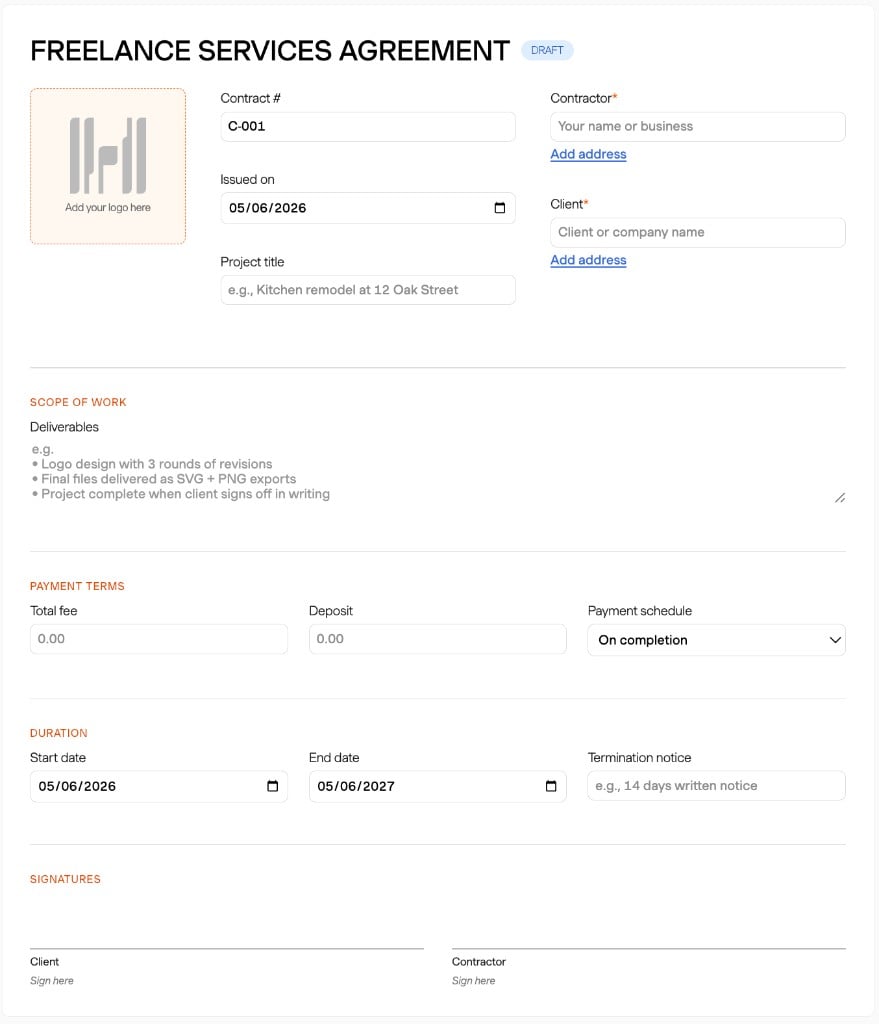
Screenshot of Harvest displaying NDA template creation in Italian.

Nda Template in Italian FAQs

  • An NDA in Italy must include the identification of parties, a clear definition of confidential information, purposes for information sharing, and the duration of confidentiality. Specific obligations for information handling and remedies for breaches are also essential.

  • Customizing an NDA involves clearly defining parties, specifying confidential information categories, and outlining obligations and remedies. Tailor the agreement to the specific context and needs of your business, ensuring all legal requirements are met.

  • In Italy, NDAs must comply with the Italian Civil Code, the EU Directive on trade secrets, and GDPR for personal data. They must be in writing, signed by all parties, and include a clear definition of confidential information.

  • Important clauses in an Italian NDA include the definition of confidential information, the duration of confidentiality, obligations of the receiving party, permitted disclosures, remedies for breaches, governing law, and dispute resolution clauses.

  • NDAs are used in various situations, including employment relationships, business negotiations, mergers and acquisitions, and collaborations where sensitive information needs protection. They are crucial for safeguarding intellectual property and trade secrets.

  • Italian law requires NDAs to be precise, avoiding vague language and overly broad obligations. The agreement must have a reasonable timeframe and comply with trade secret protection laws to be enforceable.

  • Avoid using vague definitions, failing to specify confidentiality duration, and ensuring the signatory's authority. Avoid including overly broad obligations and ensure the NDA aligns with legal standards for enforceability.