
Harvest
Contracts
Sign up

Nda Template in Filipino

Navigating the complexities of NDA templates in Filipino is critical for legal compliance in the Philippines. Harvest helps simplify this process, ensuring confidentiality and legal clarity.

Start from a template

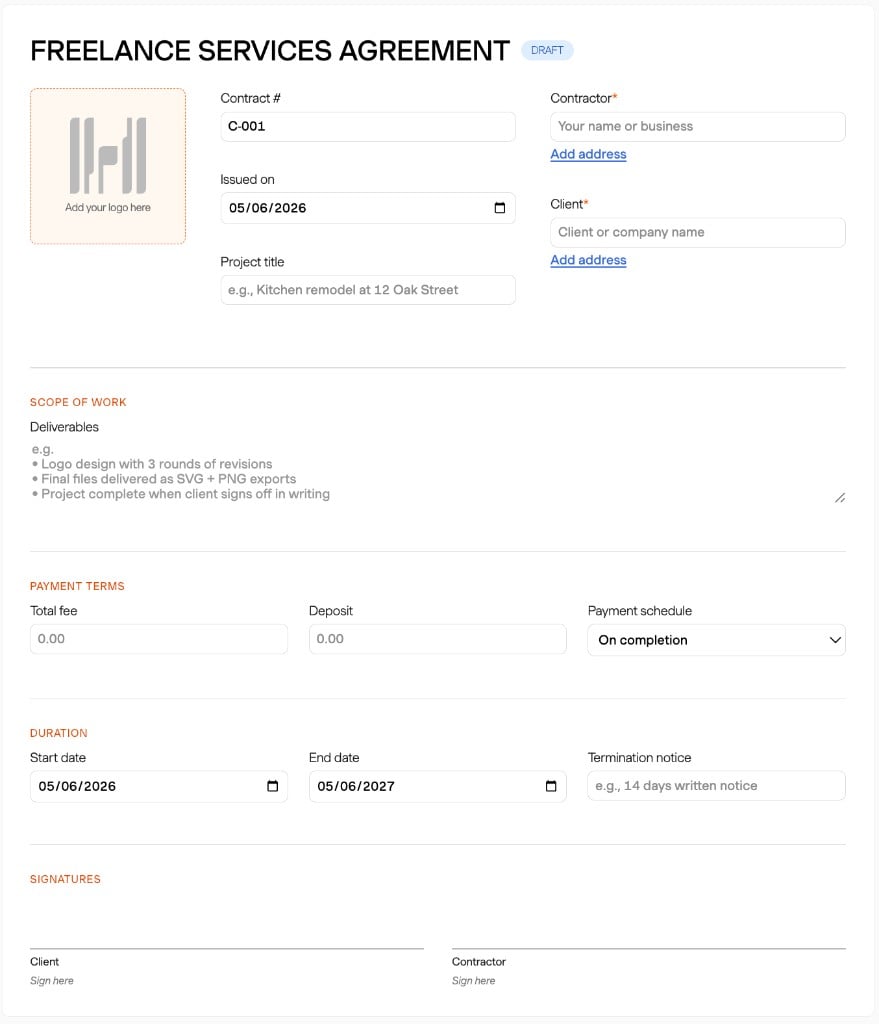
AGREEMENT DRAFT

Add your logo here

Scope of work

Payment terms

Duration

Signatures

Client

Sign here

Contractor

Sign here

Get paid via:
Credit card / Debit card
ACH
Wire transfer

Customize contract

Appearance

Add a logo
Show contract title

Contract settings

Include payment terms Total fee, deposit, and schedule
Include termination clause Notice required to end the contract
Include signature blocks Both parties sign at the bottom

Essential Components of an NDA in the Philippines

In the Philippines, Non-Disclosure Agreements (NDAs) are crucial tools for safeguarding confidential information across industries. Governed by the Civil Code, Intellectual Property Code, and the Electronic Commerce Act, NDAs are legally binding and enforceable. Essential components include clear identification of parties, a precise definition of what constitutes confidential information, and the obligations of the receiving party. Industry research indicates that these agreements must specify the duration of confidentiality obligations and include remedies for breaches, such as injunctions or damages claims.

Additionally, NDAs must stipulate that the Philippine law governs the agreement, and disputes are resolved by Philippine courts. Given the country's bilingual nature, NDAs are often drafted in both Filipino and English to ensure clarity and compliance. This dual-language approach helps mitigate the risk of misinterpretation, which can lead to significant legal and financial repercussions.

Customizing an NDA Template for Filipino Use

Customizing an NDA template for use in the Philippines requires attention to both legal and linguistic details. It's essential to tailor the document to the specific roles and relationships involved, ensuring that definitions of confidential information are neither vague nor overly broad. Legal experts recommend clear drafting to avoid common pitfalls like undefined or overly broad non-compete clauses, which can undermine enforceability.

Incorporating precise language is crucial, especially when translating NDAs into Filipino. Errors in translation can alter the document's meaning, leading to disputes. To maintain legal validity, translations should be certified by Department of Foreign Affairs-accredited translators or court-sworn interpreters, especially for court admissibility. The emphasis on accurate translation reflects the Philippines' commitment to ensuring that all parties fully understand the agreement's terms.

Legal and Compliance Considerations for Filipino NDAs

Legal compliance is a critical consideration when drafting NDAs in the Philippines. These agreements must not contravene the Data Privacy Act of 2012 or other public policies. NDAs should clearly outline the consequences of breaches, which can include injunctions, damages, and even criminal charges under the Cybercrime Prevention Act for severe cases involving trade secrets or data breaches.

Moreover, NDAs must comply with language requirements for legal documents in the Philippines. If an NDA is not in an official language—Filipino or English—it must be accompanied by a certified translation to be admissible in court. This requirement underscores the importance of ensuring that legal documents are accessible and understandable to all parties involved.

Practical Tips for Effective NDA Implementation

Implementing NDAs effectively in the Philippines involves more than just drafting a template. For maximum protection, NDAs should be integrated with broader risk management strategies. This includes using electronic signatures, which are legally recognized under the Electronic Commerce Act, to facilitate digital execution and storage of NDAs.

Additionally, NDAs should be part of a comprehensive protection strategy that includes "clean exit" certifications for departing employees, revocation of access to confidential information, and injunctive-relief clauses to enable swift legal action in case of breaches. By incorporating these measures, organizations can enhance the enforceability and practical utility of NDAs, safeguarding their sensitive information more effectively.

NDA Templates with Harvest

Explore how Harvest ensures clear, compliant NDA templates in Filipino for effective confidentiality agreements.

Screenshot of a Filipino NDA template in Harvest's interface.

Nda Template in Filipino FAQs

  • An NDA in the Philippines must include clear identification of parties, a precise definition of confidential information, and obligations of the receiving party. It must specify the duration of the confidentiality obligation and remedies for breach, governed by Philippine law.

  • Yes, NDAs are legally binding in the Philippines, governed by the Civil Code, Intellectual Property Code, and the Electronic Commerce Act. They must meet the essential requisites of a contract to be enforceable.

  • Accurate translation is crucial because errors can lead to misinterpretation and legal disputes. Translations should be certified by DFA-accredited translators or court-sworn interpreters to ensure admissibility in court.

  • Customizing NDAs for Filipino use involves tailoring the document to the specific roles involved and ensuring precise language, especially in translations. This helps avoid common drafting pitfalls that undermine enforceability.

  • Breaching an NDA in the Philippines can result in injunctions, damages, and potentially criminal charges under the Cybercrime Prevention Act, especially in cases involving trade secrets or data breaches.

  • Effective NDA implementation includes using electronic signatures, integrating NDAs with broader risk management strategies, and ensuring compliance with the Data Privacy Act of 2012.

  • Electronic signatures are legally recognized under the Electronic Commerce Act, allowing NDAs to be digitally executed and stored, facilitating ease of use and legal compliance.