
Harvest
Contracts
Sign up

Nda Template in Thai

NDAs are essential for protecting confidential information in Thailand's tech-driven economy. Harvest offers tools to streamline NDA drafting, ensuring enforceability under Thai law.

Start from a template

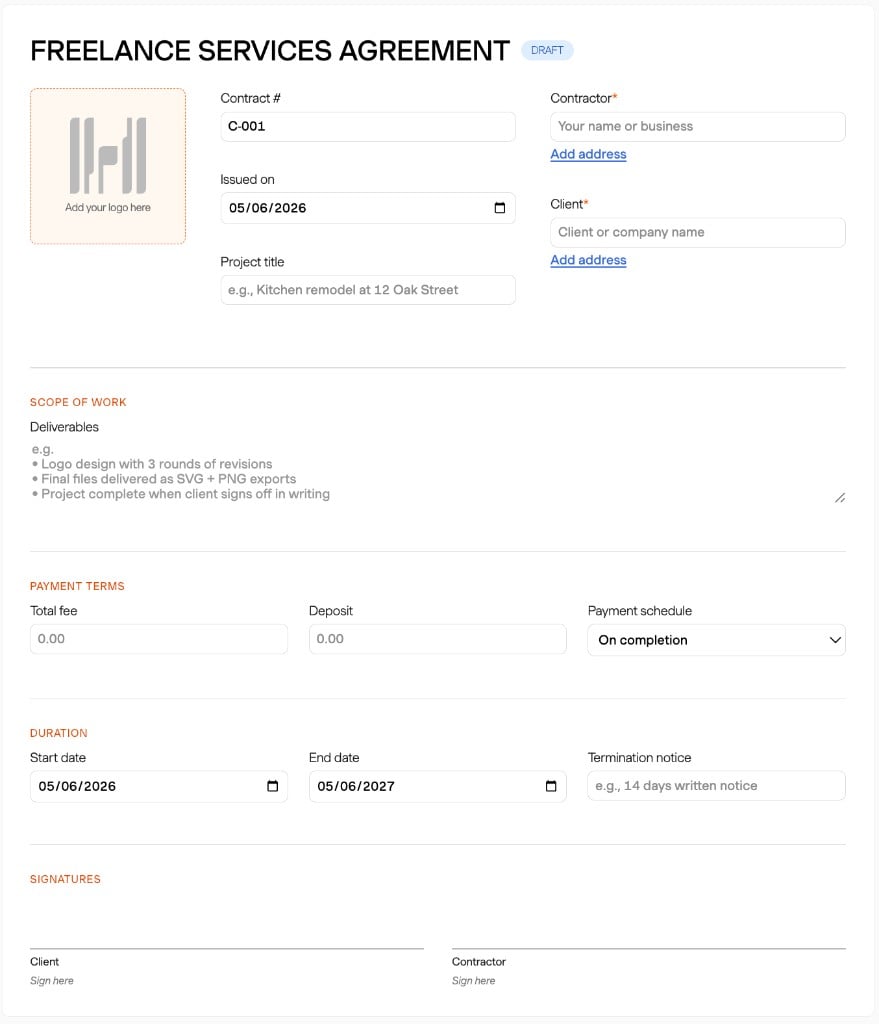
AGREEMENT DRAFT

Add your logo here

Scope of work

Payment terms

Duration

Signatures

Client

Sign here

Contractor

Sign here

Get paid via:
Credit card / Debit card
ACH
Wire transfer

Customize contract

Appearance

Add a logo
Show contract title

Contract settings

Include payment terms Total fee, deposit, and schedule
Include termination clause Notice required to end the contract
Include signature blocks Both parties sign at the bottom

Key Elements of an NDA in Thailand

Non-Disclosure Agreements (NDAs) are crucial in safeguarding confidential information in Thailand's tech-driven economy. A valid NDA in Thailand must include clear definitions of what constitutes confidential information, such as trade secrets, business plans, and proprietary software. Thai courts emphasize the importance of clarity, as vague terms can lead to unenforceability. For example, in a real estate case, an NDA with ambiguous terms failed to protect condo plans due to its lack of specific definitions and ties to the Trade Secrets Act.

Additionally, NDAs in Thailand should specify the obligations of the receiving party, such as using the information solely for permitted purposes and not disclosing it to third parties. It's also vital to include exclusions, like information that's already public. The NDA should comply with the Thai Civil and Commercial Code and the Trade Secrets Act, ensuring that reasonable protective measures are in place for the information.

Drafting an Enforceable NDA

Drafting an enforceable NDA in Thailand requires meticulous attention to detail. Legal experts highlight that Thai courts often scrutinize NDAs for reasonableness and clarity. The agreement should use unambiguous language and avoid overly broad or perpetual terms, which may render it unenforceable. A typical NDA duration in Thailand is between 1 to 3 years post-termination for employment-related agreements.

It's advisable to draft NDAs in both Thai and English to prevent misunderstandings. This bilingual approach is recommended, as it enhances enforceability and ensures that all parties fully understand the terms. Moreover, specifying Thai law as the governing law and including dispute resolution mechanisms, such as Thai courts or arbitration, can further strengthen the NDA's enforceability.

Legal Considerations and Compliance

While there is no dedicated legislation for NDAs in Thailand, they are enforceable under the general principles of contract law within the Thai Civil and Commercial Code. The 2002 Trade Secrets Act supports NDAs by protecting information that is not publicly known and has economic value. Compliance with Thailand's Personal Data Protection Act (PDPA) is also necessary when personal data is involved.

Breaches of an NDA can lead to significant legal consequences, including claims for damages, injunctive relief, and possibly termination of employment or contracts. The Thai Criminal Code penalizes unauthorized disclosure of confidential information. Therefore, it's crucial to ensure that NDAs are meticulously drafted and compliant with relevant Thai laws to avoid these penalties.

Common Pitfalls in NDA Drafting

One of the most common pitfalls in NDA drafting in Thailand is failing to clearly define what constitutes confidential information. This can lead to courts interpreting the agreement in favor of the receiving party. It's essential to include specific examples of confidential data, such as client lists or financial records, to avoid ambiguity.

Another pitfall is the inclusion of overly broad or restrictive clauses, which may be deemed unenforceable. For instance, a case involving a startup in Chiang Mai showed how vague NDAs can lead to the misuse of confidential information. It's important to draft NDAs with reasonable terms that comply with Thai legal principles to ensure their enforceability.

Streamline NDA Drafting with Harvest

Explore Harvest's tools for crafting enforceable NDAs in Thailand, ensuring compliance and clarity with bilingual templates.

Harvest tool for NDA creation in Thailand

Nda Template in Thai FAQs

  • Key elements include defining confidential information clearly, specifying obligations and exclusions, and ensuring compliance with Thai contract law and the Trade Secrets Act.

  • Ensure clarity in terms and definitions, draft the NDA in both Thai and English, and specify Thai law as the governing law along with dispute resolution mechanisms.

  • Yes, bilingual Thai-English NDA templates are available and recommended to prevent misunderstandings and enhance enforceability.

  • Include trade secrets, business plans, client lists, financial records, and any proprietary data. Clearly defining these can prevent ambiguity in enforcement.

  • Common pitfalls include vague definitions, overly broad terms, and failing to comply with Thai legal principles, which can lead to unenforceability.

  • NDAs are enforceable under the Thai Civil and Commercial Code and supported by the Trade Secrets Act, though there is no dedicated NDA legislation.

  • Penalties include legal action for damages, injunctive relief, termination of employment or contract, and potential fines or incarceration under the Trade Secrets Act.