
Harvest
Contracts
Sign up

Independent Contractor Agreement Template in Thai

Harvest empowers contractors to efficiently track time, manage expenses, and streamline invoicing, crucial for independent contractor agreements in Thailand.

Start from a template

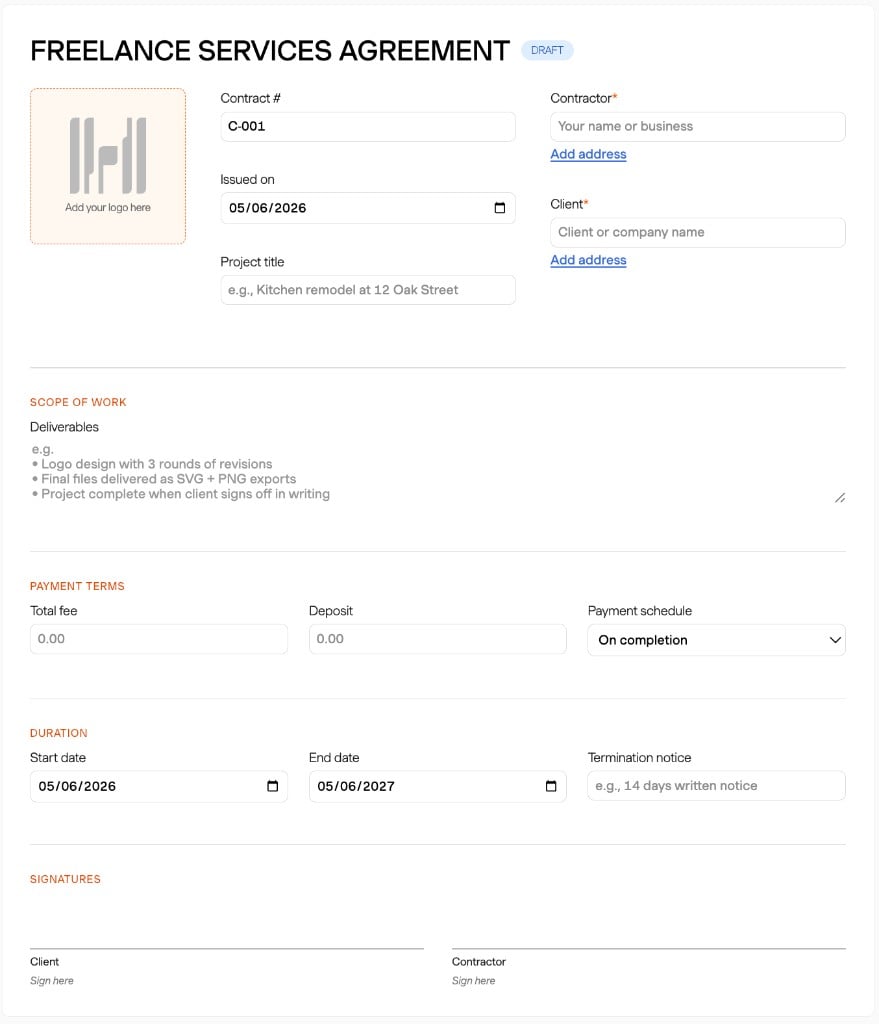
AGREEMENT DRAFT

Add your logo here

Scope of work

Payment terms

Duration

Signatures

Client

Sign here

Contractor

Sign here

Get paid via:
Credit card / Debit card
ACH
Wire transfer

Customize contract

Appearance

Add a logo
Show contract title

Contract settings

Include payment terms Total fee, deposit, and schedule
Include termination clause Notice required to end the contract
Include signature blocks Both parties sign at the bottom

Understanding the Legal Framework of Contractor Agreements in Thailand

In Thailand, independent contractor agreements are governed by the Thai Civil and Commercial Code, specifically Sections 587 to 607, which pertain to the "contract of hire of work." This legal framework differentiates independent contractors from employees, who are subject to the more stringent Labour Protection Act of 1998. Key factors that define this distinction include the contractor's autonomy in task execution, the ability to set their own schedules, and receiving lump-sum payments rather than recurring salaries.

To ensure compliance and avoid misclassification penalties, it is crucial for businesses to draft clear service agreements. Misclassifying an employee as an independent contractor can result in significant fines, back payments on social security contributions with surcharges, and even potential imprisonment. Additionally, there are withholding tax obligations, where a 3% tax must be withheld from payments to contractors and remitted to the Thai Revenue Department.

Given these complexities, companies often rely on professional corporate services to navigate the legal landscape, particularly when hiring foreign contractors who may require specific visas and work permits. Businesses should avoid imposing fixed working hours or integrating contractors into internal employee policies, as these actions can lead to reclassification as an employee.

Key Elements of a Compliant Contractor Agreement

A well-crafted independent contractor agreement is essential for delineating the terms of the relationship and ensuring legal compliance in Thailand. Such agreements should clearly define the scope of work, project deliverables, payment terms, and termination conditions. Legal experts emphasize the importance of avoiding vague terms like "reasonable efforts" and instead opting for specific, measurable deliverables and timelines.

Specific clauses that should be included in a compliant agreement are confidentiality, intellectual property rights, insurance and liability, and a dispute resolution mechanism. For instance, project-based or milestone-based payment structures are often recommended to reinforce the contractor's status. This approach is particularly prevalent in the tech and creative industries in Thailand, which have moved away from traditional fixed monthly salaries.

Moreover, maintaining thorough records of service agreements, invoices, and withholding tax certificates is vital for supporting proper classification and ensuring tax compliance. Such diligence can safeguard businesses from potential legal disputes and financial liabilities.

Navigating the Gig Economy in Thailand

Thailand is experiencing a surge in the gig economy, driven by economic uncertainty and a growing preference for flexible work arrangements. A JobsDB 2024 survey revealed a significant increase in non-full-time employment, with permanent part-time roles rising from 6% to 42%. This shift is propelled by companies seeking cost-effective solutions and the ability to adapt quickly to market changes.

The rise of remote work, which grew from 50% in 2020 to 76% in 2023 according to the Global Talent Survey, has further fueled this trend. As a result, more Thai professionals are engaging in freelance and contract work, both locally and internationally. This environment highlights the importance of having solid contractor agreements in place to manage these dynamic working relationships.

In sectors such as construction and tourism, the demand for independent contractors is expected to continue growing. The construction industry is projected to expand at a 4% annual rate from 2025 to 2028, while the Tourism Authority of Thailand aims to attract 40 million foreign visitors by 2025. These sectors rely heavily on contractors to support growth, making a robust agreement template an indispensable tool for businesses.

Leveraging Harvest for Contractor Management

While Harvest does not provide legal or tax advice specific to Thailand, it is an invaluable tool for managing the operational aspects of contractor agreements. Harvest helps contractors efficiently track time, manage expenses, and streamline invoicing processes, which are critical components of maintaining a successful independent contractor relationship.

By using Harvest, businesses can ensure accurate billing and transparent project budgeting, thereby enhancing trust with contractors. This is particularly important in Thailand's gig economy, where clear and reliable financial management can make a significant difference in contractor satisfaction and retention.

Moreover, Harvest's features support the organizational needs of contractors by offering visibility into project timelines and expense tracking. This empowers contractors to manage their work more effectively and allows businesses to focus on strategic growth without being bogged down by administrative tasks.

Manage Contractors with Harvest

See how Harvest helps manage time, expenses, and invoicing for independent contractor agreements in Thailand.

Harvest platform showcasing independent contractor agreement features.

Independent Contractor Agreement Template in Thai FAQs

  • Independent contractor agreements in Thailand are governed by Sections 587 to 607 of the Thai Civil and Commercial Code, focusing on the "contract of hire of work." Key legal requirements include clearly defining the scope of work, payment terms, and maintaining contractor independence to avoid misclassification as an employee.

  • To draft a compliant service agreement in Thailand, ensure it includes specific clauses on project deliverables, payment terms, confidentiality, and dispute resolution. Avoid vague terms and maintain records of all agreements and payments to support proper classification and tax compliance.

  • The withholding tax rate for services provided by an independent contractor to a Thai juristic person is typically 3%. The hiring company must remit the withheld amount to the Thai Revenue Department and provide a withholding tax certificate to the contractor.

  • Harvest aids in managing contractors by offering tools for time tracking, expense management, and invoicing. While it doesn't provide legal advice, it streamlines the operational aspects of contractor agreements, ensuring accurate billing and project budgeting.

  • Misclassifying a contractor as an employee can lead to fines, back payments on social security contributions, and potential imprisonment. Ensuring proper documentation and maintaining contractor independence are crucial to avoid such penalties.

  • The construction and tourism sectors in Thailand are experiencing growing demand for contractors. The construction industry is projected to grow by 4% annually from 2025 to 2028, while the tourism sector aims to attract 40 million foreign visitors by 2025, creating numerous opportunities for independent contractors.

  • Maintaining contractor independence is vital to avoid reclassification as an employee, which can result in legal and financial penalties. Contractors should have the freedom to set their schedules and methods, reinforcing their independent status.