
Harvest
Contracts
Sign up

Freelance Contract Template in Thai

Thailand's freelance market is booming, but drafting compliant contracts is complex. Harvest supports freelancers with invoicing and currency management, while legal specifics need professional advice.

Start from a template

AGREEMENT DRAFT

Add your logo here

Scope of work

Payment terms

Duration

Signatures

Client

Sign here

Contractor

Sign here

Get paid via:
Credit card / Debit card
ACH
Wire transfer

Customize contract

Appearance

Add a logo
Show contract title

Contract settings

Include payment terms Total fee, deposit, and schedule
Include termination clause Notice required to end the contract
Include signature blocks Both parties sign at the bottom

Why a Freelance Contract Template in Thai is Essential

A freelance contract template in Thai is crucial for ensuring clear communication and legal compliance between freelancers and clients in Thailand. As the freelance sector in Thailand continues to grow—expected to reach 8.2 million workers by 2027—it becomes increasingly important to have properly structured contracts. These contracts help avoid misclassification risks that can lead to fines or legal issues, as Thai law distinguishes between a "contract of services" and a "contract for work."

Effective contracts should clearly define the scope of work, payment terms, and other critical elements to protect both parties. For instance, 78% of Thai businesses now outsource functions to freelancers, indicating a high demand for structured agreements. An effective contract can also address common challenges such as payment disputes, often resolved by specifying terms and deadlines explicitly. Harvest can assist with managing payment terms, including VAT and currency considerations, but for legal compliance, it is recommended to consult a legal professional.

Key Elements of a Thai Freelance Contract Template

A compliant freelance contract template in Thailand should include several key elements to ensure clarity and legal security. First, it should specify the scope of work and deliverables, which helps in setting clear expectations and timelines. With the digital economy contributing 22.5% to Thailand's GDP, clarity in digital deliverables is crucial. Payment terms are also essential, with options like lump-sum payments upon milestone completions being a best practice.

Termination conditions and confidentiality clauses are other critical components. While Harvest aids in setting detailed payment terms, including VAT, it does not provide legal compliance or specific clauses for intellectual property or confidentiality. These should be crafted with legal guidance to align with Thai business practices. Additionally, bilingual contracts are recommended, especially for international dealings, to prevent misunderstandings and ensure that both Thai and English terms are clear.

Navigating Legal Compliance in Thai Freelance Contracts

Legal compliance is a vital aspect of freelance contracts in Thailand, particularly to avoid misclassification and its associated penalties. Thai law favors workers, assuming an employer's higher position, which places the onus on businesses to prove a freelancer's independence. Contracts should clearly state that freelancers control their own work methods and schedules.

The Thai Civil and Commercial Code, particularly Sections 587 to 607, governs contracts for hire of work, emphasizing the contractor's responsibility for specific tasks and the provision of necessary tools. While Harvest supports freelancers with invoicing and currency management, it is crucial to consult a legal expert for compliance with these codes. The upcoming Independent Workers Protection Act may also bring new regulatory changes, underscoring the need for up-to-date legal advice.

Practical Tips for Drafting a Thai Freelance Contract

Drafting a freelance contract in Thailand involves several practical considerations to ensure it meets legal standards and business needs. Firstly, clearly define the project deliverables and agree on payment schedules to avoid disputes. With a 58% rise in average freelance income in Thailand, defining fair compensation is key.

Addressing potential payment issues through detailed contracts is also important. Harvest offers tools for managing detailed payment terms, but not for legal compliance. Therefore, consulting a legal professional for drafting contract terms that align with Thai labor laws is recommended. Additionally, consider the use of secure online payment platforms to facilitate efficient cross-border transactions, keeping in mind Thailand’s Exchange Control Act.

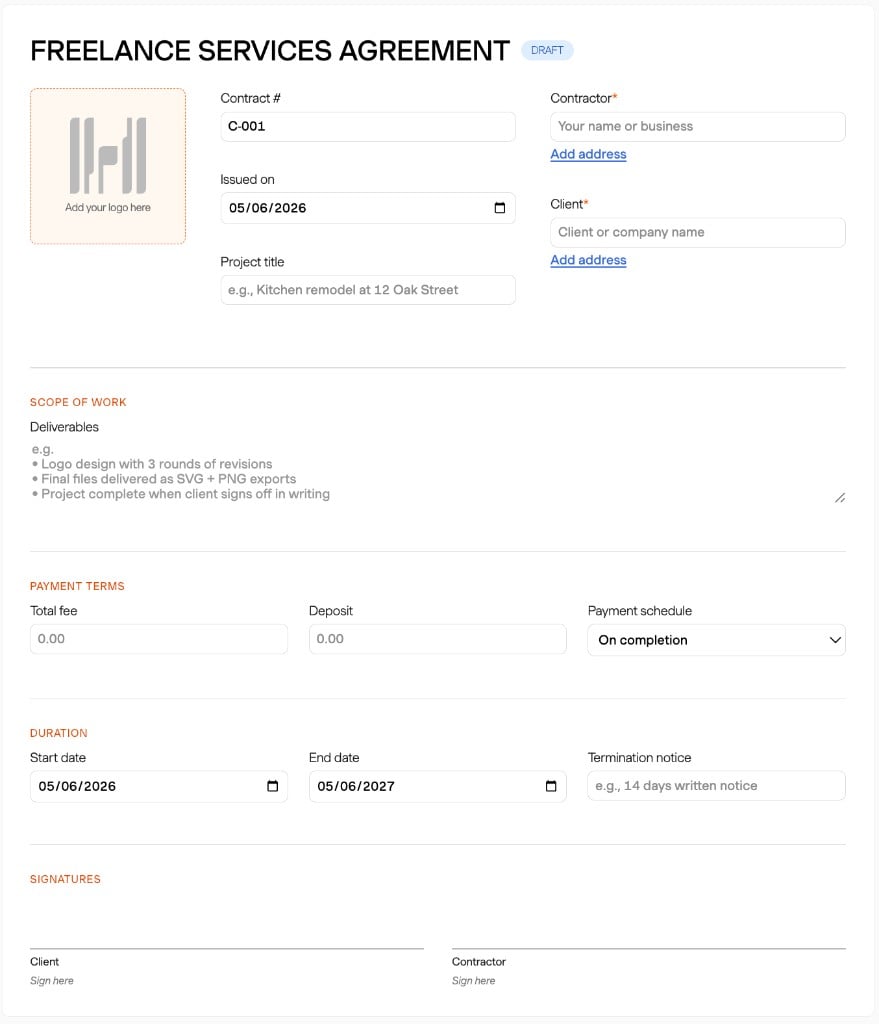
Freelance Contract Templates with Harvest

Explore how Harvest supports detailed payment terms in freelance contracts, while legal specifics require professional guidance.

Screenshot of a freelance contract template in Thai with Harvest features.

Freelance Contract Template in Thai FAQs

  • Essential elements include the scope of work, payment terms, termination conditions, and confidentiality provisions. Contracts should be clear and precise to avoid misunderstandings and legal issues.

  • To ensure compliance, specify the contractor’s independence and outline the work scope and payment terms clearly. Consulting a legal professional is recommended for Thai legal specifics.

  • Yes, using a bilingual contract is recommended to ensure clarity and legal compliance. It helps prevent misunderstandings and serves as clear evidence of terms agreed upon by both parties.

  • Common payment terms include lump-sum payments upon milestone completions and clear deadlines for payments. Clear terms help avoid disputes and ensure smooth transactions.

  • Harvest can assist with invoicing and managing payment terms, including VAT and currency settings. However, for legal compliance, consult a legal expert.

  • Foreign freelancers generally need a work permit, though the Destination Thailand Visa allows certain freelancers to work without a traditional permit. Legal advice is recommended for compliance.

  • A "contract of services" implies an employer-employee relationship, while a "contract for work" is for independent contractors hired for specific tasks, crucial to avoid misclassification.