
Harvest
Contracts
Sign up

Statement of Work Template in Vietnamese

Harvest provides tools to assist with creating comprehensive Statements of Work (SOWs) tailored for Vietnamese projects, ensuring legal compliance and cultural sensitivity.

Start from a template

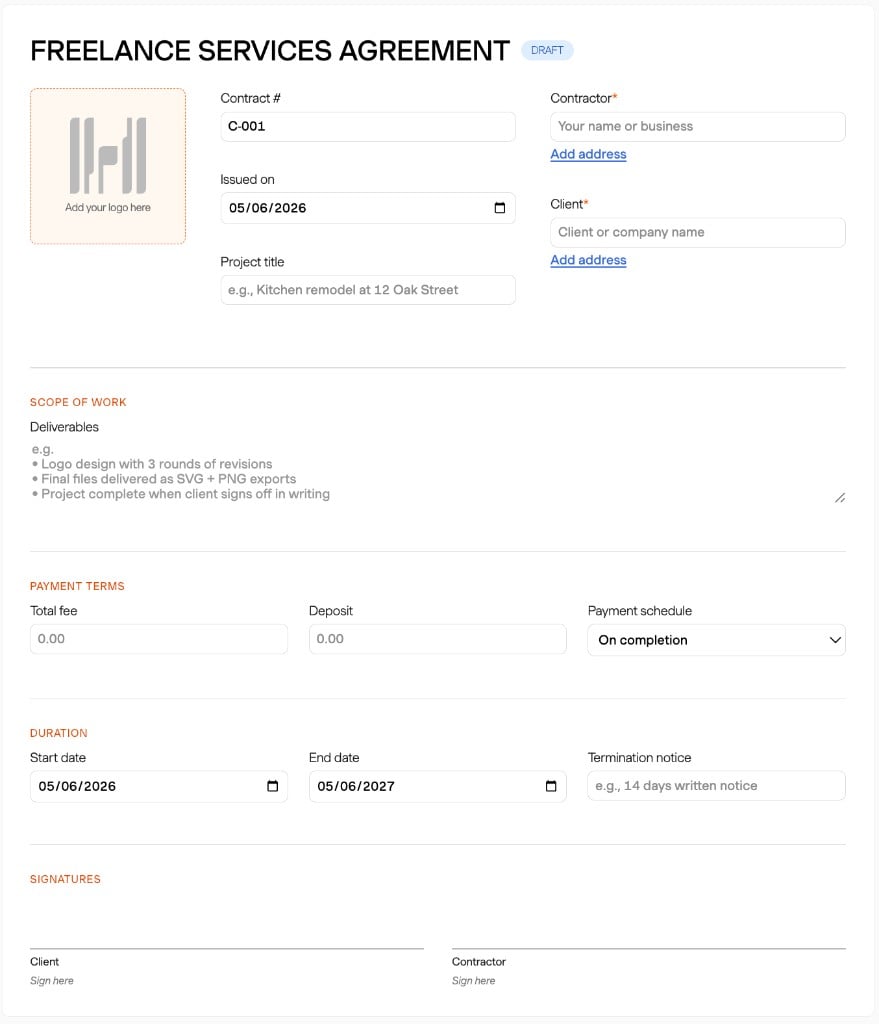
AGREEMENT DRAFT

Add your logo here

Scope of work

Payment terms

Duration

Signatures

Client

Sign here

Contractor

Sign here

Get paid via:
Credit card / Debit card
ACH
Wire transfer

Customize contract

Appearance

Add a logo
Show contract title

Contract settings

Include payment terms Total fee, deposit, and schedule
Include termination clause Notice required to end the contract
Include signature blocks Both parties sign at the bottom

Understanding the Statement of Work in Vietnam

A Statement of Work (SOW) in Vietnam serves as a comprehensive document that outlines project specifics, ensuring clarity and alignment between parties involved. With the rapid adoption of digital strategies among Vietnamese businesses—74% by 2024—there's a notable trend towards formalized digital agreements, including SOWs. These documents are governed by the Civil Code 2015 and the Commercial Law 2005, which stipulate clear requirements for service content, scope, fees, and more. It's essential that the SOW not only meets these legal standards but also adapts to the cultural nuances of Vietnamese business practices.

The use of electronic contracts is on the rise, with over 33% of businesses already adopting them, and a national strategy aiming for 80% by 2025. This shift underscores the importance of having a digital-friendly SOW. To ensure compliance, the SOW must clearly define the scope of work, payment terms, and dispute resolution methods, helping prevent misunderstandings and potential legal issues.

Crafting a Tailored SOW for Vietnamese Projects

Creating a tailored Statement of Work (SOW) for projects in Vietnam involves a structured approach that accounts for both legal and cultural considerations. Key elements include an introduction and project purpose, specific project objectives, and a detailed scope of work. This scope should clearly state what is included and excluded to prevent 'scope creep', a common challenge in project management.

Experts recommend involving all stakeholders early in the SOW drafting process to ensure that expectations are aligned and that the SOW is specific and measurable. For instance, instead of stating a general goal like "improve website performance," the SOW should specify objectives such as "reduce website load time to under 2 seconds." This level of detail helps in assessing project success and managing client expectations effectively.

Legal and Cultural Considerations for Vietnamese SOWs

Understanding the legal and cultural landscape is crucial for drafting effective SOWs in Vietnam. Legally, service contracts are governed by the Civil Code 2015 and the Commercial Law 2005, requiring specific clauses related to service content, fees, and confidentiality. Non-compliance can lead to penalties, including contract termination and compensation for damages.

Culturally, it's important to recognize that business relationships in Vietnam often emphasize relationship-building. Thus, the SOW should be drafted in a way that respects cultural norms and facilitates positive business interactions. This includes using clear, unambiguous language and ensuring that all parties have a mutual understanding of the project scope and deliverables.

Digital Transformation and the Future of SOWs in Vietnam

The digital transformation in Vietnam is reshaping how businesses approach Statements of Work (SOWs). With the government pushing for widespread adoption of electronic contracts, businesses are increasingly integrating digital solutions into their workflows. The adoption of AI, with 18% of businesses already using it, highlights the need for precise and adaptable SOWs, particularly in tech-driven projects.

The trend towards digital agreements is driven by the need for improved operational efficiency and enhanced security. As more businesses transition to electronic contracts, having a well-structured SOW becomes essential for ensuring project success. It acts as an operational blueprint, guiding project execution and helping to prevent disputes by clearly defining project parameters and success criteria.

Create a Vietnamese SOW with Harvest

Harvest helps you create tailored SOWs for Vietnamese projects, ensuring legal compliance and cultural sensitivity.

Screenshot of Harvest tools for creating a Vietnamese SOW template.

Statement of Work Template in Vietnamese FAQs

  • A Statement of Work (SOW) in Vietnam is a comprehensive document that outlines the specifics of a project, including scope, deliverables, timelines, and payment terms. It ensures clarity between parties and aligns with Vietnamese legal standards set by the Civil Code 2015 and the Commercial Law 2005.

  • To customize a SOW for a Vietnamese project, involve stakeholders early to align expectations, and clearly define project objectives and scope. Be specific, using measurable terms such as "reduce load time to under 2 seconds." This ensures clarity and prevents scope creep.

  • In Vietnam, SOWs must comply with the Civil Code 2015 and the Commercial Law 2005, requiring clear clauses on service content, fees, and confidentiality. Non-compliance can lead to contract termination and legal penalties.

  • In drafting a Vietnamese SOW, consider cultural norms that emphasize relationship-building. Use clear language and ensure mutual understanding of project scope and deliverables to facilitate positive business interactions.

  • Digital transformation in Vietnam is increasing the use of electronic contracts, making digital SOWs more common. This shift enhances operational efficiency and security, requiring SOWs to be precise and adaptable, especially in tech-driven projects.

  • Specificity in a SOW prevents misunderstandings and scope creep by clearly defining project goals, deliverables, and success criteria. This precision helps in evaluating performance and ensuring project success.

  • Businesses can prevent scope creep by creating a detailed SOW that explicitly defines what is included and excluded in the project's scope. Regularly reviewing and updating the SOW as the project progresses can also help manage changes effectively.