
Harvest
Quotes
Sign up

Quote Template for Contractors in Japanese

Harvest empowers contractors in Japan to create detailed, compliant estimates by allowing for precise itemization of costs and inclusion of tax details, streamlining the quoting process.

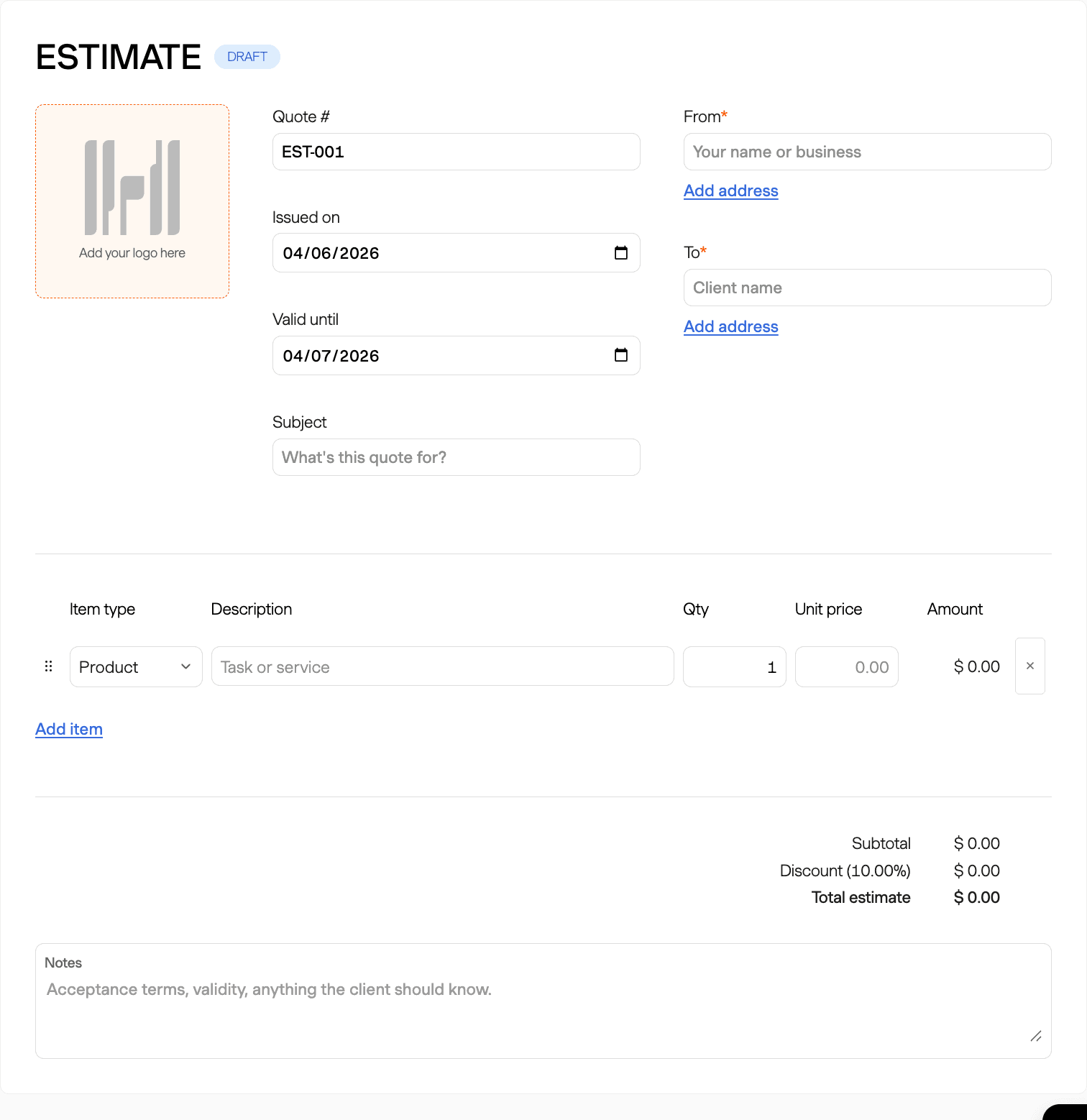
ESTIMATE DRAFT

Add your logo here
Item type
Description
Qty
Unit price
Tax
Amount
Subtotal
$0.00
Discount
$0.00
Total estimate
$0.00
Get paid via:
Credit card / Debit card
ACH
Wire transfer

Customize estimate

Appearance

Add a logo
Show estimate title

Quote settings

Tax Add up to 2 tax rates
%
Discount Apply a discount percentage
%

Understanding Japanese Quote Templates for Contractors

In Japan, the creation of quote templates for contractors involves several key elements that ensure transparency and compliance with industry standards. A significant trend is the shift towards electronic quote templates, which are increasingly adopted due to their efficiency and compliance with the Electronic Bookkeeping Act. This act allows electronic documents like PDFs to be legally valid if they meet specific requirements, such as ensuring authenticity and visibility.

Moreover, the revised Construction Business Act, effective from December 2025, mandates contractors to provide detailed quotes that itemize material costs, labor costs, and essential expenses. This requirement is designed to prevent unreasonably low bids and ensure fair labor conditions. The shift from vague "lump-sum" estimates to detailed breakdowns is crucial for transparency and dispute prevention. For contractors, adopting standardized templates and dedicated software can significantly reduce the time spent on creating quotes by using real-time data and past project information.

Essential Elements of a Japanese Quote Template

A comprehensive Japanese quote template for contractors must include specific items to ensure clarity and compliance. Essential elements include the recipient's formal name and address, issue date, and a unique quote number. The template should also list the issuer's company name, address, contact information, and representative's name. A detailed breakdown of items, including description, quantity, unit, unit price, and total amount, is critical to meet the requirements of the revised Construction Business Act.

Additionally, quotes should specify whether prices are tax-inclusive or tax-exclusive to avoid misunderstandings. This is particularly important in Japan, where the consumption tax is a key consideration in business transactions. Including a "remarks" section for specific conditions, assumptions, or potential risks can further enhance the clarity of the quote. This level of detail helps prevent disputes and builds trust with clients by clearly outlining the scope and terms of the project.

How Harvest Supports Japanese Contractors

Harvest provides a versatile platform that helps contractors create detailed estimates, which are essential for both client engagement and internal budgeting processes. With Harvest, users can itemize labor and material costs, ensuring compliance with the detailed requirements set by the revised Construction Business Act. This feature is particularly beneficial for construction projects where transparency and accuracy are paramount.

Moreover, Harvest allows users to include tax information in their estimates, adapting to include consumption tax details, which is a common practice in Japanese quotations. By facilitating the creation of electronic estimates that serve as a basis for purchase orders and contracts, Harvest streamlines the quoting process, making it easier for contractors to manage their projects efficiently. This capability ensures that contractors can maintain competitiveness and compliance in the evolving Japanese market.

Customizing Your Japanese Quote Template with Harvest

Customizing a Japanese quote template to meet the specific needs of your business is made simpler with Harvest. Although Harvest does not support specific regional formats like the Japanese Mitsumori-sho, it provides the flexibility to create itemized estimates that can be tailored to various business contexts. Users can input detailed descriptions, quantities, and pricing information, allowing for precise and transparent quotes.

While Harvest does not specifically support the inclusion of validity periods or company stamps, it does offer the capability to create comprehensive estimates that align with the legal and operational requirements in Japan. This customization process involves selecting appropriate fields, such as client information and detailed breakdowns, to ensure that the quote meets both client expectations and legal standards. By leveraging Harvest's tools, contractors can enhance their operational efficiency and improve client satisfaction.

Legal Considerations for Japanese Contractor Quotes

When creating quotes in Japan, contractors must be mindful of several legal considerations to ensure compliance and protect their business interests. The revised Construction Business Act requires detailed itemization of quotes, including material and labor costs, to prevent unreasonably low bids and support fair labor conditions. Failure to comply can lead to administrative penalties.

Additionally, while it is not legally required to include consumption tax details in quotes, it is common practice to do so to avoid misunderstandings. Electronic quotes must comply with the Electronic Bookkeeping Act, ensuring authenticity and visibility. By understanding these legal requirements and utilizing tools like Harvest, contractors can create compliant and competitive quotes that align with industry standards.

Explore Harvest's Quote Template

See how Harvest helps contractors create detailed, compliant Japanese quotes with customizable templates.

Harvest screenshot showing a Japanese contractor quote template

Quote Template for Contractors in Japanese FAQs

  • A Japanese contractor quote should include the recipient's name, issue date, quote number, issuer's details, project title, and a detailed breakdown of costs. It should also specify tax status and include a remarks section for any additional conditions.

  • Using Harvest, you can customize a Japanese quote template by inputting detailed descriptions, quantities, and pricing information. This allows for precise and transparent quotes tailored to your business needs.

  • In Japan, quotes must comply with the revised Construction Business Act, requiring detailed breakdowns of costs. Electronic quotes must also adhere to the Electronic Bookkeeping Act, ensuring authenticity and visibility.

  • Including tax information in Japanese quotes prevents misunderstandings by clarifying whether prices are tax-inclusive or tax-exclusive, which is a common practice in business transactions.

  • Harvest allows contractors to create itemized estimates, providing detailed breakdowns of labor and material costs. This capability supports compliance with Japanese legal standards and enhances transparency.

  • Common mistakes include vague "lump-sum" entries, calculation errors, and unclear terms. Using tools like Harvest to itemize costs and automate calculations can help avoid these issues.

  • Yes, electronic quotes can be legally valid in Japan if they comply with the Electronic Bookkeeping Act, which requires ensuring their authenticity and ease of retrieval.