
Harvest
Quotes
Sign up

Estimate Template for Contractors in Japanese

Harvest helps contractors streamline their estimating process, offering tools to create detailed estimates and manage expenses, although it doesn't tailor to Japanese construction standards.

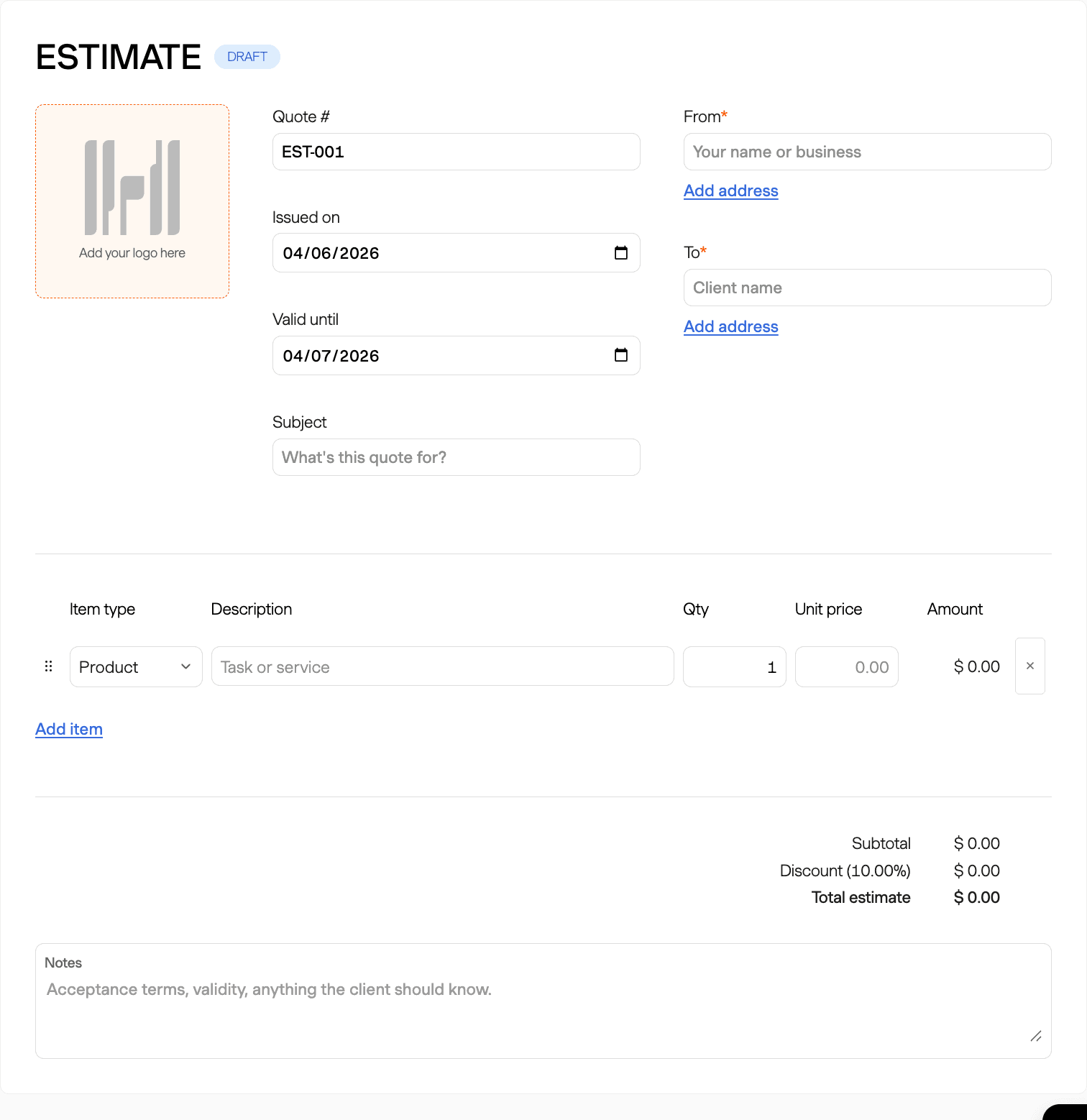
ESTIMATE DRAFT

Add your logo here
Item type
Description
Qty
Unit price
Tax
Amount
Subtotal
$0.00
Discount
$0.00
Total estimate
$0.00
Get paid via:
Credit card / Debit card
ACH
Wire transfer

Customize estimate

Appearance

Add a logo
Show estimate title

Quote settings

Tax Add up to 2 tax rates
%
Discount Apply a discount percentage
%

Understanding the Need for Detailed Estimates in Japan

Creating accurate and detailed estimates is crucial for contractors in Japan, especially given recent regulatory changes. The revised Construction Business Act mandates that estimates must clearly itemize material costs, labor costs, and other essential expenses for various types of construction work. This shift towards detailed, transparent pricing aims to enhance accountability and trust between contractors and clients (source: industry research). Additionally, the law prohibits contractors from providing estimates with unreasonably low prices, a practice known as 'dumping', ensuring that all costs reflect the actual work required.

The demand for detailed estimates is further highlighted by the industry's shift towards digitalization. Despite 64.2% of Japanese construction workers initiating digitalization efforts, 18.1% of companies still rely on paper-based processes. This highlights the potential for tools like Harvest to help streamline and modernize estimating processes, even though Harvest does not specialize in Japanese industry standards.

Crafting an Effective Contractor Estimate Template

For contractors in Japan, a well-structured estimate template is vital for compliance and clarity. Typically, such a template includes a cover sheet (見積表紙), a detailed breakdown (見積内訳書), and terms and conditions (見積条件書). This three-part structure ensures that all necessary information is clearly communicated and aligns with legal requirements (source: legal guidelines).

Estimates should meticulously break down costs by type, including materials, labor, direct expenses, and statutory welfare expenses. This comprehensive breakdown not only meets regulatory standards but also helps prevent disputes. For instance, vague estimates have led to financial losses and project disputes, such as unexpected costs for equipment disposal not covered in the initial estimate.

Leveraging Technology to Enhance Estimate Accuracy

Adopting digital tools can significantly improve the accuracy and efficiency of creating contractor estimates. Industry experts suggest that moving from Excel-based methods to dedicated estimation systems can enhance productivity and reduce errors. By centralizing estimate data and using standardized templates, contractors can ensure consistency and avoid the pitfalls of "human-dependent" processes (source: expert perspectives).

While Harvest does not offer specific Japanese construction templates, it supports the creation of organized job costs and tracking of expenses. Contractors can use Harvest to manage time, expenses, and invoicing, which helps in maintaining project budgets and profitability.

Ensuring Compliance and Building Client Trust

Compliance with Japanese legal standards for estimates is not only a regulatory requirement but also key to building trust with clients. The revised Electronic Books Preservation Act requires electronic storage of estimates, emphasizing the need for digital solutions. Additionally, itemizing costs such as statutory welfare expenses ensures transparency and promotes proper social insurance contributions (source: legal compliance).

Harvest, while not specialized in Japanese compliance, offers tools that help contractors maintain organized records and manage expenses effectively. This can indirectly support compliance efforts by providing a clear financial overview and aiding in accurate expense tracking.

Estimate Templates with Harvest

Harvest offers tools to create detailed contractor estimates, streamlining the process and managing costs, though not tailored to Japanese standards.

Screenshot of Harvest's estimate creation tool for contractors.

Estimate Template for Contractors in Japanese FAQs

  • A Japanese contractor estimate should include a cover sheet, detailed breakdown of costs, and terms and conditions. Costs must be itemized by construction type, materials, labor, and statutory welfare expenses to comply with legal standards.

  • Digital tools can enhance accuracy by centralizing data, using standardized templates, and reducing errors common in manual processes. They streamline estimate creation and ensure consistency across projects.

  • A detailed cost breakdown prevents disputes by clearly outlining all expenses involved in a project. It fosters transparency and trust between contractors and clients, ensuring that all parties understand the pricing structure.

  • Japanese law requires estimates to itemize material and labor costs clearly. The Electronic Books Preservation Act also mandates electronic storage of digital estimates, emphasizing the importance of digital compliance.

  • Harvest offers tools for creating organized estimates, tracking job costs, and managing expenses. While it doesn't tailor to Japanese standards, it helps streamline the estimating process and maintain project budgets.

  • Excel-based estimates often lead to human errors, time-consuming processes, and difficulties in sharing data. Transitioning to specialized systems can overcome these challenges and improve estimate management.

  • Using standardized templates ensures all necessary information is included in estimates, improving efficiency and consistency. It also aligns with legal requirements and enhances client communications.