Sign up


Essential Elements in a Handyman Contract
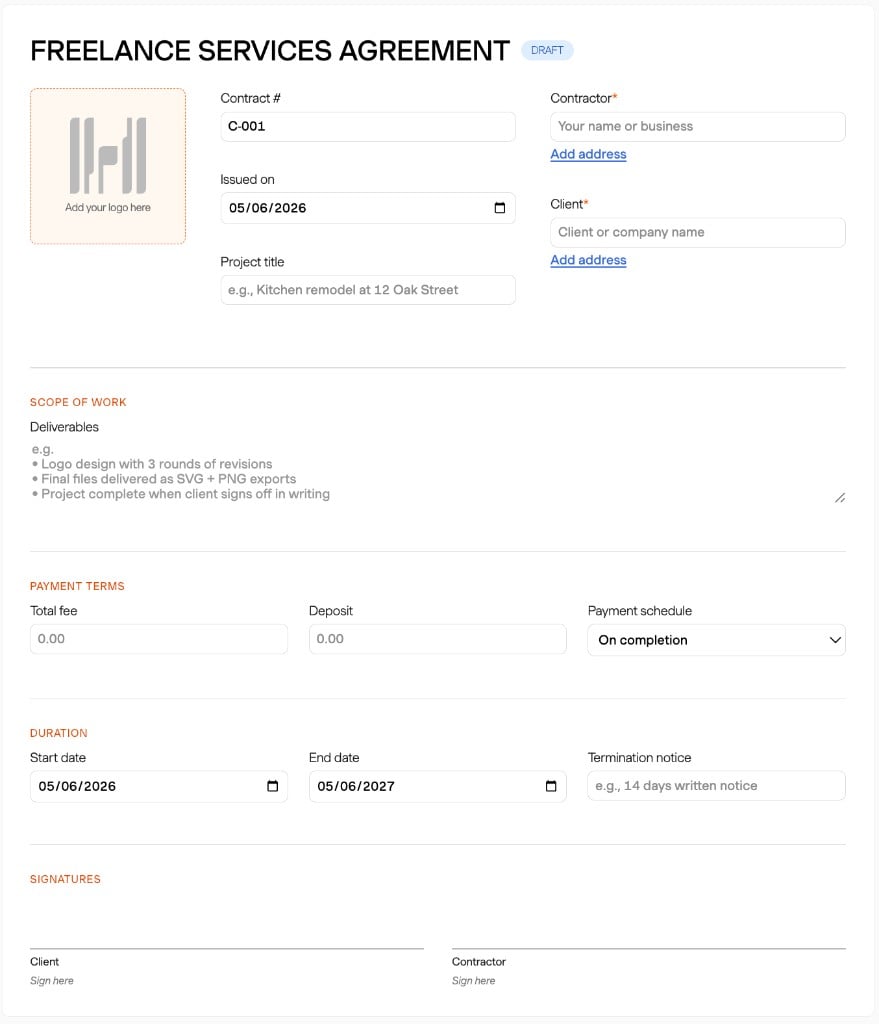
When drafting a handyman contract, it is important to include key elements that define the scope of work, payment terms, and legal protections. The scope of work should detail specific tasks like repairs, installations, and maintenance services to eliminate any ambiguity. Payment terms must outline the total cost, schedule, and methods, often favoring a hybrid model that includes flat rates for standard jobs and hourly rates for specialized tasks. Industry data suggests that for projects exceeding $1,000, a common practice is to collect 50% upfront and the remainder upon completion.
Legal protections in a handyman contract are crucial to avoid disputes. A solid contract should include clauses for termination, penalties for unfulfilled obligations, and a "force majeure" clause for unforeseen circumstances. It's also advisable to have the contract reviewed by a legal professional to ensure it complies with local regulations. While Harvest does not provide legal advice or contract templates, it supports handymen in managing change orders and setting up payment schedules through its invoicing features.