
Harvest
Contracts
Sign up

Service Agreement Template in Indonesian

Harvest supports businesses with time tracking and invoicing, ensuring seamless management of service agreements in Indonesia. Streamline your processes with Harvest.

Start from a template

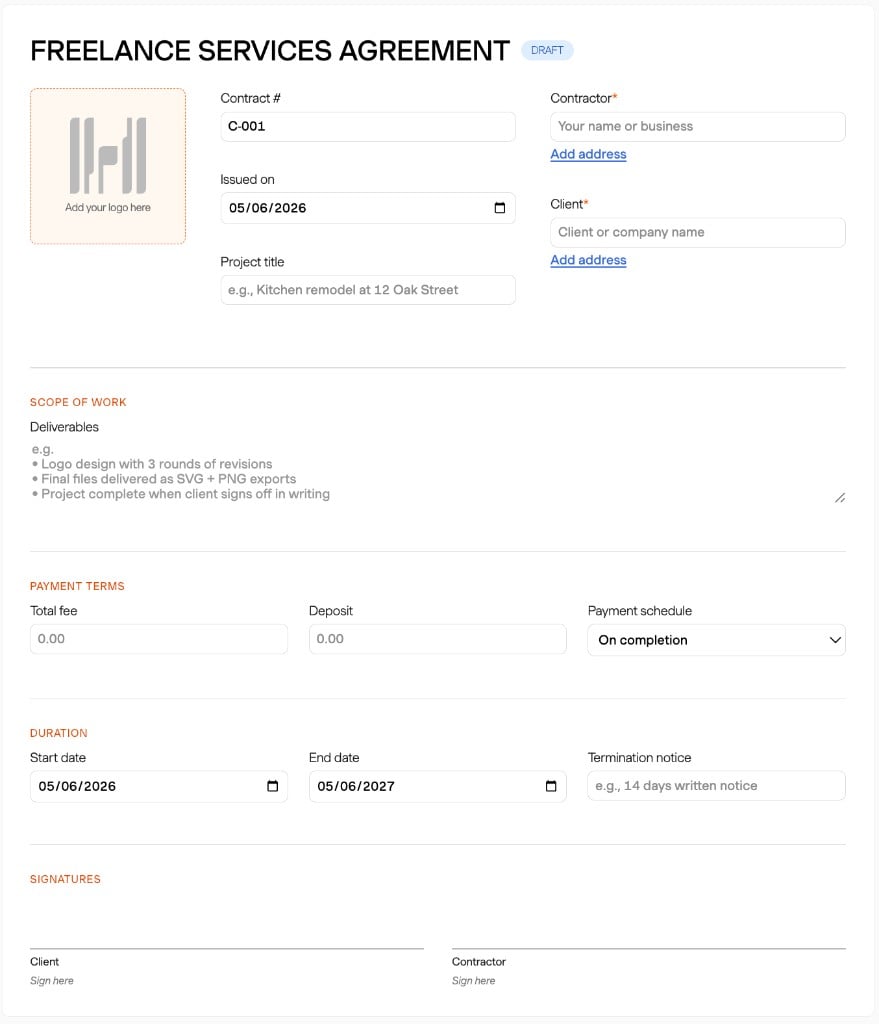
AGREEMENT DRAFT

Add your logo here

Scope of work

Payment terms

Duration

Signatures

Client

Sign here

Contractor

Sign here

Get paid via:
Credit card / Debit card
ACH
Wire transfer

Customize contract

Appearance

Add a logo
Show contract title

Contract settings

Include payment terms Total fee, deposit, and schedule
Include termination clause Notice required to end the contract
Include signature blocks Both parties sign at the bottom

Understanding Service Agreement Essentials in Indonesia

In Indonesia, a proper service agreement is crucial to ensure legal compliance and protect the interests of all parties involved. A service agreement must adhere to the four essential conditions outlined in the Indonesian Civil Code (KUHPerdata): mutual consent, capacity to contract, a specific subject matter, and a lawful cause. Failing to meet these requirements can lead to the contract being voidable or null and void, emphasizing the need for careful drafting and review.

Furthermore, under Indonesian law, the use of the Indonesian language is mandatory for contracts involving Indonesian parties, as stipulated in Pasal 31 of the Indonesian Language Law and Pasal 26 of Presidential Regulation No. 63 of 2019. While the consequences of non-compliance are not explicitly detailed, it may reduce the contract's evidentiary power or even render it void. Therefore, ensuring the proper language use is a key step in creating a valid service agreement in Indonesia.

Key Components of a Service Agreement Template

A comprehensive service agreement in Indonesia should include several key components to safeguard all parties and ensure clarity in obligations and expectations. Firstly, it must clearly identify all parties involved and outline the roles and responsibilities of each. This clarity helps prevent misunderstandings and disputes, setting a clear framework for collaboration. Additionally, the agreement should include a defined scope of services with performance metrics, timelines, and milestones to ensure accountability and track progress.

Payment terms are another critical component, detailing the amount, schedule, and method of payment. Intellectual property rights, confidentiality clauses, dispute resolution mechanisms, and termination clauses are also essential to address potential issues that may arise during the contract's execution. By incorporating these elements, businesses can create a robust service agreement that supports successful partnerships and minimizes legal risks.

The Importance of Digital Service Agreements in Indonesia

With the rapid digital transformation in Indonesia, service agreements increasingly need to accommodate online transactions and electronic communications. The rise of digital business transactions necessitates understanding electronic transaction laws, such as the Information and Electronic Transactions Law (UU ITE), to ensure agreements are both legally valid and secure.

Digital service agreements offer the flexibility and efficiency needed in today's fast-paced business environment. They can be standardized to enhance effectiveness and reduce the time and cost associated with drafting individual agreements. As businesses in Indonesia embrace these digital solutions, they must remain vigilant about compliance with relevant laws to prevent potential legal issues. This shift towards digital agreements marks a significant trend in the Indonesian business landscape, emphasizing the need for modern contract management practices.

Ensuring Compliance and Avoiding Common Mistakes

Compliance with Indonesian laws and regulations is paramount when drafting a service agreement. Legal professionals recommend a thorough review of the contract to ensure it meets all necessary legal standards and protects the interests of all parties involved. Engaging in open negotiations prior to drafting is also advised, as it helps create fair and mutually beneficial agreements.

Common pitfalls in service agreement drafting include ambiguous language, inadequate budget estimations, and poor contract management. These mistakes can lead to legal disputes and financial losses. To avoid these issues, businesses should use specific terminology, understand applicable laws, and accurately reflect agreed-upon terms in the contract. By following these best practices, companies can create clear, enforceable agreements that support successful business relationships.

Simplify Service Agreements with Harvest

Harvest streamlines the creation of service agreements with time tracking and invoicing features, tailored to Indonesian business needs.

Harvest service agreement template in Indonesian interface screenshot

Service Agreement Template in Indonesian FAQs

  • A service agreement in Indonesia should include clauses on the identification of parties, roles and responsibilities, scope of services, payment terms, intellectual property rights, confidentiality, dispute resolution, and termination. These elements ensure clarity and legal protection.

  • To comply with Indonesian law, ensure your service agreement meets the four essential conditions: mutual consent, capacity to contract, a specific subject matter, and a lawful cause. Use the Indonesian language as required, and consult with legal professionals to ensure full compliance.

  • Yes, contracts involving Indonesian parties must be drafted in the Indonesian language as per Pasal 31 of the Indonesian Language Law. This is crucial to ensure the contract's validity and evidentiary power in legal settings.

  • A service agreement provides legal protection by clearly defining the rights and obligations of both parties, reducing the risk of disputes. It includes terms for performance, payment, confidentiality, and dispute resolution, safeguarding interests throughout the contract's duration.

  • Digital service agreements are popular due to the increase in online transactions and the need for efficient, secure contract management. They offer flexibility and speed, helping businesses adapt to digital transformation and ensuring compliance with electronic transaction laws like UU ITE.

  • Common mistakes include using ambiguous language, underestimating budgets, and poor contract management. These can lead to disputes and financial losses. Clear, specific terms and a thorough legal review can mitigate these risks.

  • Standardized contracts save time and reduce costs by providing a consistent framework for agreements. They streamline the legal process, improve efficiency, and minimize the need for drafting individualized contracts for each transaction.