
Harvest
Contracts
Sign up

Contract Template in Indonesian

Navigating Indonesia's contract requirements can be complex, but Harvest helps by offering insights into crafting effective contracts that comply with local laws. While Harvest focuses on time tracking, understanding contract essentials ensures legal protection.

Start from a template

AGREEMENT DRAFT

Add your logo here

Scope of work

Payment terms

Duration

Signatures

Client

Sign here

Contractor

Sign here

Get paid via:
Credit card / Debit card
ACH
Wire transfer

Customize contract

Appearance

Add a logo
Show contract title

Contract settings

Include payment terms Total fee, deposit, and schedule
Include termination clause Notice required to end the contract
Include signature blocks Both parties sign at the bottom

Understanding Indonesian Contract Requirements

Creating a legally sound contract in Indonesia involves understanding several key legal requirements. Indonesian law mandates that contracts must meet four essential elements for validity: mutual consent of the parties, legal capacity, a clear subject matter, and a lawful cause as outlined in Article 1320 of the Civil Code. Additionally, contracts involving Indonesian entities must be drafted in Bahasa Indonesia, as stated in Article 31 of Law No. 24 of 2009. This requirement ensures clarity and compliance with local legal standards.

Employment contracts in Indonesia are primarily categorized into Fixed-Term Employment Agreements (PKWT) and Indefinite-Term Employment Agreements (PKWTT). These contracts must be written in Indonesian and adhere to specific rules, such as prohibiting probationary periods in PKWT contracts. These regulations ensure fair treatment and legal protection for employees. Furthermore, electronic contracts and signatures are recognized under the ITE Law, allowing for digital agreements that facilitate modern business practices.

Key Clauses in Indonesian Employment Contracts

When drafting an employment contract in Indonesia, it's crucial to include certain key clauses to ensure legal compliance and protect both parties' interests. Essential clauses include detailed information about the parties involved, the scope of work, payment terms, and the contract's duration. Including confidentiality clauses and dispute resolution mechanisms can further safeguard business interests and provide clarity in case of disagreements.

Employment contracts should also specify the governing law and jurisdiction, typically Indonesian law, to avoid legal conflicts. For contracts involving foreign parties, it's advisable to draft bilingual documents, ensuring that both language versions have equal standing. This not only complies with legal requirements but also facilitates clear communication between parties. By adhering to these guidelines, businesses can create robust contracts that withstand legal scrutiny.

Adapting to Indonesia's Digital Contract Landscape

Indonesia is rapidly embracing digital transformation, impacting how contracts are drafted and executed. Electronic contracts are increasingly common, supported by the ITE Law, which recognizes their legal validity. This shift is part of a broader trend where digital tools are becoming integral to business operations, with 63% of Indonesian MSMEs adopting digital solutions by 2025.

Despite the benefits of digital contracts, challenges remain, particularly in authenticating electronic signatures. While these signatures are legally recognized, they must meet specific criteria to ensure validity. This includes being accessible, unchanged, and authenticated using recognized electronic certificates. Businesses must stay informed about these requirements to effectively utilize digital contracts in their operations.

Practical Tips for Drafting Effective Contracts

Drafting a contract in Indonesia requires careful consideration of legal and practical aspects to ensure effectiveness and compliance. Avoid using generic templates that do not align with Indonesian law. Instead, tailor contracts to meet specific legal and business needs. This includes including essential clauses and ensuring the document is in Bahasa Indonesia for legal validity.

For contracts involving foreign parties, it is best practice to create bilingual agreements. Specify which language prevails in case of discrepancies to prevent misunderstandings. Additionally, leveraging Contract Lifecycle Management (CLM) platforms can streamline contract workflows, reduce cycle times, and improve compliance with legal standards. By following these tips, businesses can craft contracts that are both efficient and legally sound.

Explore Harvest Contract Templates

Harvest aids in understanding key legal requirements for Indonesian contracts, ensuring compliance and clarity.

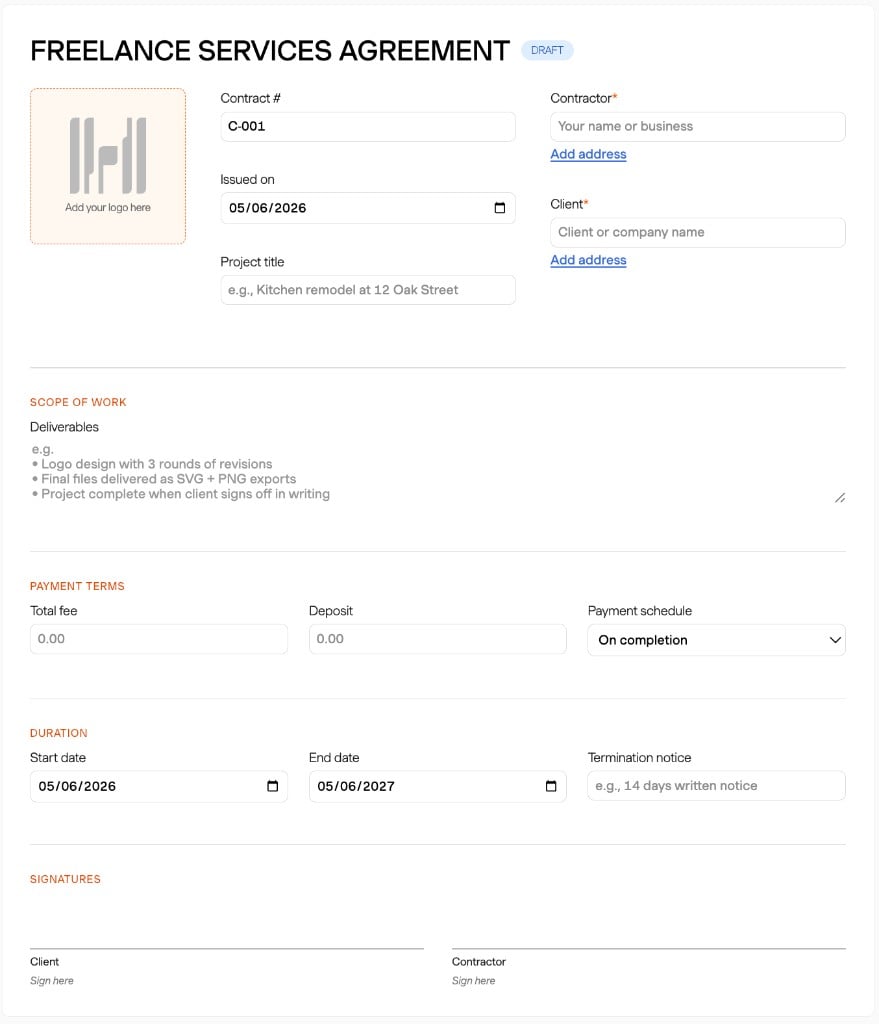
Harvest contract template preview in Indonesian context.

Contract Template in Indonesian FAQs

  • Indonesian contracts must meet four elements: mutual consent, legal capacity, a clear subject matter, and a lawful cause. These ensure the contract's validity under the Civil Code.

  • Key clauses include detailed party information, scope of work, payment terms, confidentiality, dispute resolution, and governing law. These ensure compliance and protect interests.

  • Yes, electronic contracts are legally valid under the ITE Law, provided they meet specific criteria for electronic signatures, ensuring authenticity and security.

  • For contracts involving foreign parties, draft in both Bahasa Indonesia and the foreign language. Ensure both versions have equal legal standing, specifying which prevails in case of inconsistencies.

  • Electronic signatures are legally recognized in Indonesia if they meet ITE Law criteria, including being accessible, unchanged, and authenticated with a recognized certificate.

  • Contract Lifecycle Management (CLM) platforms streamline contract workflows, reduce cycle times, and help ensure compliance with legal standards, enhancing efficiency.

  • Indonesia recognizes Fixed-Term (PKWT) and Indefinite-Term (PKWTT) employment contracts, each with specific rules to ensure fair treatment and legal protection.