
Harvest
Expenses
Sign up

Expense Register

Harvest revolutionizes project-based expense tracking with real-time mobile capabilities and detailed categorization, cutting manual errors and saving time.

  • Attach receipts to projects & tasks
  • Turn tracked expenses into client invoices
  • Free 30-day trial, no credit card needed

or drag & drop • Images and PDFs, max 10 MB

The Importance of a Robust Expense Register

Managing business expenses efficiently is crucial for maintaining financial health and strategic oversight. An expense register serves as a vital tool in this endeavor, providing a structured way to track and categorize expenses. With the global expense management software market projected to grow to USD 16.69 billion by 2032, businesses are increasingly adopting digital solutions to enhance accuracy and reduce administrative burdens.

Manual expense management is fraught with challenges, from high error rates to time-consuming processes. Research shows that automated systems can reduce expense processing time by 60% to 80%, saving businesses substantial hours monthly. For example, companies transitioning to automated solutions report saving an average of $1200 per month. This shift underscores the strategic importance of modernizing expense management practices.
How Harvest Transforms Expense Management

Harvest stands out as an effective solution for project-based expense tracking, offering features that streamline the management of business expenses. Through its mobile app, Harvest provides real-time expense tracking, allowing teams to enter expenses and upload receipts on the go. This capability is particularly beneficial for industries like construction and technology, where remote work and project-specific expenses are common.

Harvest excels in budget tracking across multiple projects and departments. By including expenses in the 'Total project fees' budget type, businesses can maintain comprehensive oversight over their financial commitments. This feature is crucial for sectors like legal and marketing, where accurate project costing and client billing are essential. While Harvest requires manual entry of expense details, it compensates with detailed categorization, ensuring precise tracking and management.

Best Practices for Implementing an Expense Register

Successful implementation of an expense register involves several best practices that enhance efficiency and compliance. Firstly, businesses should define clear policies outlining what can be expensed, spending limits, required documentation, and submission deadlines. This clarity prevents confusion and ensures adherence to company guidelines.

Next, leveraging digital tools like Harvest can significantly improve the expense management process. Encouraging employees to use mobile apps for digital receipt capture at the point of purchase reduces paper waste and minimizes the risk of lost receipts. Additionally, setting up automated approval workflows can streamline the approval process, reducing bottlenecks.

Finally, integrating the expense system with existing business processes, such as accounting software and payroll systems, is crucial. Although Harvest does not sync individual expense entries with accounting software, its integration with QuickBooks Online and Xero for invoice synchronization supports broader financial management needs.

Overcoming Challenges in Expense Management

Businesses face several challenges in managing expenses, from ensuring compliance with regulatory standards to maintaining accuracy in tracking. For instance, compliance with regulations like the IRS in the US or GDPR in the EU requires meticulous record-keeping. Failure to maintain adequate records can lead to disallowed deductions and potential penalties.

Harvest helps overcome these challenges through its real-time expense tracking and detailed categorization features. By enabling precise tracking of project-specific expenses, businesses can ensure compliance with internal and external guidelines. Moreover, regular audits and reporting facilitated by tools like Harvest allow companies to identify areas for cost reduction and policy adjustments, thus maintaining financial integrity.

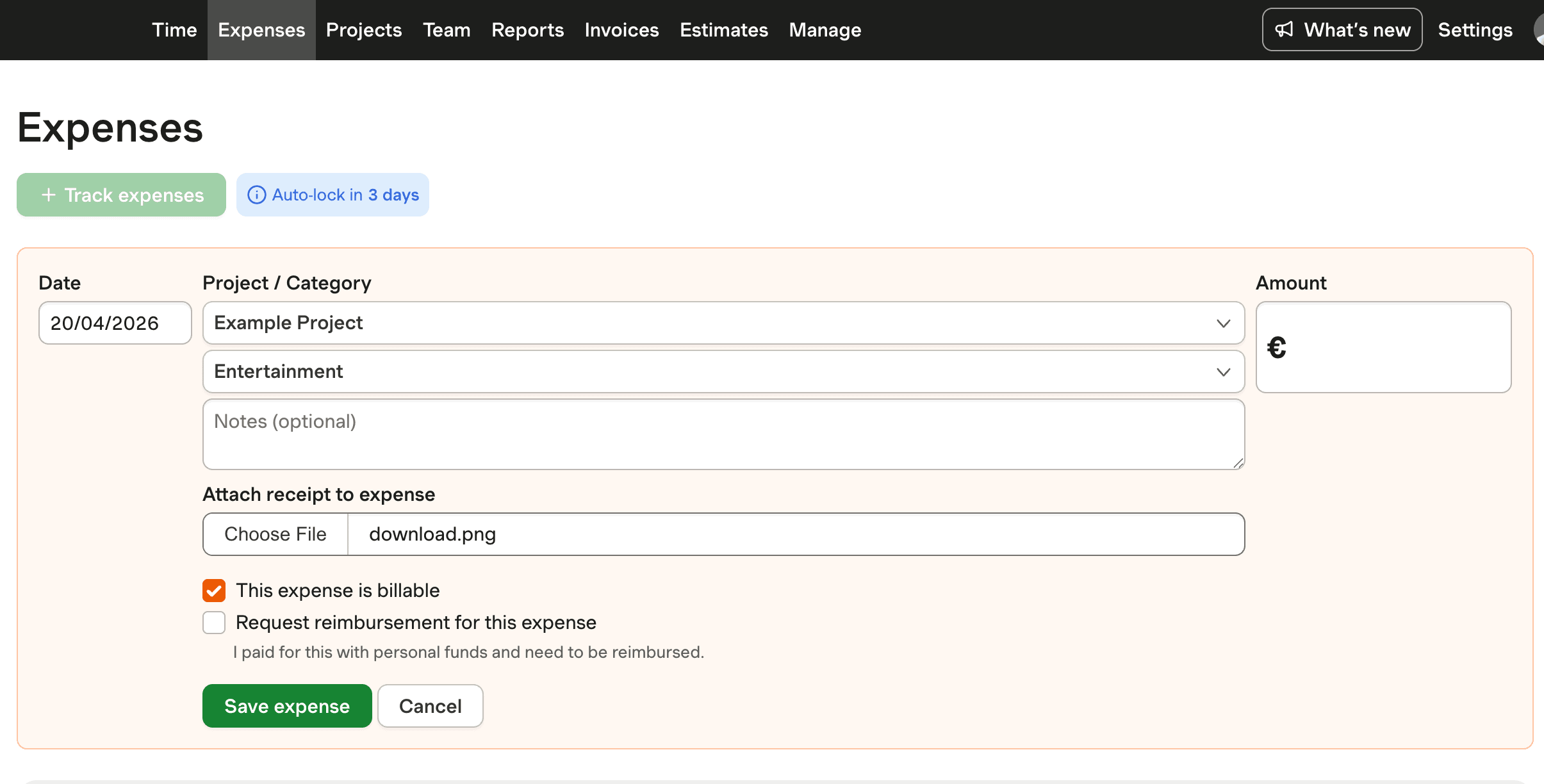
Expense Register with Harvest

See how Harvest simplifies expense tracking with real-time mobile capabilities and detailed categorization, ideal for project-based management.

Harvest interface showing expense register features for detailed tracking.

Expense Register FAQs

  • An expense register is a tool or system used to track and manage business expenses. It records the details of each expense, categorizing them for easier analysis and reporting. Digital expense registers like Harvest offer real-time tracking and detailed categorization, enhancing accuracy and oversight.

  • When choosing an expense register, consider features like real-time tracking, ease of use, mobile access, and integration capabilities with other financial systems. Harvest offers project-based tracking and mobile capabilities, making it a strong choice for businesses needing detailed categorization and budget tracking.

  • Yes, Harvest supports real-time expense tracking through its mobile app. This feature allows teams to enter and upload receipts instantly, ensuring that expenses are tracked accurately and promptly.

  • Digital expense management reduces manual entry errors, speeds up processing times, and provides real-time financial insights. Automated systems like Harvest can cut expense report processing time by 60% to 80%, freeing up resources for more strategic tasks.

  • Yes, Harvest allows for detailed expense categorization by project type. This feature enables businesses to track and manage expenses more effectively, especially in project-based industries like construction and marketing.

  • Mobile apps for expense management allow for on-the-go expense entry, receipt uploads, and real-time tracking. They help reduce paper waste, minimize lost receipts, and improve accuracy. Harvest's mobile app offers these capabilities, ensuring efficient expense management.

  • Harvest facilitates expense management with detailed categorization and tracking, although it requires manual entry of expense details. Businesses can set up their own approval workflows to streamline the process and reduce bottlenecks.