
Harvest
Contracts
Sign up

Tutoring Contract Template

Harvest helps tutoring businesses streamline administrative tasks like time tracking and invoicing, crucial for managing tutoring contracts effectively.

Start from a template

AGREEMENT DRAFT

Add your logo here

Scope of work

Payment terms

Duration

Signatures

Client

Sign here

Contractor

Sign here

Get paid via:
Credit card / Debit card
ACH
Wire transfer

Customize contract

Appearance

Add a logo
Show contract title

Contract settings

Include payment terms Total fee, deposit, and schedule
Include termination clause Notice required to end the contract
Include signature blocks Both parties sign at the bottom

Essential Components of a Tutoring Contract

A tutoring contract serves as a critical tool to formalize the relationship between tutors and their clients, setting clear expectations and responsibilities. A comprehensive tutoring contract should include several key elements to protect both parties and ensure smooth operations. First, it should clearly identify the parties involved and outline the services to be provided, such as specific subjects or the format of tutoring sessions (online or in-person). Additionally, specifying payment terms, including rates, due dates, and acceptable payment methods, is essential to prevent disputes. Many tutors have found that requiring upfront payments for blocks of sessions or implementing late fees can reduce missed payments significantly.

Moreover, a well-drafted contract should include cancellation and rescheduling policies, detailing the notice period required and any fees applicable for late cancellations or no-shows. For instance, a 24-hour notice policy coupled with a $25 no-show fee can help tutors avoid losing income from last-minute cancellations. Finally, confidentiality and liability clauses are important to protect sensitive student information and outline the scope of the tutor's responsibility. By incorporating these elements, tutors can ensure their contracts are robust and comprehensive, minimizing the risk of misunderstandings and disputes.

Managing Tutoring Contracts with Harvest

While Harvest does not provide specific clauses for tutoring contracts, it offers excellent support for managing the logistical aspects of tutoring services. Tutors can utilize Harvest to streamline time tracking, expense management, and invoicing, which are integral to running a professional tutoring business. By using Harvest's time tracking features, tutors can accurately bill for the time spent on tutoring sessions, ensuring they are compensated fairly for their work.

Moreover, Harvest's invoicing capabilities allow tutors to set up recurring invoices for long-term contracts easily, facilitating consistent cash flow and reducing administrative burdens. This is particularly beneficial for tutors who offer packages or regular sessions, as it ensures timely payments and reduces the hassle of manual invoicing. Although Harvest does not manage cancellation or rescheduling policies directly, its time tracking tools can help tutors maintain accurate records, which can be used to enforce such policies effectively. By leveraging Harvest's capabilities, tutors can focus more on providing quality education and less on administrative tasks.

Adapting Contracts for Different Tutoring Scenarios

Customizing tutoring contracts to fit specific scenarios is crucial for tutors who offer diverse services. While Harvest does not differentiate between group and one-on-one tutoring agreements, it can assist in tracking time and expenses for both types of sessions. Tutors should tailor their contracts to address the unique needs of each tutoring arrangement. For group sessions, contracts might include clauses about minimum group sizes or reduced rates for additional students. In contrast, one-on-one sessions may emphasize personalized learning plans and direct communication channels.

It's also important to consider subject-specific terms, although Harvest does not provide these directly. For example, STEM tutoring might require specialized equipment or materials, which should be clearly outlined in the contract. Humanities tutoring, on the other hand, might focus more on writing or discussion-based sessions. Including specific terms for each type of tutoring ensures that expectations are aligned and that both parties are aware of their commitments. By considering these factors, tutors can create contracts that are fair, clear, and tailored to their unique service offerings.

Legal Considerations for Tutoring Contracts

When drafting a tutoring contract, understanding the legal framework is essential to ensure compliance and protect both the tutor and the client. In the United States, tutoring contracts fall under general contract law, with certain states imposing specific consumer protection provisions. For instance, at least 14 states require disclosures on cancellation terms and refund policies for prepaid tutoring contracts. Additionally, the Federal Trade Commission (FTC) oversees tutoring companies under its unfair and deceptive practices authority, which applies nationwide.

Tutors must also consider parental consent for minors, as a parent or guardian must sign the contract to make it legally binding. Moreover, with the rise of online tutoring, jurisdictional complexities may arise, particularly when tutors and students are located in different states. Tutors should ensure their contracts address these potential issues to avoid legal complications. By staying informed about relevant legal requirements and incorporating them into their contracts, tutors can operate confidently and professionally in the growing tutoring market.

The Role of Contracts in Professional Tutoring

Contracts play a pivotal role in elevating the professionalism and credibility of tutoring services. As the tutoring industry trends towards greater formalization, written contracts have become a baseline standard for maintaining professionalism and ensuring client trust. They serve as a "roadmap" to prevent misunderstandings over payment, scheduling, and scope of work, reducing the risk of unpaid invoices and last-minute cancellations.

Experts recommend regularly reviewing and updating tutoring contracts to reflect new services, rates, or legal requirements, which helps maintain their relevance and protective power. This practice not only safeguards tutors but also demonstrates a commitment to professionalism, fostering stronger client relationships and encouraging referrals. By ensuring their contracts are robust and up-to-date, tutors can focus on delivering high-quality educational services and building a successful tutoring business.

Streamline Tutoring with Harvest

Harvest allows tutors to manage time tracking and invoicing efficiently, supporting the creation of comprehensive tutoring contracts.

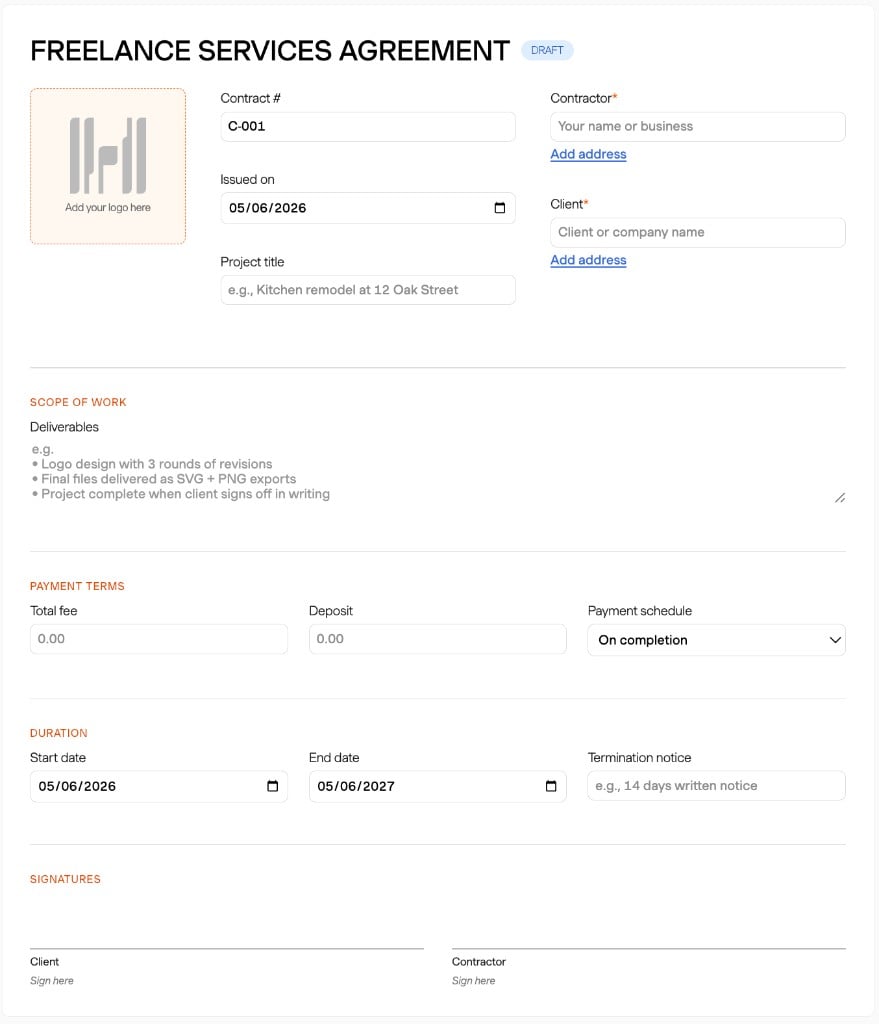
Screenshot of Harvest's tutoring contract template interface.

Tutoring Contract Template FAQs

  • A tutoring contract should include identification of parties, a description of services, payment terms, cancellation policies, confidentiality, and liability clauses. These elements protect both the tutor and the client, ensuring clear expectations and reducing disputes.

  • To customize a tutoring contract, include specific terms that reflect the nature of your services, such as session formats, subjects covered, and any unique policies. Tailor payment and cancellation terms to suit your business model and client needs.

  • Contracts are vital for tutors as they formalize the agreement with clients, preventing misunderstandings over payment, scheduling, and service scope. They enhance professionalism and client trust, which are crucial for a successful tutoring business.

  • Tutors should be aware of state-specific consumer protection laws, parental consent requirements for minors, and federal regulations like the FTC's oversight. These legal aspects ensure compliance and protect both parties in the tutoring agreement.

  • Include clear cancellation policies in your contract, specifying advance notice periods and any applicable fees. This protects your schedule and income from last-minute cancellations, reducing financial losses.

  • Common issues include vague service descriptions, lack of clear payment terms, and inadequate cancellation policies. Addressing these in the contract helps prevent disputes and ensures smooth operations.