
Harvest
Expenses
Sign up

Expense Report in Dutch

Harvest provides an efficient solution for managing project-based expenses, streamlining the process to save up to 35% in time and 75% in costs.

EXPENSE REPORT DRAFT

Drop your receipts here or click to upload

Images and PDFs (max 10 MB each)

Date
Category
Merchant
Description
Amount
Total
$0.00

Customise report

Appearance

Show report title

Report settings

Understanding 'Expense Report' in Dutch Business Context

The term "expense report" in Dutch is typically translated as "declaratie" or "onkostenvergoeding." These terms are commonly used in Dutch businesses to refer to the process of documenting and reimbursing employee expenses. While the concept is straightforward, understanding the specific language and procedures used in the Netherlands can be crucial for businesses operating there.

For instance, the term "onkostennota" is also used in certain contexts, referring specifically to an itemized expense invoice. It's important to note that digitalization has significantly impacted how these processes are managed. Research shows that automating expense reports can save up to 35% in processing time while reducing costs by as much as 75%. Despite this, 13% of Dutch businesses still rely on paper receipts, highlighting an area for potential improvement.
Digitalization and Compliance in Dutch Expense Reporting

Digital transformation in expense reporting offers considerable advantages, particularly in compliance with Dutch regulations such as the Werkkostenregeling (WKR). This regulation, mandatory since January 1, 2015, encompasses most employer-provided reimbursements and requires specific documentation on payslips. For example, "Reiskostenvergoeding: €84,00 (400 km x €0,21 per km)" must be clearly itemized.

Businesses must retain these records for at least seven years, or up to ten years for real estate-related data. Non-compliance can lead to penalties from the Belastingdienst, such as fines for incorrect VAT rates or missing invoice details. By leveraging digital tools, companies can ensure compliance and mitigate the risk of errors. Automation plays a crucial role here, reducing manual input errors and ensuring that all necessary data is correctly logged and accessible.

Real-World Application of Expense Reports in Dutch Industries

In the healthcare sector, digital platforms like Vecozo facilitate the submission of expense reports to insurers. Care providers are required to submit monthly declarations for long-term care, ensuring accurate record-keeping and compliance with industry standards. This digital submission process helps prevent common issues such as incorrect registration of care tasks, which can lead to rejected claims.

Similarly, in construction, a "bouwdepot" (construction depot) is often used to manage expenses related to home renovations. This involves submitting contractor invoices digitally, which streamlines the process and ensures transparency. By adopting digital solutions, businesses across various sectors can enhance efficiency, reduce administrative burdens, and improve financial accuracy.

Maximizing Efficiency with Harvest's Expense Tracking

While Harvest's interface is currently available only in English, it provides a robust platform for tracking project-based expenses, which can be manually input in Dutch. Harvest allows users to enter detailed expense categories and notes, facilitating clear documentation and reporting. This flexibility is crucial for businesses that need to manage expenses in multiple languages.

The platform's project-based tracking ensures that expenses are accurately allocated, which is essential for maintaining budgetary control and financial reporting. By utilizing Harvest, businesses can streamline expense management, ensure compliance with Dutch regulations, and achieve considerable time and cost savings.

Harvest for Dutch Expense Reports

Harvest helps manage expenses efficiently, offering project-based tracking with manual input options in Dutch.

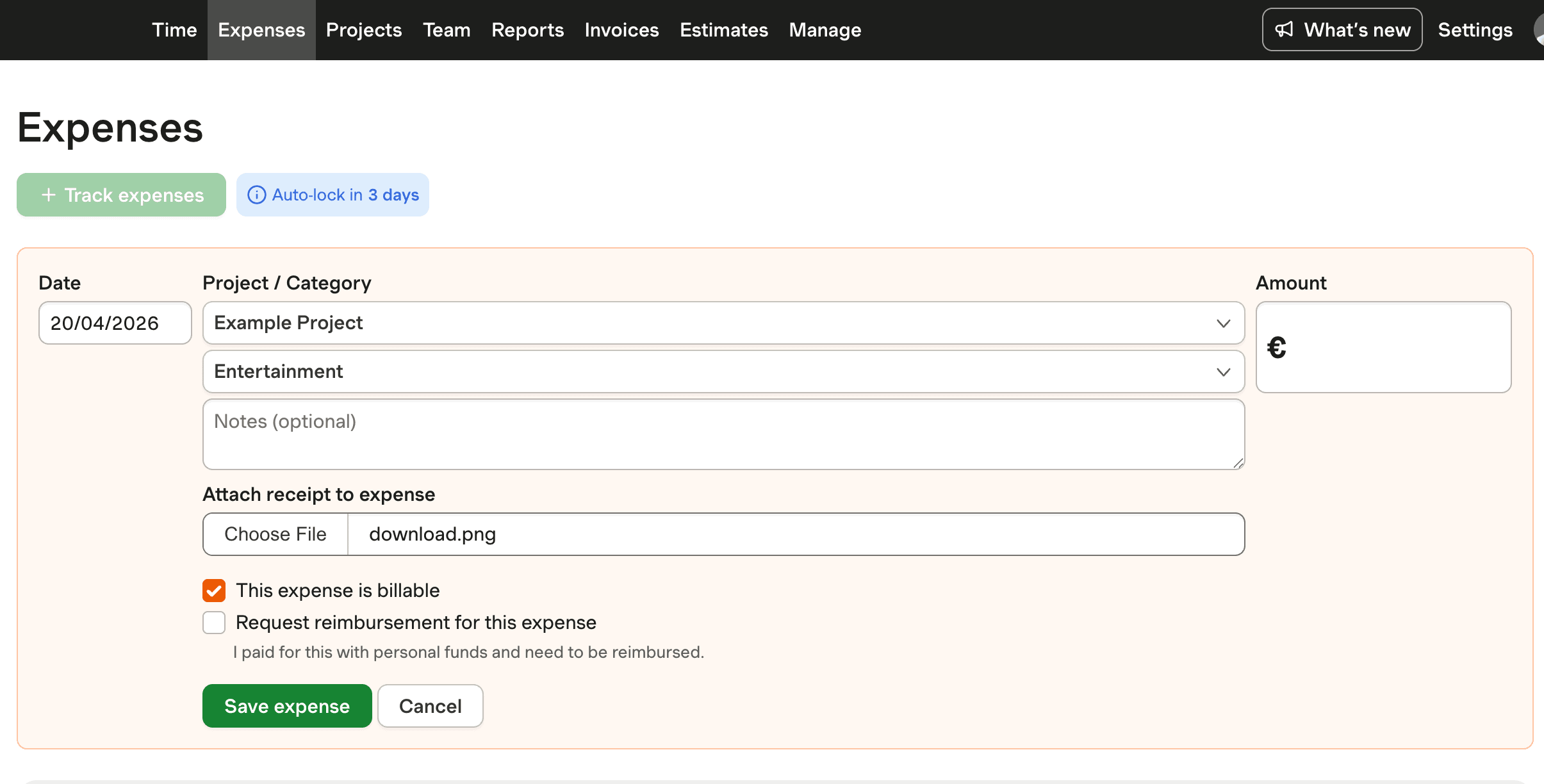
Harvest interface showing expense report features in Dutch context.

Expense Report in Dutch FAQs

  • In Dutch, 'expense report' is often translated to "declaratie" or "onkostenvergoeding." These terms are widely used in business contexts to refer to expense documentation and reimbursement.

  • The Werkkostenregeling (WKR) is a Dutch regulation that encompasses employer-provided reimbursements. It requires clear documentation and compliance, impacting how expenses are reported and reimbursed.

  • Digitalization significantly enhances efficiency in expense reporting, saving up to 35% in processing time and reducing costs by 75%. It also aids in compliance with Dutch regulations by ensuring accurate and timely documentation.

  • Common mistakes include mixing personal and business expenses, incorrect VAT rates, and late submissions. Using dedicated business accounts and digital tools can help avoid these errors and ensure compliance.

  • Yes, Harvest can be used for managing Dutch expense reports. While the interface is in English, users can manually input expense categories and notes in Dutch, ensuring flexibility and accurate documentation.

  • Harvest offers project-based expense tracking, helping businesses streamline processes and maintain compliance. It allows for detailed expense documentation, even in multiple languages, ensuring accurate financial reporting.

  • 'Onkostennota' refers to an itemized expense invoice in Dutch. It is used to detail specific costs incurred by employees, often submitted for reimbursement in business contexts.