
Harvest
Expenses
Sign up

Food Expense Tracker

Rising food costs demand effective tracking solutions. Harvest offers customizable categories and detailed reports to manage and analyze food expenses efficiently.

EXPENSE REPORT DRAFT

Drop your receipts here or click to upload

Images and PDFs (max 10 MB each)

Date
Category
Merchant
Description
Amount
Total
$0.00

Customise report

Appearance

Show report title

Report settings

Why Track Food Expenses?

Tracking food expenses is essential for gaining control over your financial health, especially as food costs continue to rise. In 2024, U.S. consumers spent an estimated $2.58 trillion on food and beverages, indicating a significant increase from previous years. Notably, 55.1% of food dollars are now spent on dining out, surpassing grocery expenses. This shift underscores the importance of monitoring food spending to manage budgets effectively.

Another critical aspect of food expense tracking is waste reduction. Globally, about one-third of all food produced is wasted annually, leading to nearly $940 billion in economic losses. In the U.S., around 40% of food is lost or wasted each year, costing $218 billion. By utilizing tools like Harvest, businesses can improve inventory management and reduce waste by 15-25%, translating to potential annual savings of $270-$450 for households.
How Harvest Simplifies Food Expense Tracking

Businesses and organizations can streamline their expense tracking with Harvest, which offers customizable categories to track food expenses like groceries, dining out, and snacks. By generating detailed expense reports, Harvest helps analyze spending patterns and identifies cost-saving opportunities, making it an invaluable tool for businesses managing multiple expense streams.

For instance, restaurants and catering services can benefit significantly from using Harvest. These sectors often grapple with fluctuating ingredient costs and need precise tracking to maintain profitability. Harvest enables them to categorize expenses efficiently, manage inventory variance, and adhere to industry benchmarks like maintaining a food cost percentage of 28-30% for quick-service restaurants.

Analyzing Spending Habits for Better Budgeting

Understanding your spending habits is crucial for effective budgeting, and Harvest makes this process easier with its comprehensive reporting tools. Tracking every expense, no matter how minor, can reveal surprising insights, such as a seemingly cheap coffee habit costing $180 per month. By categorizing expenses and generating reports, Harvest helps businesses and individuals pinpoint areas of overspending.

In the context of small businesses, tracking employee meal reimbursements is vital for tax compliance and budget adherence. Harvest's digital reporting platform allows for easy submission of receipts and categorization of expenses, ensuring that businesses accurately track deductible expenses and maintain financial control.

Implementing Effective Food Expense Strategies

To implement effective food expense strategies, start by understanding your current spending patterns. Tracking all food-related expenses for at least a month can provide a baseline for setting a realistic budget. Categorizing expenses into groceries, dining out, and snacks helps highlight areas where most money is spent. Using Harvest, businesses can set up these categories and track expenses accurately.

Regular review and adjustment of your budget is key. Harvest's detailed reports allow for periodic assessments of spending against budgets, facilitating necessary adjustments for unexpected costs or life changes. Integrating food expense tracking with broader financial planning can optimize savings and debt reduction efforts.

Leveraging Harvest for Business Expense Management

Harvest is ideal for businesses needing to track expenses across various projects with precision and ease. Its features are designed to provide insights into spending patterns, enabling businesses to identify cost-saving opportunities and maintain profitability. By using Harvest, businesses can manage expenses across projects, ensuring compliance with budgetary constraints and enhancing overall financial health.

Particularly in sectors like hospitality, where food expense data is critical for performance benchmarking, Harvest plays a pivotal role. It helps businesses maintain industry standards, like keeping food and labor costs at or below 60% of sales, ensuring operational efficiency and profitability.

Track Food Expenses with Harvest

Harvest allows businesses to track food expenses with custom categories and detailed reporting, helping manage budgets efficiently.

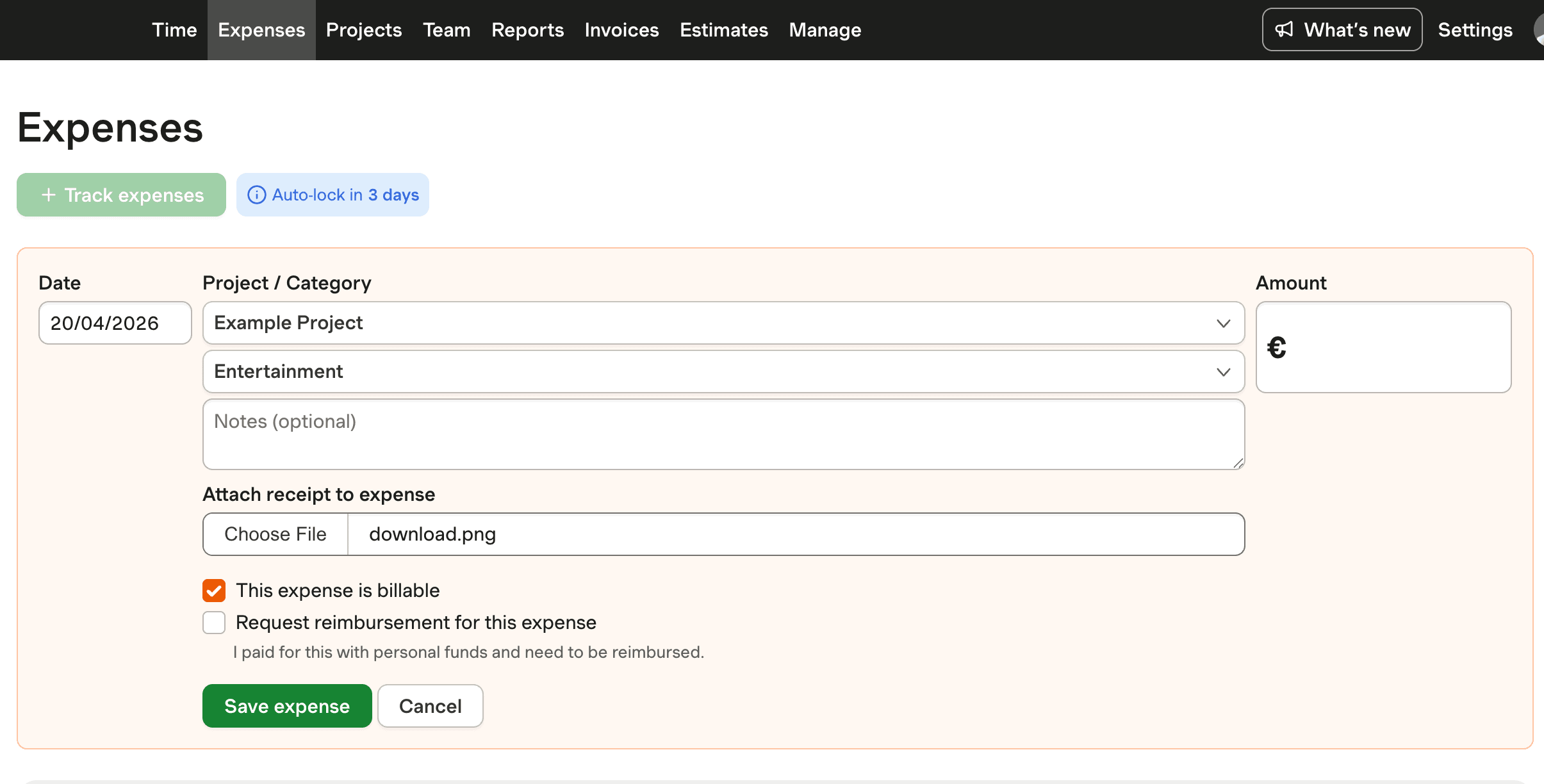
Harvest dashboard showing food expense tracking categories.

Food Expense Tracker FAQs

  • Using a digital tool like Harvest is one of the best ways to track food expenses efficiently. By creating custom categories and generating detailed reports, you can analyze spending patterns and identify areas for cost savings.

  • To analyze your food spending habits, first track all food-related expenses for a set period. Use Harvest to categorize these expenses and generate reports that highlight areas of overspending, such as dining out or snacks, to make informed budgeting decisions.

  • Include categories such as groceries, dining out, and snacks in your food budget. With Harvest, you can customize these categories to better track and analyze your spending habits, helping you identify where most of your food budget is allocated.

  • Harvest helps businesses manage food expenses by allowing them to track spending across multiple categories and projects. Detailed reports generated by Harvest provide insights into spending patterns, helping businesses identify cost-saving opportunities and maintain profitability.

  • Yes, tracking small food purchases is important as they can accumulate quickly and impact your budget significantly. Using Harvest to track every expense, no matter how small, provides a comprehensive view of your spending habits.

  • By tracking food expenses, you can improve inventory management, which reduces waste. For example, better management can decrease food waste by 15-25%, saving households $270-$450 annually. Harvest facilitates this process with its detailed tracking and reporting features.

  • Yes, Harvest can track food expenses across multiple projects by allowing users to create custom categories and generate detailed reports. This feature is particularly useful for businesses managing diverse expense streams.