
Harvest
Expenses
Sign up

How to Bill Clients for Project Expenses

Harvest enables businesses to accurately bill clients for project expenses, solving issues like revenue leakage and delayed payments.

EXPENSE REPORT DRAFT

Drop your receipts here or click to upload

Images and PDFs (max 10 MB each)

Date
Category
Merchant
Description
Amount
Total
$0.00

Customise report

Appearance

Show report title

Report settings

Understanding Project Expense Billing Challenges

Effectively billing clients for project expenses involves navigating common challenges such as revenue leakage, delayed payments, and manual errors. Revenue leakage, a significant issue, often results from unbilled or underbilled labor and expenses, frequently caused by human error in manual tracking systems. In fact, one in five expense reports contains errors, costing companies an average of $52 each to correct. Additionally, nearly half (48%) of invoices issued by small businesses are paid past their due date, affecting growth and productivity.

To combat these challenges, businesses are increasingly turning towards automation and clearer billing policies. The shift towards remote work has accelerated the adoption of automated systems, with 70% of finance teams now prioritizing real-time expense visibility. By investing in expense automation, businesses can enhance accuracy and compliance, as evidenced by the 87% of CFOs who are making this a priority. Harvest, with its real-time budget and expense tracking capabilities, enables businesses to monitor expenses accurately, reducing errors and improving cash flow management.
Best Practices for Billing Clients for Project Expenses

Implementing structured processes is key to successful client billing for project expenses. Start with thorough project planning by defining the project scope, deliverables, and timelines. Ensure you have a detailed Statement of Work (SOW) and Service Level Agreement (SLA) in place. Resource planning should involve itemizing necessary equipment and resources, alongside setting appropriate billing rates.

Harvest supports these best practices by enabling users to set up billable rates and track expenses accurately, ensuring accurate invoicing and profitability. It's crucial to itemize all costs clearly on invoices and to establish explicit payment terms. This minimizes disputes and ensures clarity for both parties. Additionally, using integrated systems like Harvest for time tracking and invoicing automates data transfer, reducing manual errors and saving time.

Streamlining Expense Management with Harvest

For businesses looking to streamline their expense management, integrating time tracking with invoicing systems is essential. Harvest offers a seamless experience by allowing users to track both time and expenses, ensuring transparency and accuracy in client billing. This integration reduces administrative time and minimizes errors, a common issue as one in five expense reports contain mistakes, costing companies significantly.

With Harvest, businesses can monitor budgets and expenses in real-time, which is crucial given the 70% of finance teams prioritizing this capability. By automating these processes, Harvest helps businesses avoid revenue leakage and improve cash flow. Providing detailed, itemized invoices with line items for tracked time and expenses ensures that billing is clear and disputes are minimized. This transparency is key to maintaining strong client relationships and ensuring timely payments.

Avoiding Disputes and Ensuring Compliance in Project Billing

Billing disputes often arise from inaccuracies and unclear payment terms. To avoid these issues, it's essential to provide detailed, itemized invoices and maintain transparent communication throughout the project lifecycle. Strategies such as establishing a clear change-order process and defining project boundaries can mitigate scope creep and its associated billing disputes.

While Harvest does not offer change management features, it focuses on providing clear invoicing by detailing tracked time and expenses. Ensuring compliance with legal standards, such as the IRS guidelines on expense reimbursement, is also crucial. Proper documentation, including digital receipts, is necessary for audit readiness and to avoid penalties. Harvest aids in this by allowing the inclusion of expenses in project budgets, ensuring that all financial data is accurately tracked and easily accessible.

Streamline Billing with Harvest

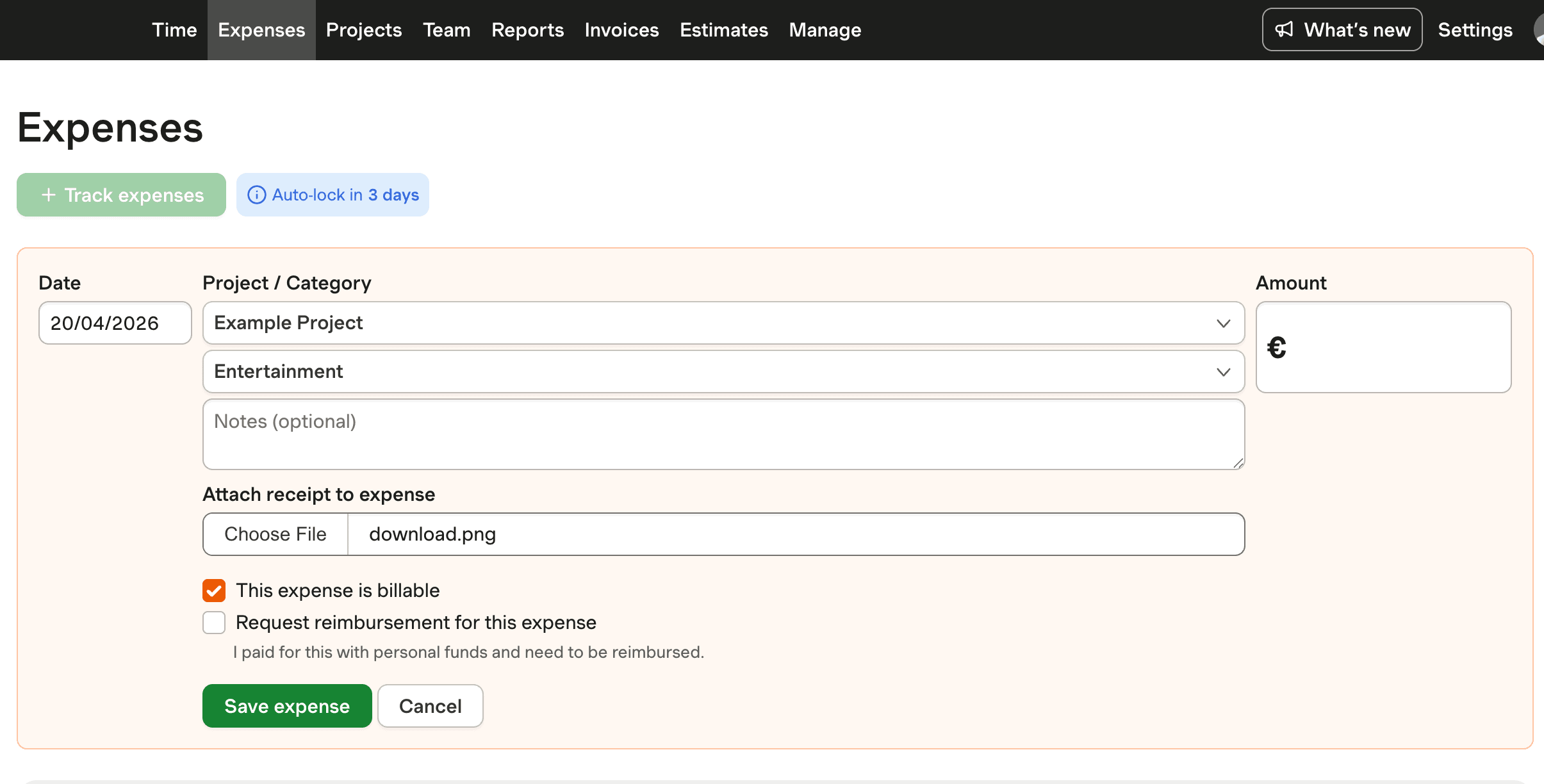
See how Harvest tracks both time and expenses for accurate client billing. Detailed invoices ensure transparency and reduce disputes.

Screenshot of Harvest's expense tracking and billing features

How to Bill Clients for Project Expenses FAQs

  • Best practices include clear project planning, setting appropriate billing rates, and itemizing all costs on invoices. Using tools like Harvest for time tracking and invoicing can automate processes and reduce errors.

  • To avoid disputes, provide detailed, itemized invoices, establish clear payment terms, and maintain transparent communication. Harvest helps by ensuring accurate invoicing with tracked time and expenses.

  • Effectively managing billable hours involves setting clear billing rates and using time tracking tools. Harvest allows users to track billable hours accurately, ensuring profitability and precise invoicing.

  • Harvest enables real-time budget and expense monitoring, allowing businesses to track expenses accurately. This ensures transparency in billing and minimizes errors.

  • Common mistakes include vague invoices, unclear payment terms, and revenue leakage. Proper documentation and using automated systems like Harvest can help prevent these issues.

  • Automation is crucial as it reduces manual errors and processing time. With Harvest, expense tracking and invoicing are streamlined, providing real-time financial insights.

  • Yes, Harvest can integrate with accounting software, enhancing accuracy and simplifying financial operations by automating data transfer and reducing manual entry.