
Harvest
Expenses
Sign up

How to Track Non-Billable Expenses

Harvest provides a straightforward way to track non-billable expenses, helping businesses optimize resource allocation and improve operational efficiency.

EXPENSE REPORT DRAFT

Drop your receipts here or click to upload

Images and PDFs (max 10 MB each)

Date
Category
Merchant
Description
Amount
Total
$0.00

Customise report

Appearance

Show report title

Report settings

Understanding Non-Billable Expenses and Their Impact

Non-billable expenses are costs incurred by businesses that cannot be directly charged to clients. These often include administrative costs, internal meetings, and employee training. Such expenses, while not directly contributing to revenue, are crucial for maintaining operational efficiency. Failing to track these expenses accurately can lead to a significant misrepresentation of a company's financial health. For instance, improper expense management can result in a loss of up to 20% of a company's budget due to undetected fraud and inefficiencies.

Understanding the full scope of non-billable expenses allows businesses to make informed decisions about resource allocation and operational improvements. By tracking these expenses, companies can identify areas where resources are overutilized and adjust accordingly to optimize profitability. Harvest provides a detailed tracking system for non-billable tasks, helping businesses allocate resources more effectively and improve operational efficiency.
The Importance of Detailed Expense Tracking

Accurate tracking of non-billable expenses is essential for maintaining financial integrity and enhancing profitability. A notable 38% of potential billable revenue is often lost due to untracked time spent on activities like emails and meetings. This highlights the importance of detailed tracking mechanisms that capture every aspect of business operations. For instance, legal firms must meticulously track non-deductible expenses to avoid tax errors and ensure compliance.

Harvest offers tools that enable law firms and consulting businesses to categorize and track non-billable expenses effectively. By including these expenses in project budgets, Harvest helps users understand overhead costs and manage administrative overhead efficiently. This detailed tracking ensures that businesses can optimize their resource allocation, enhancing both profitability and compliance.

Leveraging Technology for Efficient Expense Management

Automation in expense tracking is no longer a luxury but a necessity for businesses aiming for accurate and efficient financial management. Companies still relying on manual systems are prone to data entry errors and delayed reimbursements, which can distort budget accuracy. Implementing technology that automates receipt capture and categorizes expenses can significantly reduce these issues.

Harvest integrates seamlessly with accounting systems, allowing for automated receipt capture and expense categorization. This integration not only streamlines reporting but also improves the accuracy of financial data. By using Harvest, businesses can reduce paperwork, enhance compliance, and gain real-time visibility into their financial operations, thus avoiding the pitfalls of manual expense management.

Best Practices for Tracking Non-Billable Expenses

Establishing a formal expense reporting policy is a critical step in managing non-billable expenses. This includes defining allowable expenses, setting spending limits, and mandating the use of itemized receipts. Such policies should be clearly communicated to all employees to ensure consistent application across the organization.

Harvest supports these best practices by providing tools that allow for the categorization of expenses and the inclusion of non-billable costs in project budgets. This not only helps in maintaining accurate financial records but also facilitates operational efficiency. By leveraging Harvest, businesses can ensure that all non-billable expenses are tracked, documented, and analyzed for better resource allocation and profitability.

Track Non-Billable Expenses with Harvest

See how Harvest tracks non-billable expenses, helping improve resource allocation and operational efficiency.

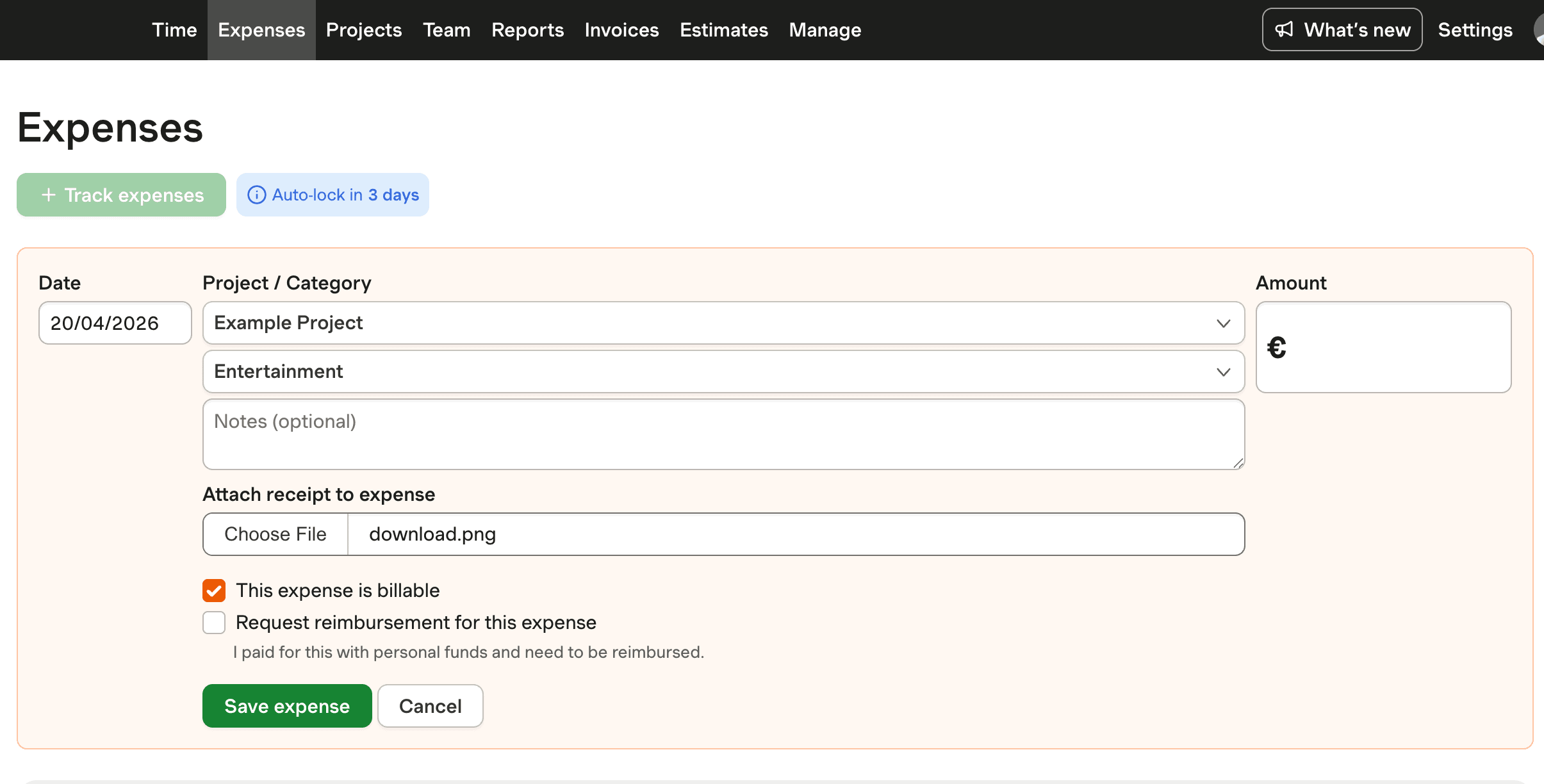
Screenshot of Harvest's non-billable expense tracking feature.

How to Track Non-Billable Expenses FAQs

  • Non-billable expenses are costs that a business incurs which cannot be directly charged to clients. These include administrative costs, training, and internal meetings. Proper tracking of these expenses is crucial for accurate financial management and improving operational efficiency.

  • Tracking non-billable expenses helps businesses understand their operational costs and allocate resources more effectively. Failure to track these expenses can lead to inaccurate financial reporting and a loss of up to 20% of a company's budget due to mismanaged funds.

  • Harvest allows businesses to categorize and track non-billable expenses by including them in project budgets. This helps in understanding overhead costs and managing administrative overhead efficiently, thereby optimizing profitability.

  • Best practices for managing non-billable expenses include establishing formal expense reporting policies, defining allowable expenses, and using itemized receipts. Harvest supports these practices by enabling detailed tracking and categorization of expenses.

  • Yes, non-billable expenses impact profitability by affecting a company's operational costs. Proper tracking and management of these expenses can help businesses optimize resource allocation and enhance overall profitability.

  • Technology, such as Harvest's expense tracking software, automates receipt capture and categorization, reducing errors and improving financial accuracy. This integration streamlines reporting and enhances compliance, providing real-time financial insights.

  • Businesses often struggle with distinguishing between billable and non-billable expenses, which can lead to profitability issues. Manual tracking systems are prone to errors, whereas automated tools like Harvest help mitigate these challenges by providing accurate tracking and analysis.