
Harvest
Expenses
Sign up

Reimbursement Form Template

Harvest streamlines expense management with customizable categories, allowing businesses to track and itemize expenses efficiently, solving common manual reporting errors.

EXPENSE REPORT DRAFT

Drop your receipts here or click to upload

Images and PDFs (max 10 MB each)

Date
Category
Merchant
Description
Amount
Total
$0.00

Customise report

Appearance

Show report title

Report settings

Understanding Reimbursement Form Essentials

When creating a reimbursement form template, including essential fields is crucial for accurate and efficient processing. A comprehensive form should capture critical data such as the date of expense, description, amount, and the category it falls under, like travel or meals. This ensures clarity and consistency across submissions, minimizing errors and disputes. According to industry research, manual reporting can inflate mileage by 10-15% due to human error, underscoring the need for precise data capture.

To combat common issues like over-reimbursement and wasted time, businesses are increasingly adopting digital solutions. These systems automate receipt capture and expense categorization, significantly reducing administrative workload. For instance, automating expense management can save up to 330 hours annually in a medium-sized company. Harvest is a leader in this space, providing tools to itemize expenses with custom categories for seamless tracking and reporting.
Customizing Reimbursement Form Templates for Your Business

Customizing a reimbursement form template to align with company policies enhances compliance and transparency. While Harvest does not offer direct customization of forms, it supports creating custom expense categories like lodging, meals, and travel, allowing businesses to tailor the expense tracking process to their needs. This flexibility is crucial for adapting to industry-specific requirements, such as those faced by the construction and healthcare sectors, where precise job costing and documentation are essential.

Moreover, integrating automated systems with existing business processes, such as accounting software, can streamline operations. This integration eliminates manual data entry, reducing errors and providing real-time financial visibility. Aligning data fields and utilizing APIs are key steps in this process, ensuring smooth data transfer and centralized financial data management. Harvest facilitates these integrations, making it an ideal choice for businesses seeking to enhance their financial operations.

Ensuring Accurate Mileage Reimbursement

Mileage reimbursement is a common component of business expense claims, yet manual calculations can lead to inaccuracies. With Harvest, calculating mileage reimbursement becomes straightforward. The platform allows users to set a per-mile rate, automatically computing the total reimbursement based on the distance traveled. This feature not only simplifies the process but also ensures accuracy, essential given the IRS mileage rate increase to 72.5 cents per mile in 2026.

For businesses navigating the complexities of mileage reimbursement, having a system that offers precise calculations can prevent over-reimbursement and compliance issues. Harvest's automated mileage tracking ensures that calculations are based on verifiable data, reducing the risk of manual errors and enhancing financial control. This accuracy is vital in industries like healthcare, where reimbursement cycles are critical to cash flow management.

Best Practices for Submitting Reimbursement Requests

Submitting reimbursement requests efficiently requires adherence to best practices. A clear, written policy defining reimbursable expenses, submission deadlines, and documentation requirements is essential. Experts recommend submitting expenses within 30 days of incurring them to avoid backlogs and ensure timely processing. Harvest supports this process with features like receipt uploads, enabling employees to attach images or PDFs to each expense entry.

One of the most common mistakes is failing to track small expenses, yet these can add up significantly over time. Using digital tools like Harvest to capture all expenses, no matter how minor, ensures full compensation and accurate records. Additionally, mandating the use of credit cards for business expenses can create electronic records, separating personal and business costs. Harvest's ability to manage these records digitally makes it an invaluable tool for efficient reimbursement management.

Reimbursement Form Templates with Harvest

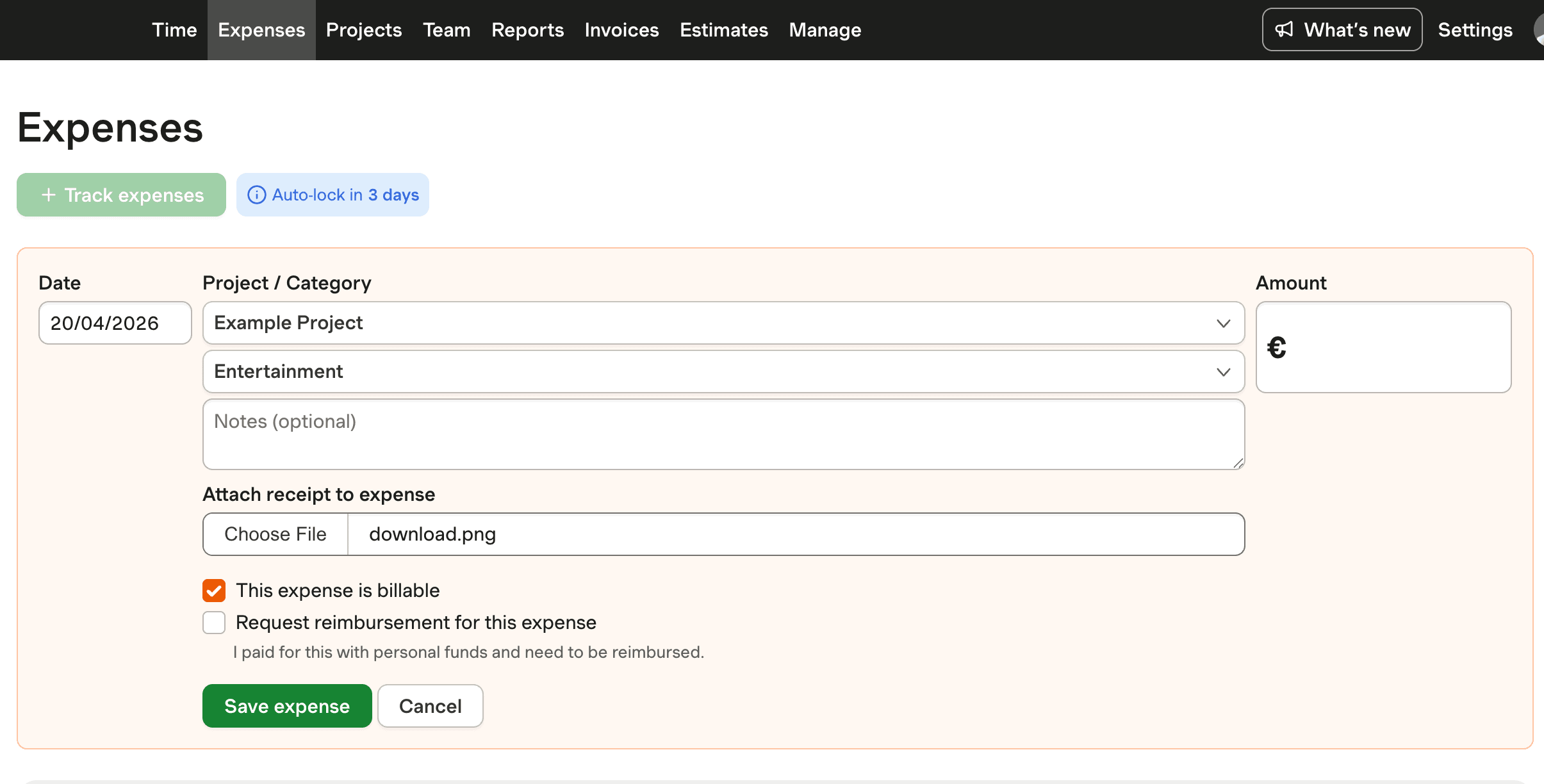
Explore Harvest's features for creating and managing reimbursement forms. Customize categories, track expenses, and streamline your processes.

Harvest reimbursement form template screenshot showcasing expense categories.

Reimbursement Form Template FAQs

  • A comprehensive reimbursement form should include fields for the date of expense, description, amount, category (e.g., travel, meals), and receipt attachment. These fields ensure accurate tracking and compliance.

  • With Harvest, you can set a per-mile rate for mileage reimbursement. The platform automatically calculates the total based on the distance traveled, ensuring accuracy and compliance with current IRS rates.

  • Best practices include submitting expenses within 30 days, using automated systems for receipt uploads, and maintaining clear policies. Harvest supports these practices with digital tracking and submission features.

  • Automation reduces manual errors, saves time, and improves accuracy in expense management. Systems like Harvest offer real-time tracking and integration with accounting tools, enhancing financial control.

  • Harvest allows users to upload images or PDFs of receipts for each expense entry, ensuring that every transaction is documented and linked to the relevant expense category.

  • Yes, Harvest can integrate with accounting software like QuickBooks or Xero, automating data transfer and simplifying financial operations through centralized data management.