
Harvest
Time Tracking
Sign up free

How to Track Time Spent on Tasks

Many organizations lose up to $78,700 per 1,000 employees due to missing time logs. Harvest solves this with accurate, easy-to-use time tracking.

Try Harvest Free

How much revenue is your team leaving on the table?

Most agencies run at 55-60% utilization. Even a small improvement means significant revenue. See what closing the gap looks like for your team.

Number of people who track billable time
$
Blended rate across roles (junior, senior, lead)
55%
Percentage of total hours that are billable. Industry average is 55-60%.
75%
A realistic target for service businesses is 70-80%.
Monthly revenue gap $0
Revenue at current utilization $0/mo
Revenue at target utilization $0/mo
Extra billable hours needed per person/day 0h
Annual revenue opportunity $0

Start tracking team utilization

Walk through the entire flow below. Start a timer, check your reports, and create a real invoice — all in three clicks.

Go ahead — start tracking!

One click and you're timing. Try it right here: start a timer, add an entry, edit the details. This is exactly how it feels in Harvest.

  • One-click timer from browser, desktop & mobile
  • Works inside Jira, Asana, Trello, GitHub & 50+ tools
  • Duration or start/end — your call
  • Day, week & calendar views to stay on top of it all
  • Friendly reminders so no hour gets left behind
Acme Corp
Website Redesign
Homepage layout revisions
1:24:09
Content Strategy
Blog calendar planning
1:30:00
SEO Audit
Technical audit report
0:45:00
Brand Guidelines
Color system documentation
2:15:00
Logo Concepts
Initial sketches round 1
1:00:00

Understanding the Why: The Core Benefits of Time Tracking

Effective time tracking is essential for enhancing productivity and ensuring accurate billing. Tracking time spent on tasks offers a comprehensive view of work patterns, allowing individuals and teams to optimize their efficiency. Statistics reveal that full-time employees in the industrial sector are only productive for about 2 hours and 53 minutes daily, highlighting the need for better time management. By utilizing precise tracking tools like Harvest, professionals can ensure that every minute is accounted for, leading to improved resource allocation and enhanced accountability.

Moreover, accurate time tracking supports compliance with labor laws, such as the Fair Labor Standards Act in the U.S., which mandates meticulous record-keeping. Harvest aids in maintaining compliance by offering detailed reports and automated tracking solutions. With these insights, organizations can avoid the hefty fines associated with non-compliance and improve their overall operational transparency.
Methods for Tracking Time: From Manual to Automated

There are multiple methods for tracking time, ranging from manual entries to automated systems. Manual methods, like paper timesheets and digital spreadsheets, are simple and cost-effective but prone to human error and time theft, which costs U.S. employers an estimated $373 million annually. On the other hand, automated solutions like Harvest offer real-time tracking and robust analytics, reducing these risks substantially.

Harvest's automated time tracking with one-click timers provides a seamless experience for remote teams and freelancers. This method increases accuracy and offers comprehensive data analysis capabilities, which manual methods lack. By integrating with tools like Asana and Slack, Harvest ensures that time tracking is an intuitive part of your workflow, enhancing productivity while maintaining a high degree of accuracy.

Best Practices for Effective Time Tracking

To maximize the benefits of time tracking, consistency and accuracy are key. It’s recommended to log time immediately upon starting or completing a task to minimize errors. Utilizing tools like Harvest, which allows for both manual and automated time entries, can streamline this process across multiple projects simultaneously.

Establishing clear policies and providing training on the chosen time tracking system are also critical. Harvest supports this by offering user-friendly interfaces and integrations with popular project management software, ensuring that team members can adopt the system quickly and effectively. Regularly reviewing the data collected can help identify inefficiencies and optimize future project estimates, ultimately leading to better resource allocation and project success.

Leveraging Time Tracking Data for Insights and Improvement

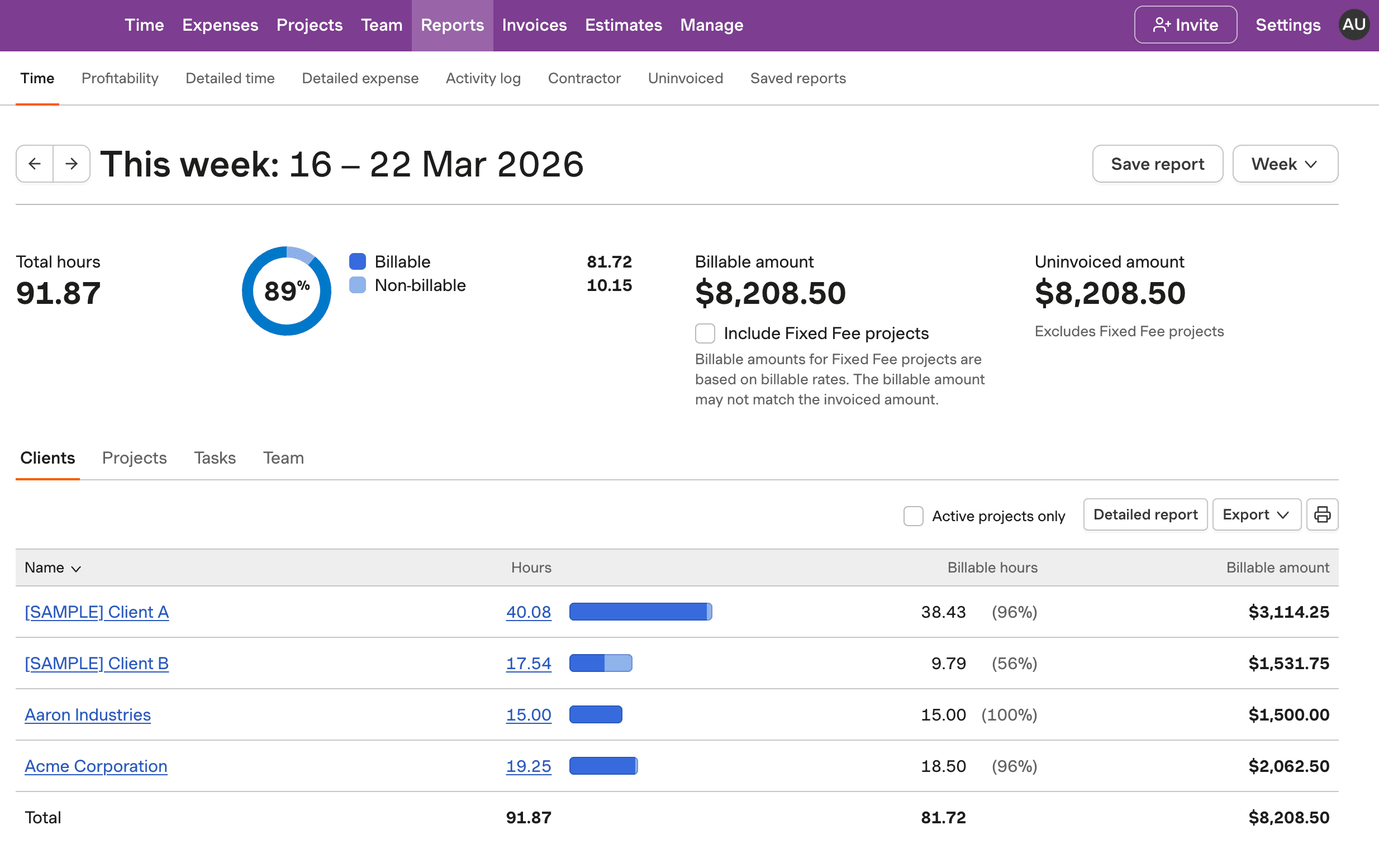
Analyzing time tracking data can provide valuable insights into productivity and project management. Key metrics such as total hours worked, billable versus non-billable hours, and task completion rates are crucial for understanding project performance. Harvest provides detailed reports that allow professionals to dive deep into these metrics, identifying time sinks and optimizing workloads.

By leveraging this data, organizations can make informed decisions about scheduling and resource allocation, improving future project estimations. For example, by understanding that missing time logs can cost companies approximately $78,700 per 1,000 employees annually, businesses can ensure better compliance and efficiency. Harvest's ability to analyze productivity metrics makes it an invaluable tool for enhancing performance and readiness for audits.

How Harvest Tracks Time Effectively

See how Harvest provides seamless time tracking across projects, enhancing productivity and compliance with detailed reports.

Harvest time tracking interface showing task tracking features

How to Track Time Spent on Tasks FAQs

  • Some of the best tools for tracking time include automated systems like Harvest, which offer real-time tracking and robust analytics. These tools integrate with popular project management software like Asana and Slack, providing a seamless workflow experience.

  • You can track time manually using paper timesheets or digital spreadsheets. While these methods are low-cost and flexible, they are prone to errors and may lack the detailed insights offered by automated tools like Harvest.

  • Manual methods such as paper timesheets are low-cost but often inaccurate. Automated tools like Harvest provide high accuracy, real-time tracking, and valuable data insights, though they may require an initial investment and training.

  • Harvest integrates seamlessly with popular project management tools like Asana, Trello, and Jira. This integration provides enhanced visibility into time tracking, making it easier to manage projects and improve productivity.

  • Key metrics to analyze include total hours worked, billable versus non-billable hours, and task completion rates. Harvest offers detailed reports to help you identify inefficiencies and optimize resource allocation.

  • Using automated tools like Harvest ensures accuracy by allowing real-time tracking and minimizing manual entry errors. Consistent use and regular review of time logs further enhance accuracy.

  • Yes, Harvest is designed to help freelancers and teams track billable and non-billable hours effectively. This feature aids in accurate billing and financial management.

  • Best practices include logging time immediately, using clear task descriptions, and reviewing data regularly. Harvest supports these practices with user-friendly features and comprehensive reporting capabilities.