
Harvest
Time Tracking
Sign up free

Time Tracking in Denmark

Facing Denmark's new time tracking laws, effective July 1, 2024, Harvest helps employers comply with requirements to register employee working hours.

Try Harvest Free

How many hours did you work this week?

Enter your clock-in and clock-out times for each day. The calculator handles breaks, overtime, and weekly totals automatically.

Day Clock In Clock Out Break Hours
Total hours this week 0h
Regular hours (≤40) 0h
Overtime hours 0h
Average hours/day 0h
Total break time 0h

Track time automatically with Harvest

Walk through the entire flow below. Start a timer, check your reports, and create a real invoice — all in three clicks.

Go ahead — start tracking!

One click and you're timing. Try it right here: start a timer, add an entry, edit the details. This is exactly how it feels in Harvest.

  • One-click timer from browser, desktop & mobile
  • Works inside Jira, Asana, Trello, GitHub & 50+ tools
  • Duration or start/end — your call
  • Day, week & calendar views to stay on top of it all
  • Friendly reminders so no hour gets left behind
Acme Corp
Website Redesign
Homepage layout revisions
1:24:09
Content Strategy
Blog calendar planning
1:30:00
SEO Audit
Technical audit report
0:45:00
Brand Guidelines
Color system documentation
2:15:00
Logo Concepts
Initial sketches round 1
1:00:00

Understanding Denmark's New Time Tracking Law: The Basics

Effective from July 1, 2024, Denmark's new time tracking law mandates that employers register the working hours of their employees. This change aligns with the 2019 European Court of Justice ruling requiring EU member states to enforce reliable systems for tracking working time. The law's primary goal is to protect employee health and safety by ensuring compliance with the EU Working Time Directive, which sets rules on maximum working hours and rest periods.

Employers must implement an "objective, reliable, and accessible" system to record each employee's daily working hours. While it's not mandatory to track specific time slots, the total daily working hours must be documented. Employees must also have access to their recorded hours, and all data should be stored for five years, even after an employee has left the company. This comprehensive approach is crucial for maintaining transparency and upholding labor standards.
Key Compliance Requirements for Employers

Denmark's time tracking law requires employers to adhere to several compliance requirements to ensure workplace transparency and safety. Firstly, employers must design a system that is reliable and flexible, providing employees with access to their work records. This system must store data for at least five years, a critical step for compliance with both national and GDPR data protection laws.

In terms of working hours, the legislation stipulates a maximum average of 48 hours per week over a four-month period, including overtime. Employees must also receive a minimum of 11 consecutive hours of rest every 24 hours and at least 24 hours of rest per week. These regulations are designed to prevent burnout and promote a healthy work-life balance. Implementing a system like Harvest, which facilitates detailed time tracking, can significantly help employers meet these obligations.

Exemptions and Special Considerations

Under the new regulations, some employees may qualify for exemptions, particularly "self-organizers" who manage their own schedules and whose working hours cannot be predetermined. However, this exemption is narrowly defined and typically applies to genuine managerial roles. Such exemptions must be clearly outlined in employment contracts to avoid misunderstandings.

Sector-specific deviations are also possible through collective bargaining agreements, especially in industries like healthcare and emergency services. These agreements can allow deviations from the standard 48-hour limit with employee consent. Additionally, employees working from home must have their hours registered, though certain exemptions apply to the daily and weekly rest requirements under specific conditions.

Consequences of Non-Compliance and Risk Mitigation

Failing to comply with Denmark's time tracking laws can lead to significant consequences, including financial penalties and adverse legal outcomes. Employers could face fines or even imprisonment for severe violations of the Working Environment Act. Furthermore, non-compliance with GDPR can result in fines up to 4% of global annual turnover.

To mitigate these risks, employers should develop clear policies for time registration and integrate these processes with existing HR systems. Utilizing a tool like Harvest, which provides comprehensive reporting and secure data storage, can help employers maintain compliance and avoid potential pitfalls. By ensuring robust data management and employee awareness, businesses can uphold the new standards effectively.

Time Tracking with Harvest in Denmark

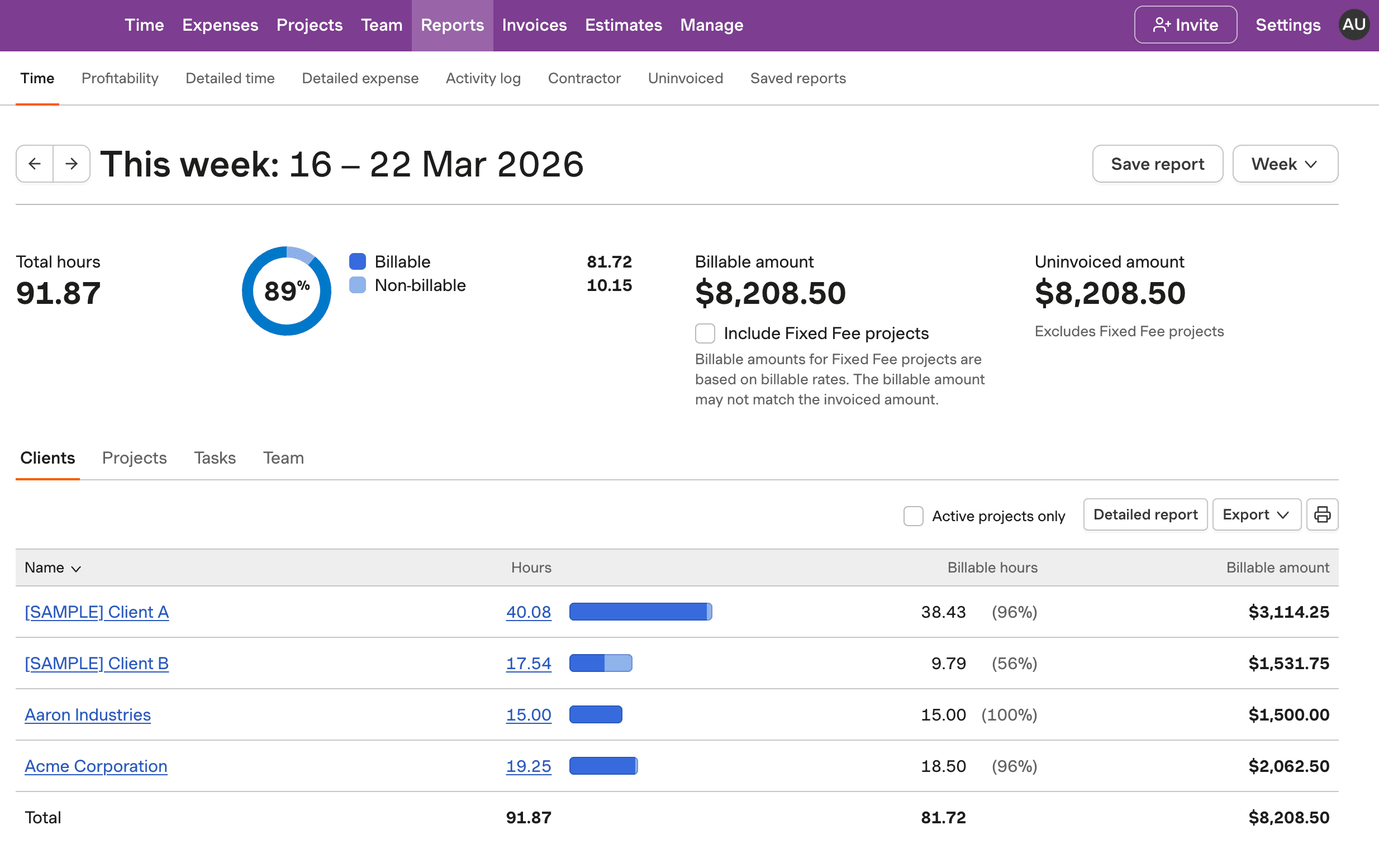
Preview Harvest's interface for tracking work hours, aligning with Denmark's new compliance laws effective July 1, 2024.

Harvest time tracking tool interface for compliance with Denmark's laws.

Time Tracking in Denmark FAQs

  • Denmark's new time tracking laws, effective July 1, 2024, require employers to register each employee's daily working hours. This aligns with the EU Working Time Directive to ensure employee health and safety.

  • The new time tracking laws in Denmark became effective on July 1, 2024. Employers must now have systems in place to register employee working hours to comply with these regulations.

  • Employers in Denmark must implement a reliable system for tracking daily working hours, provide employee access to records, and store this data for five years. Compliance with GDPR is also required.

  • Yes, exemptions exist for "self-organizers" who manage their own schedules, but these are limited and must be clearly stated in contracts. Collective agreements may also allow for sector-specific exemptions.

  • Harvest provides a reliable system for tracking working hours with features like one-click timers and detailed reporting, helping Danish employers meet new compliance requirements.

  • Non-compliance can result in fines or imprisonment for severe violations. GDPR breaches can lead to fines up to 4% of global turnover. Using reliable systems like Harvest can mitigate these risks.

  • Yes, remote work hours must be registered. However, exemptions may apply to daily and weekly rest rules if work is self-organized. Nonetheless, hours count towards the 48-hour weekly limit.