
Harvest
Time Tracking
Sign up free

Time Tracking With Salesforce Integration

Harvest offers robust time tracking and reporting capabilities, addressing the significant revenue loss from unrecorded billable hours with seamless integrations, though not directly with Salesforce.

Try Harvest Free

How much revenue is your team leaving on the table?

Most agencies run at 55-60% utilization. Even a small improvement means significant revenue. See what closing the gap looks like for your team.

Number of people who track billable time
$
Blended rate across roles (junior, senior, lead)
55%
Percentage of total hours that are billable. Industry average is 55-60%.
75%
A realistic target for service businesses is 70-80%.
Monthly revenue gap $0
Revenue at current utilization $0/mo
Revenue at target utilization $0/mo
Extra billable hours needed per person/day 0h
Annual revenue opportunity $0

Start tracking team utilization

Walk through the entire flow below. Start a timer, check your reports, and create a real invoice — all in three clicks.

Go ahead — start tracking!

One click and you're timing. Try it right here: start a timer, add an entry, edit the details. This is exactly how it feels in Harvest.

  • One-click timer from browser, desktop & mobile
  • Works inside Jira, Asana, Trello, GitHub & 50+ tools
  • Duration or start/end — your call
  • Day, week & calendar views to stay on top of it all
  • Friendly reminders so no hour gets left behind
Acme Corp
Website Redesign
Homepage layout revisions
1:24:09
Content Strategy
Blog calendar planning
1:30:00
SEO Audit
Technical audit report
0:45:00
Brand Guidelines
Color system documentation
2:15:00
Logo Concepts
Initial sketches round 1
1:00:00

The Strategic Imperative of Time Tracking in Salesforce

Time tracking with Salesforce integration is crucial for businesses seeking to improve project management and financial accuracy. Traditional time tracking methods often lead to data inaccuracies and productivity losses. Studies show that 90.5% of respondents miss billable hours, losing an average of 21.5%, which translates to significant revenue loss. Furthermore, employees switch between applications approximately 1,200 times daily, resulting in nearly four hours of lost productivity per week—or five full weeks annually per employee.

By integrating time tracking directly within Salesforce, businesses can eliminate these inefficiencies. This integration provides a single source of truth for time-related data, reducing discrepancies and enhancing decision-making. Leveraging Salesforce's native reporting tools, businesses can visualize complex data, gaining insights into project performance and profitability. This approach supports data-driven strategies, optimizing resource utilization and improving overall productivity.
Core Features of a Salesforce-Integrated Time Tracking Solution

A Salesforce-integrated time tracking solution should offer flexible entry methods, like manual input, stopwatches, and daily/weekly timesheets, to accommodate various work styles. A robust integration allows tracking across Salesforce objects, including tasks, projects, and opportunities, providing a comprehensive view of business operations. Advanced reporting capabilities are essential, enabling analysis of utilization rates and cost effectiveness.

Mobile accessibility ensures that time tracking is convenient for remote teams and field staff, while real-time updates facilitate immediate data access for management decisions. The integration should also support seamless data synchronization with other systems, such as payroll or accounting software, to enhance operational efficiency. By incorporating these features, businesses can ensure accurate billing and compliance with labor laws, improving client trust and satisfaction.

Implementing Time Tracking: A Step-by-Step Guide and Best Practices

To set up a Salesforce-integrated time tracking system, start by selecting a solution that offers native integration or a robust connector. After creating an account, install the necessary AppExchange package or browser extension, and grant permissions within Salesforce to access and manage data.

  1. Customize settings to track time against specific Salesforce objects and define billable categories.
  2. Encourage daily time logging to prevent memory gaps and ensure data accuracy.
  3. Use clear comments to enhance transparency and provide context for invoicing.
  4. Regularly review and approve timesheets to maintain data integrity and avoid delays.

Following these best practices helps maximize the benefits of integrated time tracking, supporting accurate project management and efficient resource allocation.

Transforming Project Management and Profitability with Salesforce Time Data

Integrating time tracking with Salesforce enhances project management by providing accurate data for planning and estimation. This allows businesses to optimize resource allocation, prevent team burnout, and ensure timely project delivery. Accurate time tracking supports precise invoicing, reducing client disputes and enhancing transparency.

Real-time dashboards within Salesforce enable managers to monitor project health and identify bottlenecks, improving delivery predictability. By leveraging detailed time data, businesses can make informed decisions, ensuring that resources are used effectively and projects remain profitable. This integration transforms how companies manage projects, leading to improved efficiency and financial outcomes.

Time Tracking With Salesforce Integration in Harvest

Explore how Harvest integrates with various tools to enhance time tracking within your Salesforce ecosystem, boosting accuracy and management.

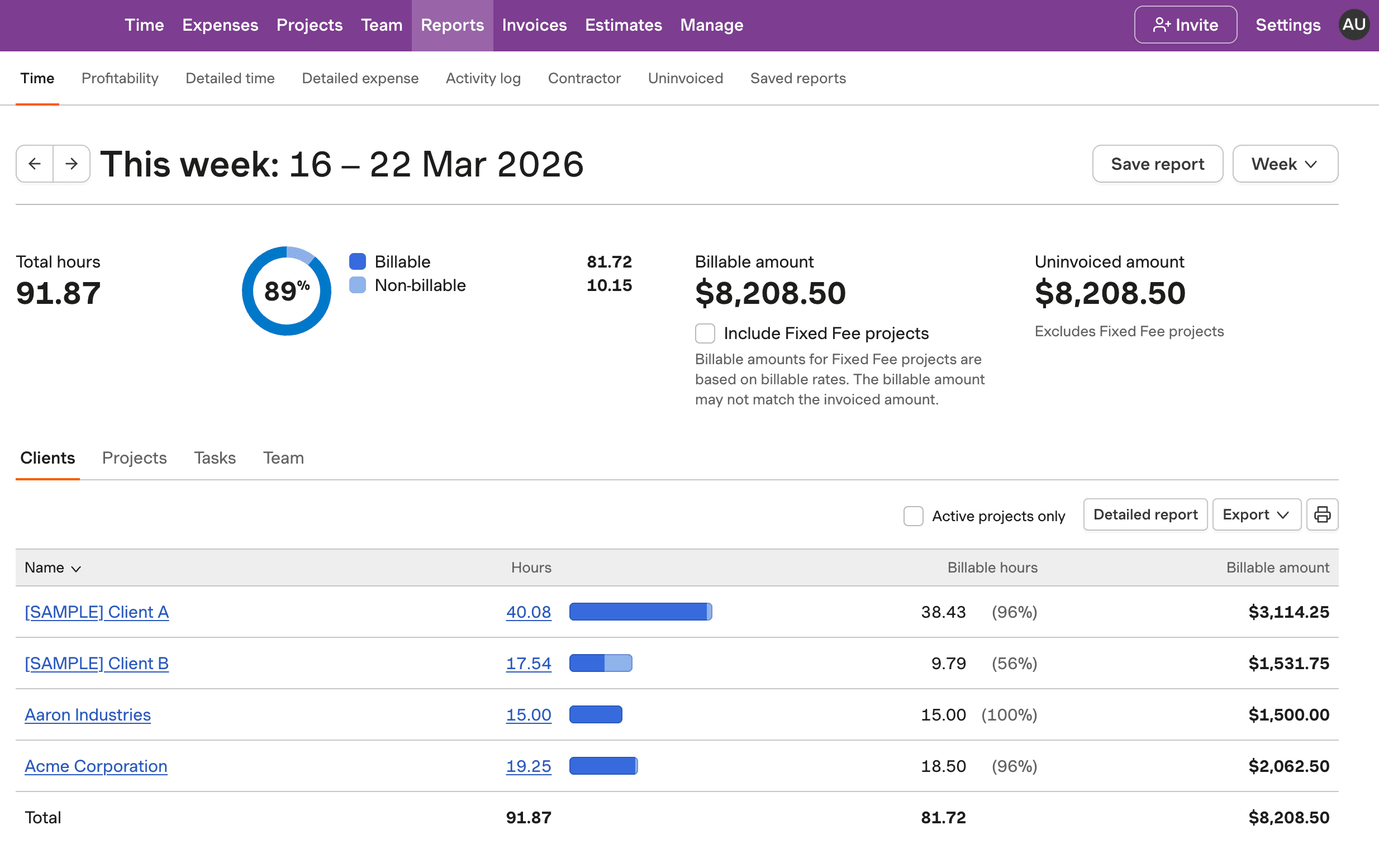
Harvest time tracking with Salesforce integration interface

Time Tracking With Salesforce Integration FAQs

  • While Harvest excels in time tracking and reporting, it does not directly integrate with Salesforce. However, it offers integrations with tools like Asana and Trello that can complement Salesforce workflows.

  • Time tracking within Salesforce provides accurate data for project planning and execution. It helps in optimizing resource allocation, improving delivery predictability, and ensuring accurate client invoicing, thus enhancing overall project management.

  • Key features include flexible time entry methods, integration with Salesforce objects, advanced reporting, mobile accessibility, and seamless data synchronization with accounting systems. These enhance productivity and ensure accurate billing.

  • While some tools offer free trials or basic versions, comprehensive features often require a paid plan. Harvest provides a free 30-day trial to explore its capabilities, although it doesn't directly integrate with Salesforce.

  • Yes, many time tracking solutions offer mobile apps that allow users to log time on the go. This is particularly useful for remote teams and field staff, ensuring accurate and timely data entry.

  • To set up time tracking, choose a compatible tool, create an account, and install the necessary AppExchange package or extension. Customize your settings to track time against desired Salesforce objects and start logging time.

  • Salesforce time tracking data can generate reports on utilization rates, project profitability, and resource allocation. These insights aid in strategic planning and operational efficiency, driving business success.