
Harvest
Time Tracking
Sign up free

Track Project Profitability

Harvest helps teams avoid costly scope creep by tracking project budgets and alerting managers when limits are approached, ensuring profitability.

Try Harvest Free

Will this project be profitable?

Estimate your project cost, set the right price, and know exactly how many hours your team can spend before margin disappears.

Total hours across all team members
$
Average rate across all roles on the project
15%
Scope creep is real. Most projects need 10-25% buffer to stay profitable.
Recommended project price $0
Base cost (before buffer) $0
Hours per person per week 0h
Weekly burn rate $0
Max hours before loss 0h

Track project hours with Harvest

Walk through the entire flow below. Start a timer, check your reports, and create a real invoice — all in three clicks.

Go ahead — start tracking!

One click and you're timing. Try it right here: start a timer, add an entry, edit the details. This is exactly how it feels in Harvest.

  • One-click timer from browser, desktop & mobile
  • Works inside Jira, Asana, Trello, GitHub & 50+ tools
  • Duration or start/end — your call
  • Day, week & calendar views to stay on top of it all
  • Friendly reminders so no hour gets left behind
Acme Corp
Website Redesign
Homepage layout revisions
1:24:09
Content Strategy
Blog calendar planning
1:30:00
SEO Audit
Technical audit report
0:45:00
Brand Guidelines
Color system documentation
2:15:00
Logo Concepts
Initial sketches round 1
1:00:00

Understanding Project Profitability

Project profitability is a crucial metric that determines whether a project generates more revenue than its total costs. Calculating project profitability involves subtracting total project costs from total revenue. A positive result indicates profitability, while a negative result means costs exceeded revenue. Many teams fail to account for indirect costs, which can reduce net profit by 20-30% compared to gross profit if not properly managed.

Profit margins vary by industry. In professional services, a strong net profit margin ranges from 15% to 25%. In construction, net profit margins average around 5-6%, with general contractors often targeting 12-16% gross margins. Marketing agencies typically achieve margins of 15% to 20%. Understanding these benchmarks helps set realistic goals for your business.
How to Calculate Project Profitability

Accurately calculating project profitability involves several steps. First, determine total project revenue, including client payments and additional services. Next, add up direct project costs like labor and materials. Calculate gross profit by subtracting direct costs from total revenue. To find net profit, subtract both direct and indirect costs from revenue, which includes overhead and shared expenses. Finally, express net profit as a percentage of revenue to calculate the profit margin.

Regularly tracking these metrics is essential. Only 51% of projects finish on schedule, and scope creep can lead to budget overruns averaging 27%. Using tools like Harvest can automate these calculations, ensuring you capture all relevant data for accurate profitability analysis.

Strategies to Improve Project Profitability

Improving project profitability requires a proactive approach. Begin with accurate estimation, using past project data to inform your projections. Managing scope proactively is also critical, as poor scope management can cost organizations $97 million for every $1 billion invested. Harvest helps manage scope creep with project budgets and alerts when limits are approached, safeguarding your margins.

Optimize resource allocation by ensuring that the right team members are assigned to the right tasks. Track team utilization rates with Harvest to maximize efficiency and profitability. Implement real-time financial tracking to stay responsive to cost changes and maintain control over your budget. By applying these strategies, you can significantly enhance your project's financial outcomes.

The Role of Software in Tracking Profitability

Software tools play a vital role in tracking and enhancing project profitability. They offer real-time insights into costs, time, and revenue, allowing for timely adjustments. Harvest, for instance, tracks team utilization and project budgets, providing alerts when you're approaching financial limits. This capability is crucial for managing scope creep, which affects 52% of projects, and can lead to significant budget overruns.

These tools automate the calculation of profitability metrics, reducing errors and increasing efficiency. By consolidating financial and project data into a single system, Harvest ensures consistency and accuracy, empowering managers to make informed decisions and strategically improve project outcomes.

Track Project Profitability with Harvest

See how Harvest tracks project budgets, alerts on limits, and helps avoid scope creep, ensuring better profitability.

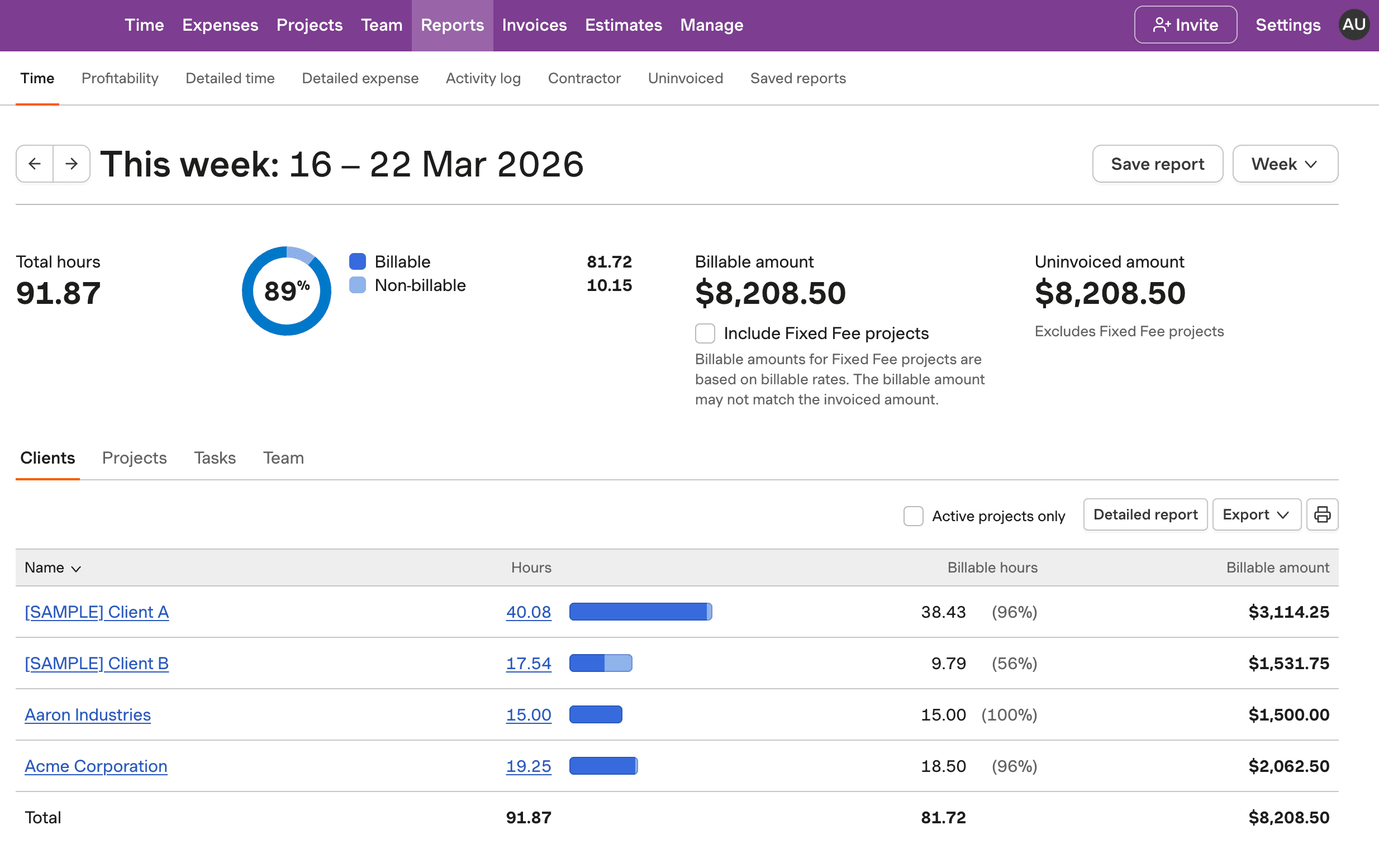
Harvest interface showing project profitability tracking features.

Track Project Profitability FAQs

  • Key metrics include total project revenue, direct and indirect costs, gross and net profit, and profit margin. Tracking these regularly ensures you have a clear view of a project's financial health.

  • Scope creep can lead to budget overruns averaging 27%, significantly impacting profitability. Harvest helps manage this by tracking budgets and alerting you when limits are approached.

  • Software like Harvest automates profitability calculations by tracking time, costs, and budgets in real-time. This reduces errors and enhances decision-making, ensuring accurate profitability analysis.

  • Improving profitability involves accurate estimation, proactive scope management, and optimized resource allocation. Tools like Harvest help by providing real-time insights and alerts to prevent budget overruns.

  • Project profitability should be calculated at key milestones, such as 25%, 50%, and 75% completion, and at project close. This helps track progress and address any financial issues proactively.

  • Harvest tracks team utilization rates, helping you optimize resource allocation for maximum efficiency and profitability. This ensures the right people are on the right tasks at the right time.

  • Yes, Harvest provides alerts when project budgets approach set limits. This helps prevent budget overruns and ensures that projects remain profitable.