
Harvest
Contracts
Sign up

Consulting Contract Template

Consultants face challenges like scope creep and late payments, but Harvest streamlines these workflows with tools for time tracking, expense management, and invoicing.

Start from a template

AGREEMENT DRAFT

Add your logo here

Scope of work

Payment terms

Duration

Signatures

Client

Sign here

Contractor

Sign here

Get paid via:
Credit card / Debit card
ACH
Wire transfer

Customize contract

Appearance

Add a logo
Show contract title

Contract settings

Include payment terms Total fee, deposit, and schedule
Include termination clause Notice required to end the contract
Include signature blocks Both parties sign at the bottom

Understanding the Key Elements of a Consulting Contract

A consulting contract serves as a critical foundation for any consulting engagement, ensuring that both parties have clear expectations and legal protections. At its core, a consulting contract should include several key elements: a detailed scope of work, payment terms, confidentiality clauses, and intellectual property rights. These components help prevent common issues like scope creep and late payments, which are prevalent challenges in the consulting industry. For instance, clear payment schedules and scope definitions can greatly reduce misunderstandings and disputes, which may lead to a 15-20% improvement in cash flow predictability.

Consulting contracts have evolved from mere legal documents to strategic tools that build client confidence. By including well-defined deliverables and responsibilities, consultants can enhance project success rates by up to 30%. In today's digital age, integrating contract management into CRM systems has become a norm, reducing the need for legal assistance by 28% and speeding up contract completion times to an average of 1.7 days. These trends underscore the importance of having a robust consulting contract to manage engagements effectively.
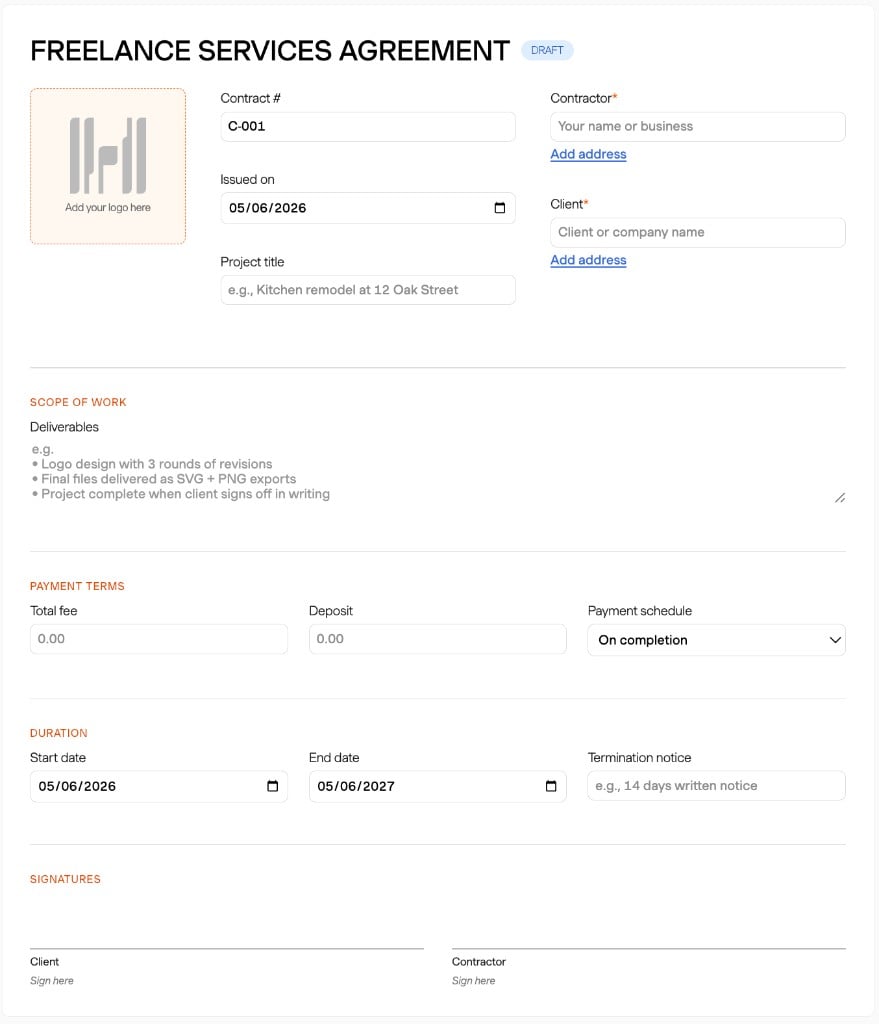

Customizing Your Consulting Contract Template

Customizing a consulting contract template is essential to meet the specific needs of your consulting services. While templates provide an excellent starting point, they must be tailored to align with the unique aspects of your project. Start by identifying the parties involved and clearly defining the services to be provided. This includes specifying the compensation structure, whether it's hourly, a flat fee, or a retainer. Additionally, incorporate terms like termination, expenses, intellectual property, and confidentiality to protect both parties.

For consultants, particularly in specialized fields, it's crucial to customize contracts to address industry-specific challenges. For example, healthcare consulting agreements often include clauses for non-clinical services and compliance support. Meanwhile, construction-related consulting contracts need to address risks like lengthy contract terms and uninsured losses. By customizing your template, you not only protect your interests but also enhance client trust by demonstrating professionalism and thoroughness.

Legal Considerations for Consulting Contracts

Legal considerations are paramount when drafting a consulting contract. In the U.S., contracts must include mutual consent, an exchange of value, a legal purpose, and legal capacity to be binding. Misclassifying a consultant as an employee can lead to significant penalties, highlighting the importance of clear definitions within the contract. Additionally, intellectual property rights must be clearly outlined to avoid future disputes over ownership of work products.

It's also vital to consider regional legal requirements. For instance, consulting agreements in Ontario, Canada, should be customized to comply with provincial laws. They should use clear, concise language and undergo legal review to ensure compliance. These legal frameworks not only provide protection but also enhance the strategic value of the contract by setting clear expectations and demonstrating professionalism.

How Harvest Supports Consulting Workflows

While Harvest does not provide specific consulting contract templates, it plays a crucial role in managing and streamlining consulting workflows. Harvest offers robust tools for time tracking, expense management, and invoicing, making it easier for consultants to manage their projects and finances efficiently. By using Harvest, consultants can ensure accurate billing and maintain organized records of billable hours and expenses.

Harvest's functionality supports consultants in achieving better financial management. With features that allow for detailed time tracking and expense categorization, consultants can easily generate invoices and manage project budgets. This automation not only saves time but also reduces the likelihood of errors, ultimately leading to improved client satisfaction and revenue predictability.

Consulting Contract Templates with Harvest

Harvest simplifies consulting workflows with customizable contract templates, time tracking, and invoicing tools.

Screenshot of Harvest's consulting contract template creation interface.

Consulting Contract Template FAQs

  • A consulting contract should include a detailed scope of work, payment terms, confidentiality clauses, and intellectual property rights. These elements help prevent common issues like scope creep and late payments.

  • Customizing a consulting contract involves defining the parties, services, and compensation structure. Include specific terms for termination, expenses, intellectual property, and confidentiality to suit your project's needs.

  • Ensure the contract includes mutual consent, an exchange of value, a legal purpose, and legal capacity. Define intellectual property rights clearly to prevent future disputes.

  • Harvest supports consultants with tools for time tracking, expense management, and invoicing, helping streamline project workflows and financial management.

  • Yes, consulting contracts can be customized for specific industries, such as healthcare or construction, to address unique challenges and requirements.

  • Common challenges include scope creep and late payments. These can be mitigated by having clear descriptions of deliverables, payment schedules, and client sign-offs at each phase of the project.

  • A written contract sets clear expectations, protects both parties legally, and reduces misunderstandings. It is a strategic tool that enhances project success and client trust.