Sign up


Understanding the Essentials of a Design Contract
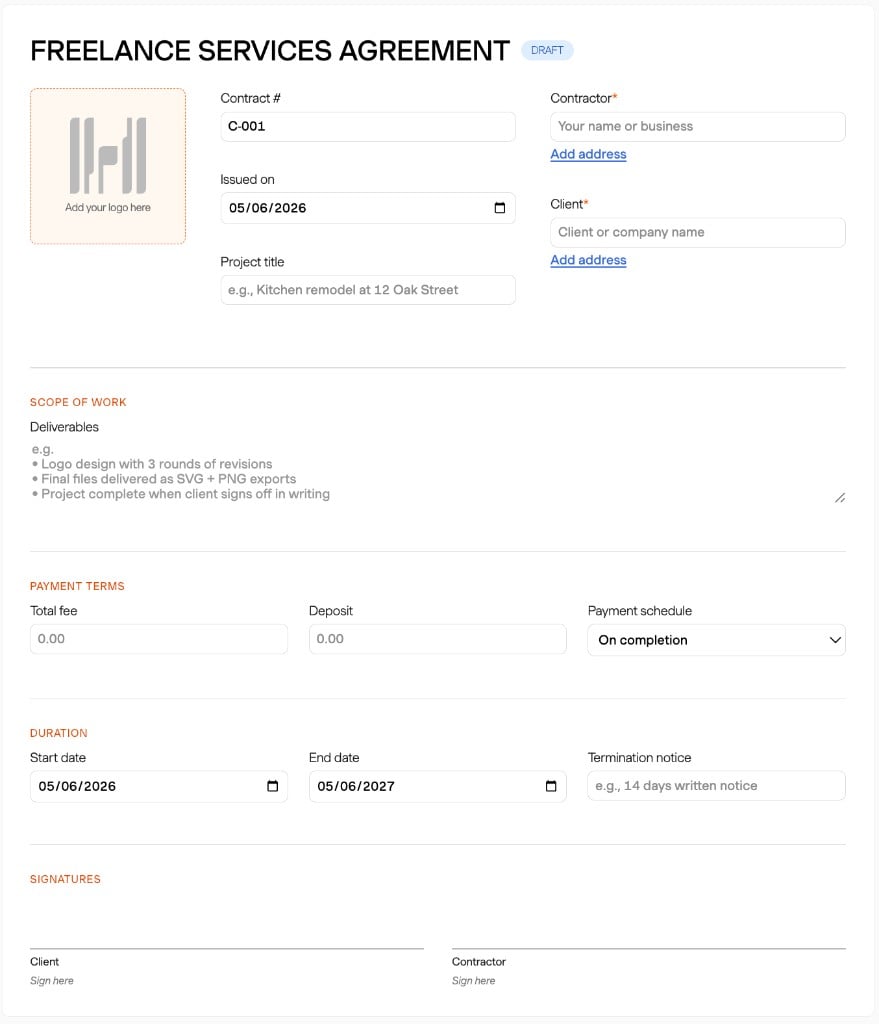
Creating a design contract is crucial for safeguarding your interests and ensuring successful project outcomes. A comprehensive design contract should include several key components. First and foremost, it should clearly define the scope of work, detailing what is included and what is not, to prevent scope creep. This is particularly important as unclear specifications often lead to disputes and financial losses, especially in complex projects like construction.
Payment terms are another critical element. Vague terms can lead to payment delays, which are a common source of contention in client relationships. To mitigate this, specify payment schedules, include penalties for late payments, and consider requiring an upfront retainer. Additionally, intellectual property clauses should be clearly defined to establish ownership rights over the design work. This not only protects your creative assets but also ensures transparency with clients.
While Harvest does not provide legal contract creation tools, it supports designers in managing the financial aspects of projects through accurate time tracking and invoicing. By ensuring clear financial transactions, Harvest helps mitigate financial risks associated with design projects.