
Harvest
Contracts
Sign up

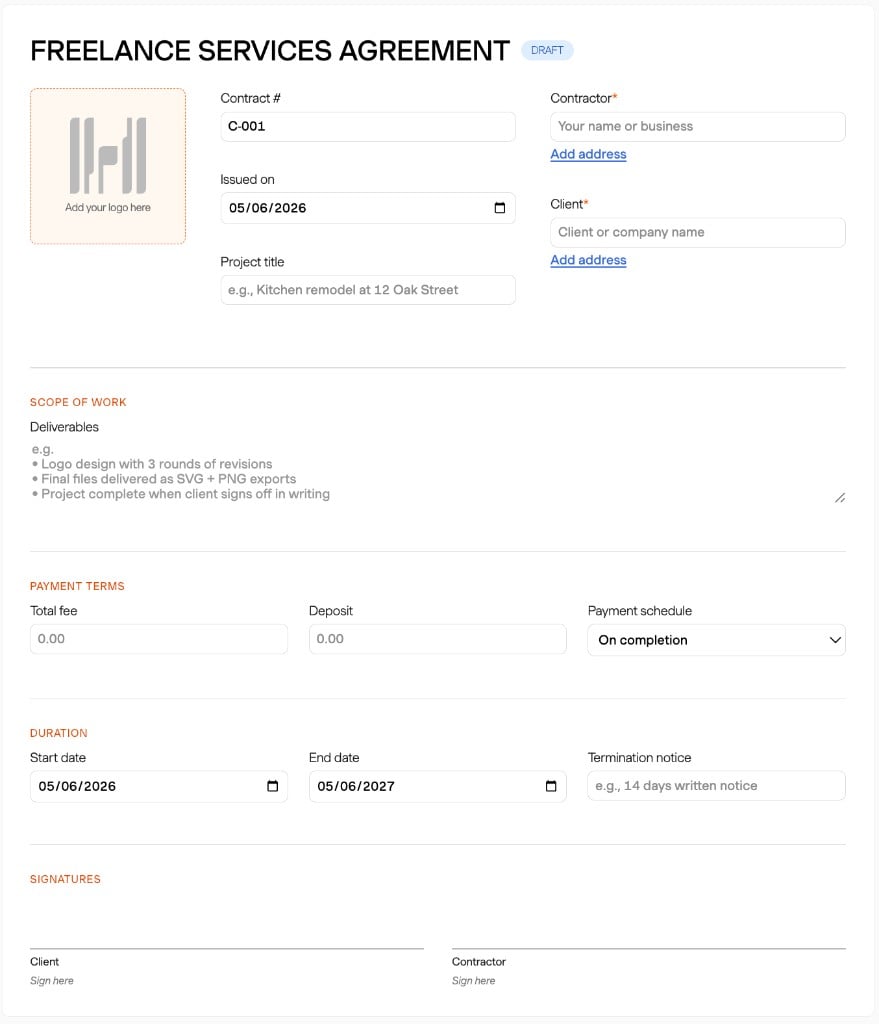
Contract Template for Paving Contractors

Paving contractors face complex legal and operational challenges. Harvest helps streamline time tracking and invoicing, supporting efficient project execution.

Start from a template

AGREEMENT DRAFT

Add your logo here

Scope of work

Payment terms

Duration

Signatures

Client

Sign here

Contractor

Sign here

Get paid via:
Credit card / Debit card
ACH
Wire transfer

Customize contract

Appearance

Add a logo
Show contract title

Contract settings

Include payment terms Total fee, deposit, and schedule
Include termination clause Notice required to end the contract
Include signature blocks Both parties sign at the bottom

Key Clauses in Paving Contractor Contracts

A paving contractor contract must include specific clauses to ensure compliance and smooth project execution. One critical clause is the payment terms, which outlines how and when payments will be made. Many contracts specify progress payments based on project milestones, helping contractors manage cash flow effectively. Another crucial element is the project specifications, detailing the scope of work, materials to be used, and standards to be adhered to, which reduces misunderstandings and potential disputes.

Additionally, contracts should address safety regulations to ensure all parties comply with legal obligations and maintain a safe working environment. This includes adhering to local and federal regulations, such as the U.S. Federal Acquisition Regulation (FAR) requirements, which dictate specific record-keeping practices. By including these clauses, paving contractors can minimize risks and protect their interests.

Customizing Your Paving Contract Template

Customizing a contract template to fit specific project needs is essential for paving contractors. Start by reviewing the project's unique requirements, such as site conditions and client expectations. For instance, a contract for a high-traffic area like a parking lot might need specific clauses addressing phased construction and minimizing disruptions.

It's important to incorporate site assessments and material estimates into the contract. Thorough site assessments help identify potential challenges, such as drainage issues, while accurate material estimates ensure the project stays on budget. These elements can be tailored within a standardized contract template, making it a practical tool for various paving projects.

Ensuring Compliance with Legal and Safety Standards

Compliance with legal and safety standards is paramount in paving contracts. Contractors should familiarize themselves with local laws and regulations that impact their contracts. For example, California's SB 440 and SB 61 laws affect retention caps and change order processes, which must be reflected in the contract to avoid legal issues.

Additionally, safety standards should be clearly outlined in the contract to ensure that all parties adhere to necessary precautions. This includes specifying the use of personal protective equipment (PPE) and compliance with occupational safety regulations. By embedding these standards into the contract, contractors can mitigate legal risks and ensure a safe working environment.

Benefits of Using a Standardized Contract Template

Standardized contract templates offer paving contractors several advantages. Primarily, they reduce the need for custom contracts, saving both time and money on legal reviews. This efficiency is crucial in an industry where time is of the essence, as standardized templates provide a clear, consistent framework for agreements.

Moreover, such templates can minimize disputes by establishing clear expectations and responsibilities from the onset. Contractors can ensure all project requirements, from payment schedules to safety protocols, are consistently documented. This approach not only enhances operational efficiency but also fosters trust and long-term relationships with clients.

Integrating Contract Management with Digital Tools

Integrating contract management with digital tools can significantly enhance a paving contractor's workflow. While Harvest primarily supports time tracking and invoicing, it highlights the benefits of using digital tools in the industry. Digital platforms can streamline processes such as estimating, bidding, scheduling, and documentation, leading to improved project efficiency.

For paving contractors, leveraging technology to manage contracts can facilitate better communication and coordination among teams. This integration allows for real-time updates on project progress and changes, ensuring that all stakeholders remain informed and aligned with the project's goals.

Streamline Contracts with Harvest

Harvest offers tools for efficient time tracking and invoicing, enhancing paving contract management for contractors.

Screenshot of Harvest contract template for paving contractors.

Contract Template for Paving Contractors FAQs

  • A paving contractor contract should include payment terms, project specifications, and safety regulations. These clauses ensure clear communication and compliance with legal standards.

  • Yes, you can customize contract templates to fit unique project needs by including site assessments and specific material estimates. This ensures the contract aligns with the project's requirements.

  • Include clauses that specify safety standards, such as the use of PPE and adherence to occupational safety regulations. This helps mitigate legal risks and maintain a safe work environment.

  • Standardized templates save time and money by reducing the need for custom contracts and minimizing legal reviews. They also help prevent disputes by establishing clear expectations.

  • Digital tools enhance contract management by streamlining estimating, bidding, scheduling, and documentation processes. This leads to improved efficiency and better communication among teams.

  • Contractors should be aware of local laws and regulations, such as California's SB 440 and SB 61, which affect retention caps and change order processes in contracts.

  • Payment terms outline how and when payments are made, helping contractors manage cash flow effectively. This can include progress payments based on project milestones.