
Harvest
Contracts
Sign up

Nda Template in Norwegian

Harvest is ideal for contractors needing efficient time tracking and invoicing solutions, streamlining project management and financial tasks.

Start from a template

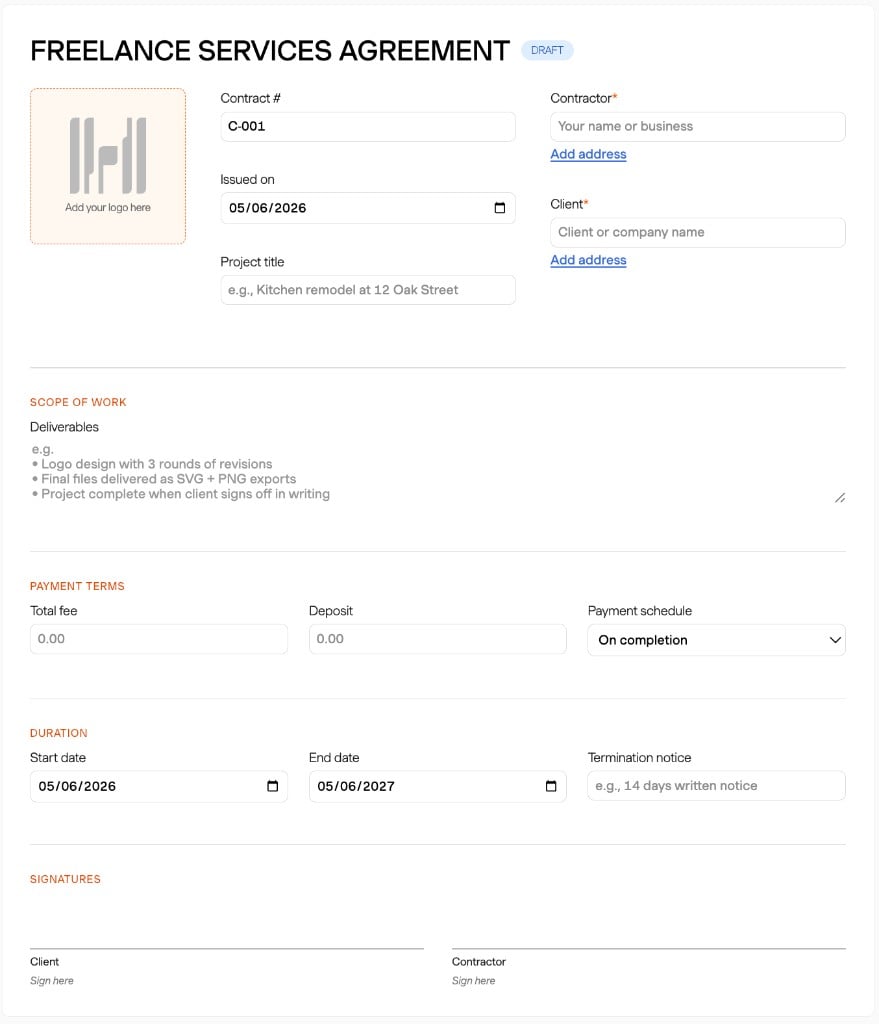
AGREEMENT DRAFT

Add your logo here

Scope of work

Payment terms

Duration

Signatures

Client

Sign here

Contractor

Sign here

Get paid via:
Credit card / Debit card
ACH
Wire transfer

Customize contract

Appearance

Add a logo
Show contract title

Contract settings

Include payment terms Total fee, deposit, and schedule
Include termination clause Notice required to end the contract
Include signature blocks Both parties sign at the bottom

Understanding Norwegian NDAs

A Non-Disclosure Agreement (NDA) in Norway is an essential tool for protecting confidential business information and maintaining competitive advantages. These agreements are commonly used across various industries to safeguard sensitive data such as trade secrets and proprietary business processes. In Norway, NDAs are governed by the Trade Secrets Act of 2020, which aligns with the EU Trade Secrets Directive to bolster the protection of confidential information. Despite the protections NDAs offer, they are not foolproof, and businesses must implement additional measures to ensure confidentiality.

Norwegian NDAs typically include clauses that define "confidential information" broadly—encompassing technical, financial, and commercial data. However, information already public or required for judicial inquiries cannot be deemed confidential. The duration of confidentiality obligations can vary, but it's crucial to specify an appropriate timeframe to avoid enforceability issues. Common durations range from two to ten years, often extending beyond the termination of business relationships.
Key Components of a Norwegian NDA

Crafting a legally sound NDA in Norway involves including specific components that clarify the obligations and rights of all parties involved. An NDA should clearly define the scope of "confidential information," the purpose of disclosure, and the obligations of the receiving party. This clarity helps prevent disputes and aids in enforcement if a breach occurs. The NDA should also outline the duration of these obligations, which can vary based on the nature of the information.

Additionally, the agreement should address potential consequences for breaches, such as claims for compensation or legal action. Without a specified liability cap, damages under an NDA can be unlimited, emphasizing the importance of carefully reviewing and negotiating these terms. When drafting an NDA, it’s advisable to use concise language, as overly complex or vague terms can lead to misunderstandings and render the agreement unenforceable.

Norwegian Law and NDAs

Norwegian NDAs are governed by a robust legal framework that includes the Trade Secrets Act and the Public Administration Act. These laws provide a strong basis for enforcing confidentiality obligations and protecting proprietary business information. The General Data Protection Regulation (GDPR) also impacts how personal data, which might be part of confidential information, is handled within NDAs.

In Norway, the legal venues for NDA disputes are commonly the courts of Oslo, though other district courts may also be specified, especially for industry-specific agreements like those in the offshore sector. It's important to note that NDAs are not a cure-all for confidentiality issues; businesses should still exercise caution regarding the amount and type of information they disclose, even under an NDA.

Practical Tips for Using NDAs in Norway

When engaging in the exchange of sensitive information, especially with Norwegian authorities, it's advisable to label documents clearly as "CONFIDENTIAL – Trade Secret / Business Sensitive." This practice helps emphasize the competitive sensitivity and importance of maintaining confidentiality. Additionally, providing redacted versions for public records can safeguard sensitive details from unintended disclosure.

Customization is key when using NDA templates. While templates provide a useful starting point, they must be tailored to the specific context and needs of the parties involved. This includes defining the purpose of the disclosure and setting realistic timeframes for confidentiality obligations. Digital signatures are accepted in Norway, offering an efficient method for executing NDAs and ensuring all parties are legally bound by the agreement.

Risks and Considerations in NDA Use

While NDAs provide formal legal protection, they do not prevent the unauthorized dissemination of information. It's crucial for businesses to implement internal controls and educate employees on the importance of confidentiality and proper data handling. Missteps in these areas can lead to significant liabilities, especially if the NDA lacks a liability cap.

Furthermore, NDAs should not include non-compete provisions unless specifically negotiated, as these can lead to enforceability issues. Businesses should also be cautious when dealing with similar or competitive projects, as this can create potential risks for intellectual property ownership. Professional legal advice is recommended to navigate these complexities and ensure the NDA reflects the true intentions of the parties involved.

Explore Harvest for NDA Management

Discover how Harvest streamlines NDA management, offering tools for tracking and invoicing seamlessly integrated into your workflow.

Harvest NDA management interface for Norwegian contracts.

Nda Template in Norwegian FAQs

  • A Norwegian NDA should include clauses defining "confidential information," the purpose of disclosure, obligations of the parties, duration of confidentiality, and consequences of breaches. These components ensure clarity and enforceability.

  • Norwegian NDAs are governed by the Trade Secrets Act and the Public Administration Act, providing a legal framework for confidentiality obligations. These laws align with the EU Trade Secrets Directive to protect proprietary information.

  • Unilateral NDAs protect information disclosed by one party, whereas mutual NDAs involve both parties sharing confidential information. The choice depends on the nature of the business relationship and information exchange.

  • Yes, it's advisable to customize NDA templates to suit specific business contexts. This ensures the agreement accurately reflects the parties' intentions and addresses all necessary legal and practical considerations.

  • Breaching an NDA in Norway can lead to significant consequences, including legal action and claims for compensation. The disclosing party may seek injunctive relief to enforce confidentiality obligations.

  • Yes, digital signatures are widely accepted in Norway and offer a practical method for executing NDAs. They are legally binding and facilitate efficient agreement processes.

  • Businesses should implement robust internal procedures and educate employees on confidentiality practices. This helps prevent breaches and mitigates liability risks associated with NDA violations.