
Harvest
Contracts
Sign up

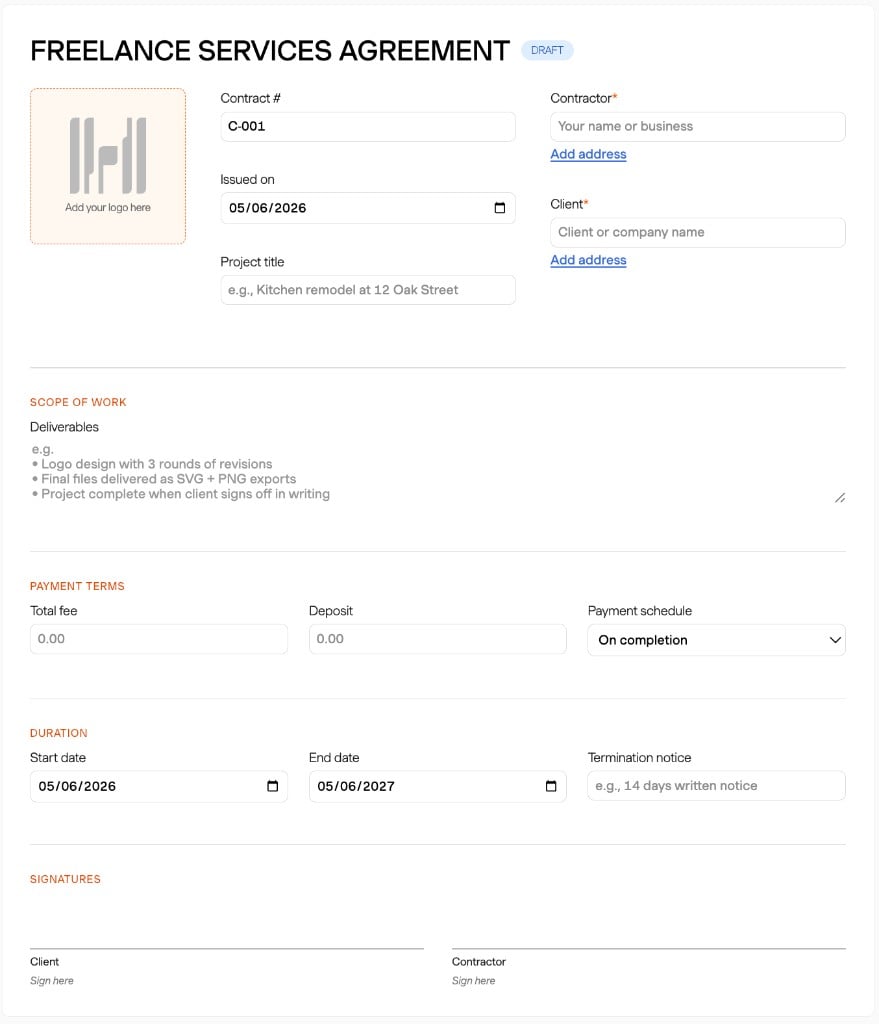
Contract Template for Septic Contractors

Septic contractors face unique challenges in service agreements and time management. Harvest streamlines invoicing and change orders, enhancing operational efficiency.

Start from a template

AGREEMENT DRAFT

Add your logo here

Scope of work

Payment terms

Duration

Signatures

Client

Sign here

Contractor

Sign here

Get paid via:
Credit card / Debit card
ACH
Wire transfer

Customize contract

Appearance

Add a logo
Show contract title

Contract settings

Include payment terms Total fee, deposit, and schedule
Include termination clause Notice required to end the contract
Include signature blocks Both parties sign at the bottom

Essential Clauses for Septic Service Contracts

Creating a comprehensive septic service contract is crucial for both contractors and clients. Essential clauses include maintenance frequency, payment terms, and compliance with local regulations. For instance, in Texas, state law mandates maintenance contracts for aerobic systems, requiring inspections every four months. Such requirements are crucial in ensuring system longevity and legal compliance.

Additionally, contracts should outline specific services covered, such as routine inspections, pump maintenance, and emergency repairs. Industry experts advise that neglecting regular maintenance can lead to repair costs as high as $20,000, compared to a $100 fix during a routine visit. Comprehensive service agreements help avoid such pitfalls.

While Harvest does not offer specific contract templates, it supports septic contractors in managing time, expenses, and invoicing. This enables businesses to focus on providing quality service while ensuring financial operations are efficient and accurate.

Customizing Contracts for Septic Contractors

Customizing contracts to reflect the specific needs of septic contractors can enhance service delivery and client satisfaction. A tailored contract should include clauses for change orders, particularly for unexpected repairs or system upgrades. Harvest excels in managing these adjustments through its invoicing and project management capabilities, ensuring seamless transitions and transparent client communication.

Payment terms are another critical aspect. Harvest allows septic contractors to set up customizable payment terms, including options for recurring billing, which can streamline financial management and improve cash flow predictability. This flexibility is essential in an industry where service frequency and scope can vary significantly.

While Harvest doesn't provide specific liability clauses or regulatory compliance details, it supports contractors by offering tools for tracking time and expenses, enabling them to deliver services efficiently and transparently.

Navigating Legal and Compliance Requirements

Septic contractors must navigate various legal and compliance requirements to operate effectively. For example, Virginia's HB2671 mandates formal inspections by licensed professionals as a prerequisite for property sales. Such regulations highlight the importance of including compliance-related clauses in service contracts.

Although Harvest does not handle regulatory compliance directly, it aids contractors by managing project budgets and invoicing, ensuring that financial records align with legal requirements. This support is invaluable in maintaining a professional standard and avoiding legal complications.

For contractors, understanding and incorporating local legal requirements into contracts is crucial. While Harvest can't provide compliance-specific contract sections, its robust invoicing and expense tracking features help maintain transparency and accountability in financial dealings.

Leveraging Technology for Efficient Service Management

Advancements in technology offer septic contractors opportunities to enhance service management and client interactions. From IoT sensor integration for monitoring septic systems to predictive maintenance tools, the industry is rapidly evolving to meet modern demands.

Harvest plays a vital role in this technological landscape by providing tools for tracking time, managing expenses, and facilitating invoicing. These capabilities are crucial for contractors who need to focus on service delivery while efficiently handling business operations.

By leveraging Harvest's features, septic contractors can improve operational efficiency, reduce administrative overhead, and enhance client satisfaction. This positions them to better adapt to industry trends, such as the growing demand for eco-friendly and energy-efficient systems.

Avoiding Common Pitfalls in Septic Service Agreements

Septic service agreements, if not crafted carefully, can lead to misunderstandings and disputes. Common pitfalls include vague service descriptions, unclear payment terms, and inadequate handling of change orders. Clear, detailed contracts are essential in avoiding these issues.

While Harvest does not provide specific contract templates, it aids in managing change orders for unexpected repairs or system upgrades, ensuring clarity and transparency. This functionality is crucial in maintaining client trust and satisfaction.

Additionally, Harvest's tools for setting up recurring invoices and customizable payment terms help contractors manage their finances efficiently, reducing the risk of cash flow issues. By focusing on these aspects, contractors can deliver reliable services and maintain strong client relationships.

Harvest for Septic Contractors

Discover how Harvest supports septic contractors with invoicing, time tracking, and managing change orders, enhancing operational efficiency.

Harvest interface showing a contract template for septic contractors

Contract Template for Septic Contractors FAQs

  • A septic service contract should include maintenance frequency, payment terms, compliance with local regulations, and specific services offered, such as inspections and emergency repairs.

  • Harvest assists septic contractors with tools for managing time, expenses, and invoicing. It supports customizable payment terms and change order management, enhancing business efficiency.

  • Regular inspections prevent costly repairs and system failures. A routine inspection might cost $100, whereas neglect can lead to repairs costing $5,000 to $20,000.

  • Change orders in septic contracts cover unexpected repairs or upgrades. Harvest supports these through its project management and invoicing features, ensuring clear communication with clients.

  • While Harvest doesn't manage regulatory compliance, it aids in maintaining financial records through project budgets and invoicing, supporting legal requirements.

  • Trends include eco-friendly systems, IoT integration for monitoring, and predictive maintenance. These advancements improve efficiency and service delivery.

  • Technology, like IoT sensors and predictive tools, enhances monitoring and maintenance. Harvest complements these by streamlining invoicing and expense management.

  • Common pitfalls include vague service descriptions and unclear payment terms. Clear contracts and tools like Harvest for managing change orders can help avoid these issues.

  • Customizable payment terms, supported by Harvest, improve cash flow management and predictability, essential in a service-driven industry like septic maintenance.